How Yemen trapped Saudi Arabia in a double chokehold
Yemen has escalated its response to Saudi aggression, launching missile and drone attacks on key Saudi Aramco oil facilities and imposing a maritime embargo on Saudi shipping.
Intelligence analysis by Gemini 2.5 Flash
The article frames Yemen's actions as a strategic counter-deterrence, transforming years of Saudi-led siege into a 'blockade for blockade' doctrine. It highlights the failure of Western air defenses and criticizes Western powers for their perceived double standards regarding freedom of navigation.
Imagine a big bully who keeps picking on a smaller kid, blocking their lunch and making them hungry for years. One day, the smaller kid gets smart and starts throwing pebbles at the bully's piggy bank and blocking the path to their favorite candy store. Now, the bully is upset, but the smaller kid says, 'You did it to me first!' This story is about Yemen, the smaller kid, fighting back against Saudi Arabia, the bully, by hitting their oil money spots and blocking their ships, after being attacked for a long time.
Analysis
Yemen's Shift to Counter-Deterrence
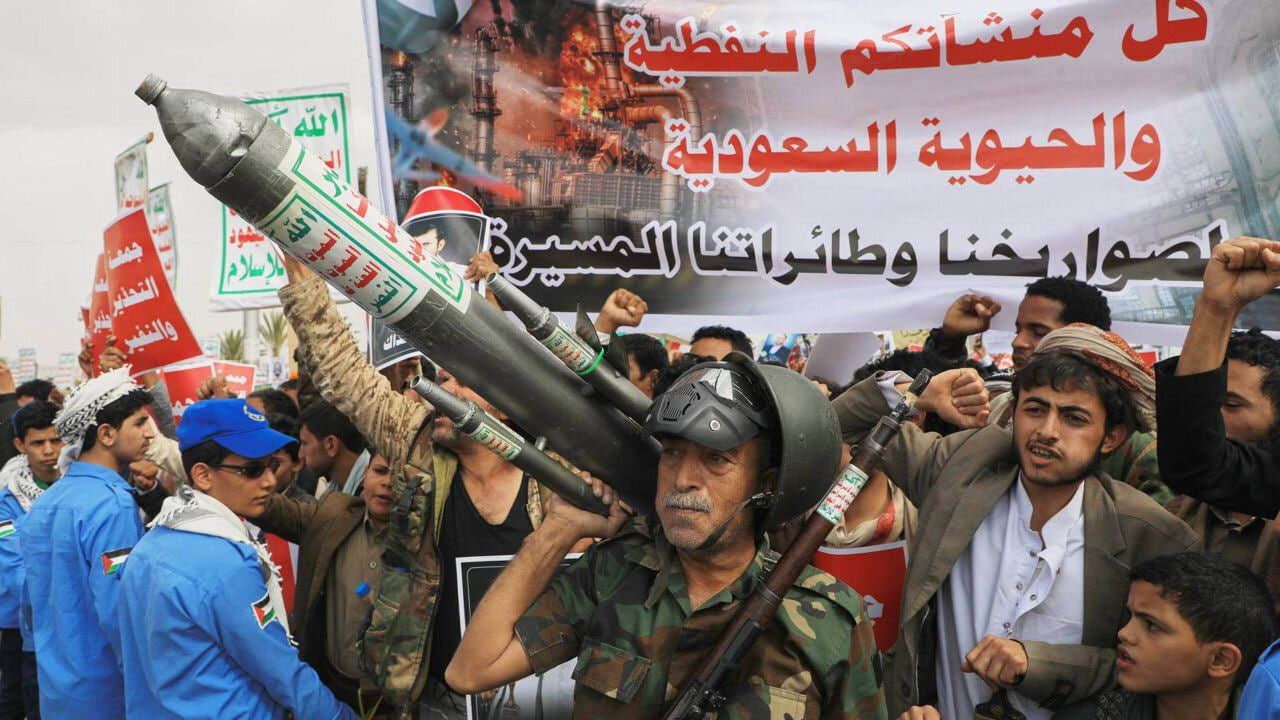
For over a decade, Saudi Arabia, backed by the U.S. and Israel, subjected Yemen to a devastating siege, targeting infrastructure and causing a severe humanitarian crisis. However, recent events, particularly the Yemeni response to Saudi airstrikes on Al-Hudaydah and Kamaran Island, signal a profound strategic shift. Yemen's Armed Forces retaliated with precision, striking sensitive Saudi Aramco facilities in Jizan and Yanbu using indigenously developed ballistic missiles, cruise missiles, and drone swarms. These attacks, confirmed by satellite imagery, targeted critical oil export infrastructure, including Yanbu, which was designed to bypass Persian Gulf vulnerabilities.
The article emphasizes that these strikes demonstrate Yemen's capacity to extend its reach over a thousand kilometers, effectively challenging Saudi Arabia's western escape route for oil exports. The repeated failure of multi-billion-dollar Western air defense systems, such as American Patriot batteries, to intercept these coordinated saturation strikes underscores the effectiveness of Yemen's asymmetric warfare tactics. This strategic pivot from enduring aggression to actively targeting the core of the Saudi economy marks a new phase in the conflict, where Yemen is no longer merely a victim but an active deterrent force.
The Maritime Embargo and Western Hypocrisy
Beyond military strikes, Yemen has implemented a deliberate doctrine of 'blockade for blockade' and 'siege for siege.' Following a Saudi strike on Sana’a International Airport, the Yemeni Armed Forces declared a targeted maritime embargo against Saudi-flagged vessels and cargo bound for Saudi ports. Ansarullah officials clarified that this measure does not close the Bab al-Mandeb Strait to global trade but specifically targets Saudi shipping, enforcing a reciprocal blockade.
This move directly challenges the international community's perceived double standards. The article argues that Western capitals remained silent for over a decade as Saudi Arabia strangled Yemeni ports, leading to an unprecedented humanitarian emergency. Yet, these same powers now express outrage when Sanaa exercises its sovereign right to retaliate. This blatant hypocrisy, according to the Tehran Times, exposes the hollow nature of Western rhetoric regarding freedom of navigation, which is seen as serving imperial monopolies while sanctioning the starvation of independent nations.
Reinforcing the Regional Resistance Front
The escalation in Yemen is presented as an integral part of a broader regional confrontation. The article asserts that Riyadh has functioned as a compliant instrument of imperial policy, launching airstrikes and maintaining economic strangulation against Yemen to divide the 'Resistance Front' and relieve pressure on the American-Israeli axis. However, Sanaa's actions, rooted in the Quranic principle of just retaliation, are portrayed as dismantling this design through absolute solidarity.
The July 25 statement from the Yemeni military leadership explicitly linked Red Sea security to the broader regional struggle, indicating that the 'Resistance' operates as a single, cohesive shield. This perspective suggests that Saudi Arabia's attempt to isolate Yemen has inadvertently drawn the kingdom into an unwinnable war of attrition, proving that those who weaponize siege will ultimately find themselves encircled. This narrative reinforces the idea of a unified front against perceived Western and Israeli aggression, with Yemen playing a crucial role in challenging regional power dynamics.
Key points
- Yemen launched missile and drone attacks on Saudi Aramco facilities in Jizan and Yanbu in retaliation for Saudi airstrikes.
- The attacks targeted key oil export infrastructure, demonstrating Yemen's extended strike capabilities and the failure of Western air defenses.
- Yemen declared a targeted maritime embargo on Saudi-flagged vessels and cargo, enforcing a 'blockade for blockade' doctrine.
- The article criticizes Western powers for perceived double standards regarding freedom of navigation, highlighting their silence during Yemen's siege.
- Yemen's actions are framed as reinforcing the broader 'Resistance Front' against perceived imperial aggression in the Middle East.
From the perspective of the article, Yemen's successful counter-deterrence could lead to a re-evaluation of Saudi Arabia's aggressive policies and potentially force a more equitable resolution to the conflict. The strengthening of the 'Resistance Front' might also lead to a more balanced power dynamic in the Middle East, challenging perceived Western and Israeli dominance.
The escalation of attacks on critical oil infrastructure and the imposition of a maritime embargo risk further destabilizing the region and potentially drawing in more international actors. This could lead to a wider conflict, exacerbating the humanitarian crisis in Yemen and increasing global energy market volatility.
Market signals
- OIL Strikes on Saudi Aramco facilities in Jizan and Yanbu, key oil export hubs, create supply-route risk and push oil prices higher.
AI-generated analysis of potential market relevance. Not financial advice.