Indian opposition disrupts parliament to support student protesters and pressure Modi
Indian opposition lawmakers disrupted parliament on Wednesday in support of student protesters, echoing their calls for the education minister to resign over exam leaks and ratcheting up pressure on Prime Minister Narendra Modi after days of unrest.
Intelligence analysis by Llama
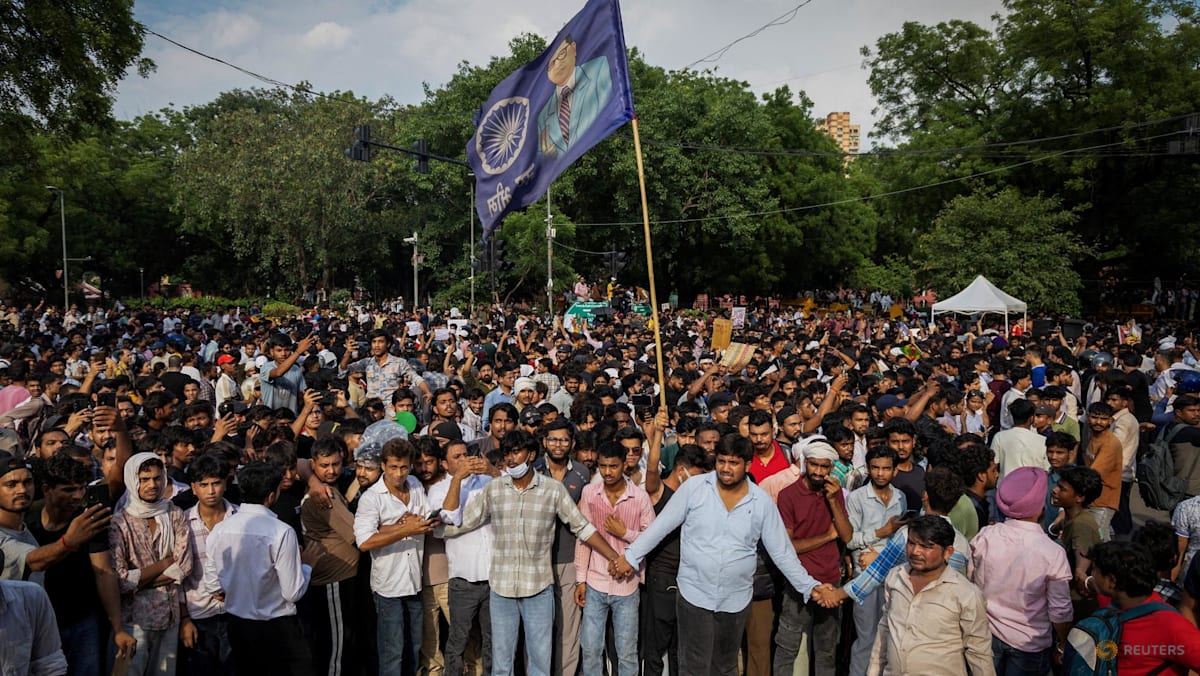
Indian opposition lawmakers disrupted parliament on Wednesday in support of student protesters, echoing their calls for the education minister to resign over exam leaks and ratcheting up pressure on Prime Minister Narendra Modi after days of unrest. The protests, which started last month over the leak of medical school entrance exam papers that affected some 2 million students, grew t…
Imagine you're taking a big test, and someone leaks the answers online. You'd be really upset, right? That's what's happening in India right now. Thousands of students are protesting because someone leaked the answers to a big test, and they want the government to do something about it.
Analysis
A $60B Vote of Confidence
The protests by the Cockroach Janta Party (CJP) began as an online satire and involved only a few hundred young people when they were first launched. However, the movement has since gained momentum, with thousands of young protesters taking to the streets to demand the resignation of Education Minister Dharmendra Pradhan over exam leaks. The protests have spread to several cities across India, including New Delhi, Mumbai, Bengaluru, Kolkata, Goa, Guwahati, Thiruvananthapuram, Jammu, and Ahmedabad.
Why Cursor?
The protests are a reflection of the growing frustration among young Indians with the government's handling of the exam leak scandal. The leak of medical school entrance exam papers that affected some 2 million students has sparked widespread outrage, with many calling for the resignation of Education Minister Dharmendra Pradhan. The protests have also highlighted the need for reform in the education system, with many calling for a more transparent and accountable system.
The Road Ahead
The protests are likely to continue in the coming days, with many young Indians demanding action from the government. The government has so far refused to resign, but the protests have put pressure on Prime Minister Narendra Modi to take action. The outcome of the protests remains uncertain, but one thing is clear: the government will need to take concrete steps to address the concerns of young Indians if it wants to avoid further unrest.
Key points
- Thousands of students are protesting in India over the leak of medical school entrance exam papers.
- The protests have spread to several cities across India, including New Delhi, Mumbai, Bengaluru, Kolkata, Goa, Guwahati, Thiruvananthapuram, Jammu, and Ahmedabad.
- The protests are a reflection of the growing frustration among young Indians with the government's handling of the exam leak scandal.
- The government has so far refused to resign, but the protests have put pressure on Prime Minister Narendra Modi to take action.
If the government takes concrete steps to address the concerns of young Indians, such as reforming the education system and making it more transparent and accountable, the protests may eventually die down. This could lead to a more positive relationship between the government and young Indians, and potentially even lead to some positive changes in the education system.
If the government refuses to take action and address the concerns of young Indians, the protests may continue to escalate, leading to further unrest and potentially even violence. This could damage the reputation of the government and lead to a loss of trust among young Indians.