Kennedy Center board votes again to renovate building and inscribe Trump's name on it – report
The Kennedy Center's Trump-aligned board has voted again to close the main building for renovations and add an inscription crediting Trump, despite a federal judge's order to remove his name.
Intelligence analysis by Llama
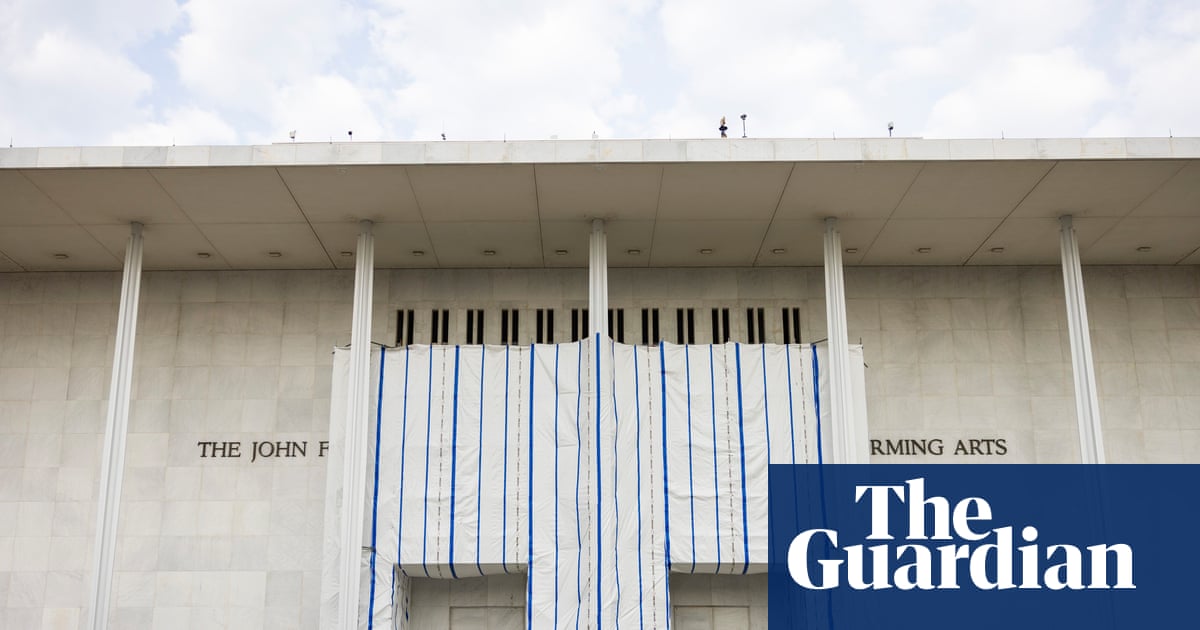
The Kennedy Center board, stacked with Trump allies, voted to shutter the main building for a $250m renovation and to add an inscription crediting President Trump, overriding a federal judge who had ruled the naming illegal and the closure "ill-informed." The plan now goes back to Judge Christopher Cooper for review.
The Kennedy Center is a big, famous theater in Washington DC. The people in charge want to fix up the building and put President Trump's name on it. But a judge said that's not allowed because only Congress can rename the building. It's like someone drawing on the school mural after the principal said stop.
Analysis
Judge Christopher Cooper's scrutiny
The latest board vote lands in the middle of an active legal fight that US district judge Christopher Cooper has been steering since spring. In May, Cooper ruled that the addition of Trump's name to the Kennedy Center's facade was illegal because only Congress has the authority to change the institution's name. Cooper also temporarily blocked the original two-year closure for renovations, calling the board's decision "ill-informed and seemingly preordained" and saying the board was "derelict in discharging the full range of its responsibilities to the Center." The board has until next week to share its new plan with Cooper, who will then assess whether the board has carried out sufficiently thorough due diligence before its vote.
The $250m renewal project
According to the New York Times, the board was presented with a detailed renewal proposal totaling roughly $250m, including significant repair work, new marble floors, and what the paper described as "acoustical" improvements. The plan also included a bid to "temporarily move the famous 3,000-pound bronze bust of JFK to another building" on the campus. The board reportedly considered three options: a complete closure, a partial closure allowing "some continued public access and limited programming in spaces unaffected" by the work, or a third option that would "consider a highly limited series of phased closures to address only the Center's most serious infrastructure needs while scheduling and maintaining a full slate of programming." The board chose the first option, keeping the newer Reach addition open for limited programming and operating it as an "active memorial to John F Kennedy."
Joyce Beatty's legal challenge
Representative Joyce Beatty, a Democrat from Ohio who sits on the Kennedy Center's board, has emerged as the most prominent internal critic of the Trump-aligned majority. Beatty sued over the initial closure vote and confirmed the results of the latest meeting. In a statement after the vote, she said the new plan "is a transparent effort to circumvent the Court's ruling, and flies in the face of the statutes that Congress passed," pledging to "continue to fight for this treasured national monument." Her role is unusual: she is a member of the board, but also a plaintiff in active litigation against its decisions, and her on-the-record presence gives the legal fight a publicly available counter-narrative inside the institution. The board's decisions are subject to Cooper's approval, meaning the vote is not a final word and the new inscription "Restored and Renovated by President Donald J Trump" will be tested against the same legal reasoning that led the judge to strike down the original naming change.
Key points
- The Kennedy Center board voted to close the main building for renovations and keep only the Reach addition open for limited programming.
- The board also voted to add an inscription reading "Restored and Renovated by President Donald J Trump" beneath the building's signage.
- US district judge Christopher Cooper had ruled in May that adding Trump's name was illegal because only Congress can change the institution's name, and he had previously blocked the initial two-year closure plan as "ill-informed and seemingly preordained."
- The board was presented with a $250m renewal proposal including new marble floors, acoustical improvements, and a plan to temporarily move the 3,000-pound bronze bust of JFK.
- Democratic representative Joyce Beatty of Ohio, a board member and plaintiff in the lawsuit, called the new plan "a transparent effort to circumvent the Court's ruling."
If the more detailed $250m plan satisfies Judge Cooper, the Kennedy Center could finally address what management described as the building's most serious infrastructure needs while keeping the Reach addition open as a working memorial. A clean, well-managed renovation would let the institution return to a fuller programming slate and move past months of legal uncertainty.
Cooper could again reject the board's process, leaving the main building in legal limbo and the Trump inscription subject to another removal order. If the appeal of the original naming ruling also fails, the board may be forced to undo both the inscription and any modifications made under the disputed closure, prolonging the institution's disruption and deepening the constitutional fight over who controls federal memorials.