Korean ambassador hosts luncheon for Iranian GKS scholars amid wartime challenges
The South Korean Ambassador to Iran, Kim Junpyo, hosted a luncheon for 20 Iranian students selected for the 2026 Korean Government Scholarship Program (GKS) and the Academy of Korean Studies (AKS) scholarship, encouraging them to foster stronger ties between the two nations.
Intelligence analysis by Gemini 2.5 Flash
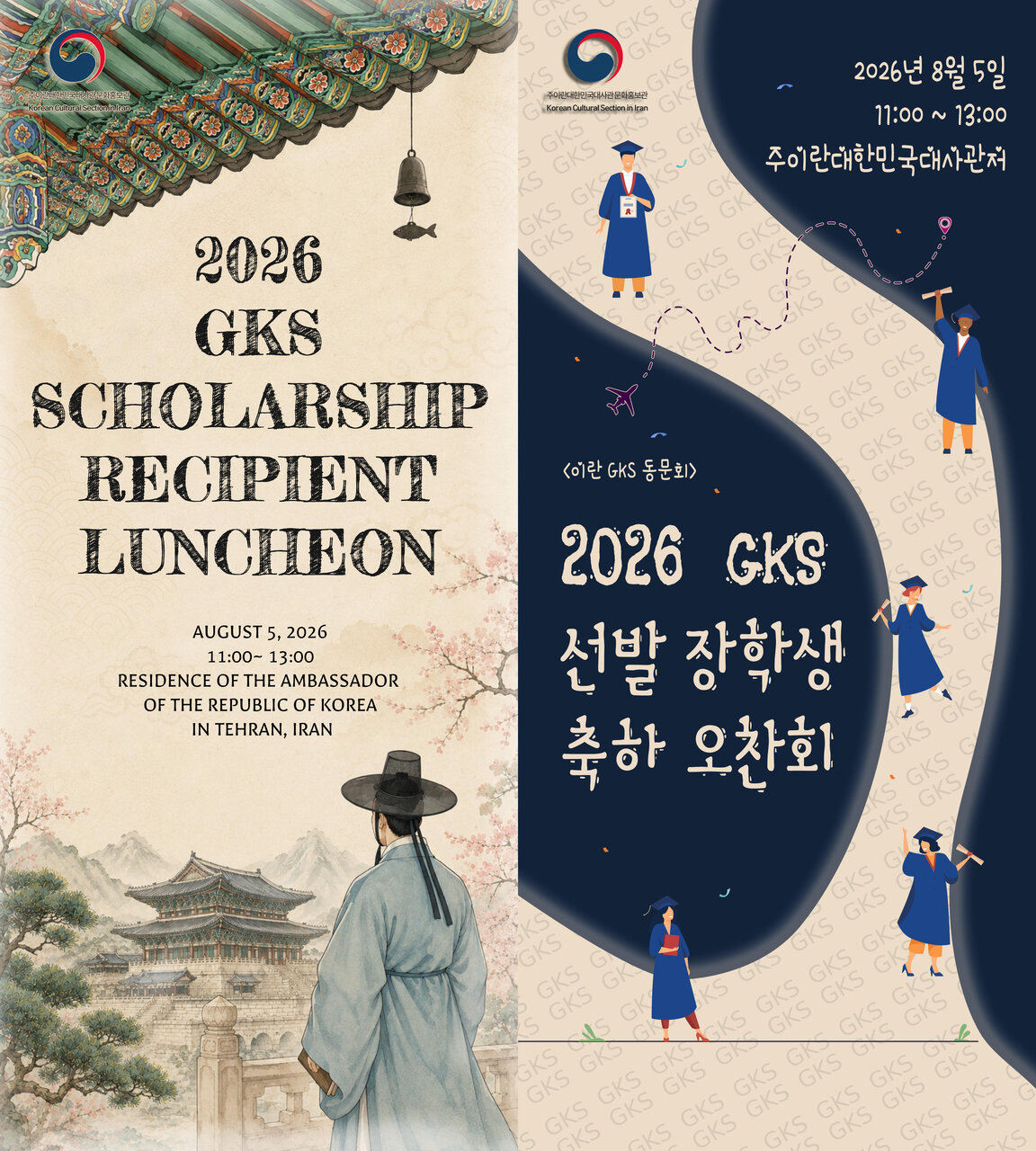
Amidst challenging wartime conditions in Iran, the South Korean Embassy organized a special luncheon for Iranian GKS and AKS scholars. Ambassador Kim Junpyo lauded the students' perseverance and urged them to act as a 'new BTS' (Bridge between Tehran and Seoul), emphasizing cultural exchange and educational continuity despite regional difficulties.
Imagine a special party where the ambassador from South Korea invited smart Iranian students who won scholarships to study in Korea. Even though things are tough in Iran right now, the ambassador told them not to give up on their dreams and to be like a 'bridge' connecting the two countries, helping them become good friends through learning and sharing cultures.
Analysis
GKS Program
The Korean Government Scholarship Program (GKS) has a rich history spanning over 60 years, serving as a crucial conduit for international academic exchange. This year, the program welcomed approximately 20 Iranian graduate students, comprising 9 doctoral candidates and 11 master's students, alongside 2 master's students from the Academy of Korean Studies (AKS). These scholars are set to commence their studies in the fall semester at various prestigious Korean universities, including Seoul National University, KAIST, and Hanyang University, among others.
The continuity of the GKS program, particularly under the prevailing 'wartime conditions' mentioned in the article, underscores its resilience and the commitment of both nations to fostering intellectual growth and cross-cultural understanding. The program not only offers academic opportunities but also integrates cultural immersion, as evidenced by the hands-on experience with Korean artifacts and traditional attire provided during the luncheon. This holistic approach aims to equip scholars with a deep appreciation for Korean culture, enabling them to become effective cultural ambassadors.
Kim Junpyo
Ambassador Kim Junpyo's address at the luncheon served as a powerful message of encouragement and vision for the Iranian scholars. He specifically commended the students for their unwavering dedication to their educational dreams, even in the face of significant geopolitical challenges. His remarks highlighted the exceptional caliber of these scholars, noting their acceptance into the GKS program's long and distinguished history.
A central theme of Ambassador Kim's speech was the metaphor of the students becoming a 'new BTS' – a 'Bridge between Tehran and Seoul.' This analogy emphasizes their crucial role in strengthening bilateral relations through academic and cultural diplomacy. By fostering deeper understanding and collaboration, these scholars are envisioned as key players in building enduring connections between South Korea and Iran, transcending political complexities and promoting mutual respect and cooperation.
Ohk Nara
Cultural Attaché Ohk Nara's statements shed light on the logistical and administrative efforts undertaken by the Korean Embassy and affiliated institutions to ensure the smooth continuation of the scholarship program. Despite the difficult 'wartime conditions' in Iran, the embassy's Cultural Section implemented alternative measures to safeguard students during the selection process. This proactive approach demonstrates a strong commitment to the welfare and academic aspirations of the Iranian applicants.
Furthermore, the National Institute for International Education (NIIED) developed an emergency GKS response plan specifically for the Middle East, signaling special support for applicants from the region. Similarly, the Graduate School of Korean Studies at AKS streamlined administrative procedures to minimize burdens for students determined to pursue their studies, all while upholding fairness and impartiality in admissions. These concerted efforts by various Korean institutions underscore a dedication to maintaining educational pathways and cultural ties, even amidst significant regional instability.
Key points
- South Korean Ambassador Kim Junpyo hosted a luncheon for 20 Iranian GKS and AKS scholars.
- The event aimed to encourage students and foster stronger cultural and academic ties between Iran and South Korea.
- Ambassador Kim urged scholars to act as a 'new BTS' (Bridge between Tehran and Seoul).
- The program continued despite 'wartime conditions' in Iran, with the embassy implementing safety measures.
- Scholars received mentorship, enjoyed Korean cuisine, and experienced traditional Korean culture.
The continued operation of the GKS program and the ambassador's encouraging message suggest a strong commitment to fostering long-term educational and cultural ties between Iran and South Korea. This could lead to enhanced diplomatic relations, increased mutual understanding, and a new generation of leaders who can bridge cultural divides.
Despite the embassy's efforts, the mention of 'wartime conditions' in Iran indicates ongoing instability that could pose challenges for students' safety, travel, or ability to fully engage in their studies. Such conditions might also deter future applicants or strain the resources required to maintain these international programs.