Live Updates: Iran says "no tangible progress" made in talks as Hezbollah rejects Israel-Lebanon ceasefire agreement
Iran says talks have made no tangible progress as Hezbollah rejects a proposed Israel-Lebanon ceasefire tied to its withdrawal from southern Lebanon.
Intelligence analysis by GPT-5.4 Mini
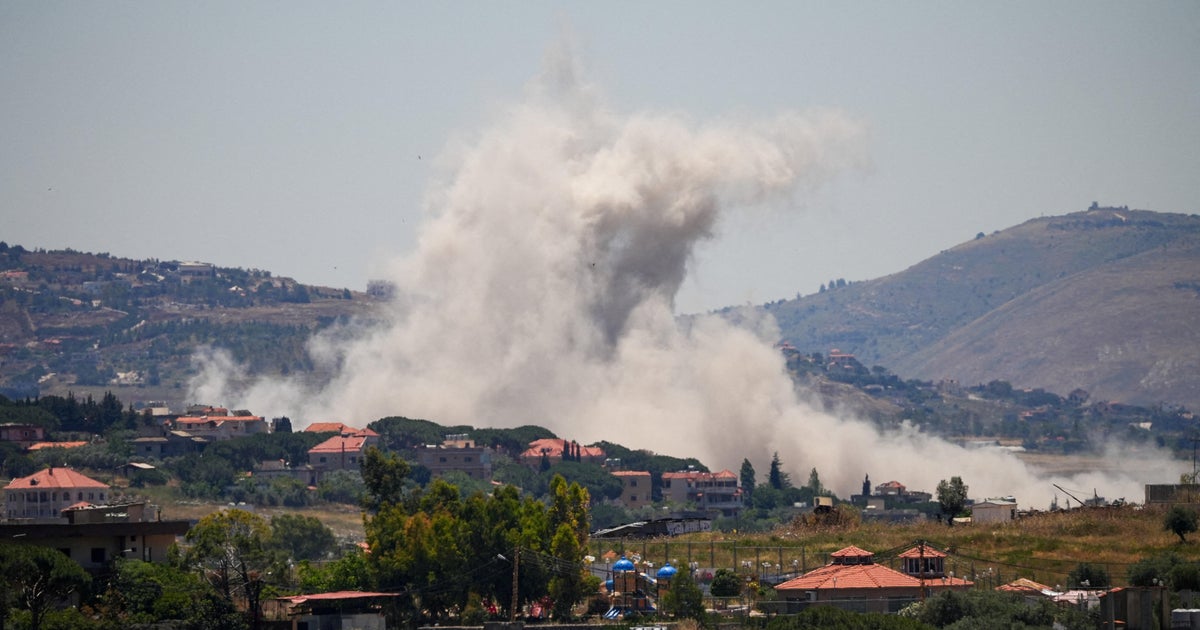
The live updates show diplomacy stalling while the conflict widens: Iran says negotiations are not advancing, Hezbollah rejects the truce terms, and the U.S. remains engaged through talks and security coordination with regional partners.
The region is like a neighborhood where one fight keeps making other neighbors nervous. Leaders are talking, but they say they are not making real progress, and one armed group has already said no to the peace plan.
Analysis
Diplomacy is stalled
Iranian Foreign Minister Abbas Araghchi said Wednesday that there has been “no tangible progress” in talks aimed at ending the wider Middle East war. He said communication with the U.S. is still open, but also warned that an Israeli strike on Beirut as part of the campaign against Hezbollah would lead to a “full-scale resumption” of the U.S.-Iran conflict.
Lebanon ceasefire runs into resistance
Israel and Lebanon agreed to renew a ceasefire framework, but the arrangement was linked to Hezbollah stopping fire and pulling operatives out of parts of southern Lebanon. Hezbollah rejected the deal on Thursday. Its secretary-general, Sheikh Naim Qassam, said the group wants a complete end to what it calls aggression and a full Israeli withdrawal. The proposed plan also included “pilot” security zones inside Lebanon where Hezbollah would be barred and Lebanese troops would patrol instead.
The U.S. remains active in the region
The updates also show direct U.S. engagement. Secretary of State Marco Rubio met with Kuwait’s foreign minister a day after Iran launched drones and ballistic missiles at Kuwait. According to the State Department, Rubio reaffirmed U.S. commitment to Kuwait’s security, said Iran must never get a nuclear weapon, and stressed restoring freedom of navigation through the Strait of Hormuz.
The U.S. military said it has redirected 127 commercial vessels since the start of its blockade on Iranian ports and vessels, while allowing humanitarian ships through. Separately, the U.N. nuclear watchdog said limited access to sites in Iran is a proliferation concern, underscoring how the conflict is now overlapping with nuclear monitoring and maritime security.
Taken together, the article shows a region where ceasefire efforts, naval pressure, and nuclear fears are all moving at once, with little sign of immediate breakthrough.
Key points
- Iran says negotiations have made no tangible progress, though communication with the U.S. remains open.
- Hezbollah rejected a proposed Lebanon-Israel ceasefire that would have created security zones and required its pullback from southern Lebanon.
- The Israeli ambassador to the U.S. accused Hezbollah and Iran of trying to destroy hopes for peace.
- Rubio met Kuwait’s foreign minister after Iranian drone and missile attacks on Kuwait, and discussed security and the Strait of Hormuz.
- The U.N. nuclear watchdog said limited access to Iranian sites is a proliferation concern.
If the talks continue, the open lines between Iran and the U.S. could still leave room for diplomacy. A workable Lebanon ceasefire could reduce attacks, limit civilian harm, and lower the chance of the conflict spreading further.
If Hezbollah’s rejection holds and fighting continues, the truce effort may collapse and the conflict could intensify in southern Lebanon and around Beirut. The article also points to wider risks for U.S. interests, including regional security, shipping, and nuclear oversight.