Major disruption to rail services in East Sussex as train derails near Lewes
A Southern train derailed near Lewes in East Sussex, closing several rail routes and triggering a major emergency response. No deaths or serious injuries were reported.
Intelligence analysis by GPT-5.4 Mini
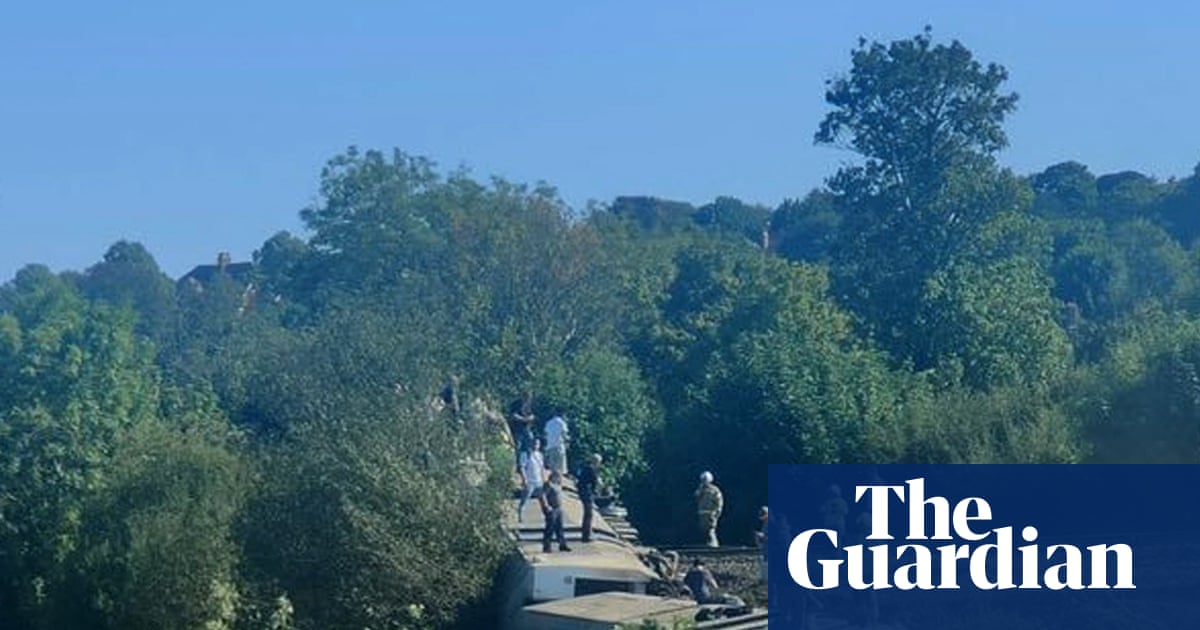
A passenger train from London Victoria to Eastbourne came off the tracks near Lewes, leaving carriages on their side and forcing the suspension of multiple routes. Officials said everyone was off the train and passengers should expect major delays.
A train jumped off the rails near Lewes, like a toy train slipping out of its track. Everyone got off safely, but the roads in the rail system had to be closed, so lots of other trips were delayed too.
Analysis
Lewes
The derailment near Lewes turns a single incident into a network problem because the route sits on a busy stretch linking several coastal and inland destinations. Southern said the line disruption would stop trains between Brighton and Lewes, Haywards Heath and Lewes, and Seaford/Eastbourne and Lewes.
That matters because rail incidents are not only about the train itself. Once a line is blocked, delays spread outward through timetables, connections, and crew rotations, affecting people who were nowhere near the derailment site.
The article suggests the response was fast enough to keep the situation from becoming a mass-casualty event. Even so, the immediate lesson is that infrastructure failures can still create a wide public impact long after the passengers have been evacuated.
Haywards Heath
The location between Haywards Heath and Lewes is important because it shows where the system is most exposed. When a train comes off the tracks in that corridor, the operators lose a key segment that ties several services together.
Southern advised passengers to delay travel or take alternative routes, which is a practical sign that recovery will depend on how quickly the line can be assessed and cleared. The request for an extra 60 minutes also hints at uncertainty beyond the immediate scene.
For regular riders, the real burden is not just cancellation but unpredictability. A rail network can absorb a minor delay, but a derailment forces a different kind of disruption where every onward journey has to be re-planned around a closed section.
Heidi Alexander
The transport secretary’s response shows the political sensitivity of rail safety incidents in England. Heidi Alexander said she was deeply concerned, thanked emergency services, and said the government was working with the rail industry and local partners.
That kind of reaction does not change the physical clean-up, but it signals how these events are handled at a national level. Rail incidents quickly become a test of public confidence, especially when images show overturned carriages and passengers waiting for rescue.
The government source quoted in the article said there were no fatalities or serious injuries, which is the most important detail. Still, the broader issue remains whether the rail system can restore service quickly enough while proving that safety and communication are being handled well.
Key points
- A Southern passenger train derailed between Haywards Heath and Lewes in East Sussex.
- Officials said there were no fatalities or serious injuries and everyone was off the train.
- Several rail routes were suspended, including links to Brighton, Lewes, and Eastbourne.
- Passengers were told to delay travel or use alternative routes.
- Emergency services, rail operators, and the transport secretary all responded publicly.
The most important positive sign is that everyone was reported off the train and no fatalities or serious injuries were believed to have occurred. If emergency crews and rail workers clear the scene quickly, services could gradually restart and the disruption may stay temporary.
Even without serious injuries, the closed routes could cause long delays and missed connections across the area. If damage to the track or rolling stock is significant, the disruption could last well beyond the day of the derailment.