Mecca Pact: Why Turkish media has focused on Israel's concerns
Turkish officials insist the recent Mecca defense pact with Saudi Arabia and Pakistan targets no country, yet pro-government Turkish outlets have heavily covered Israeli 'fear' and 'unease' over the agreement.
Intelligence analysis by Llama
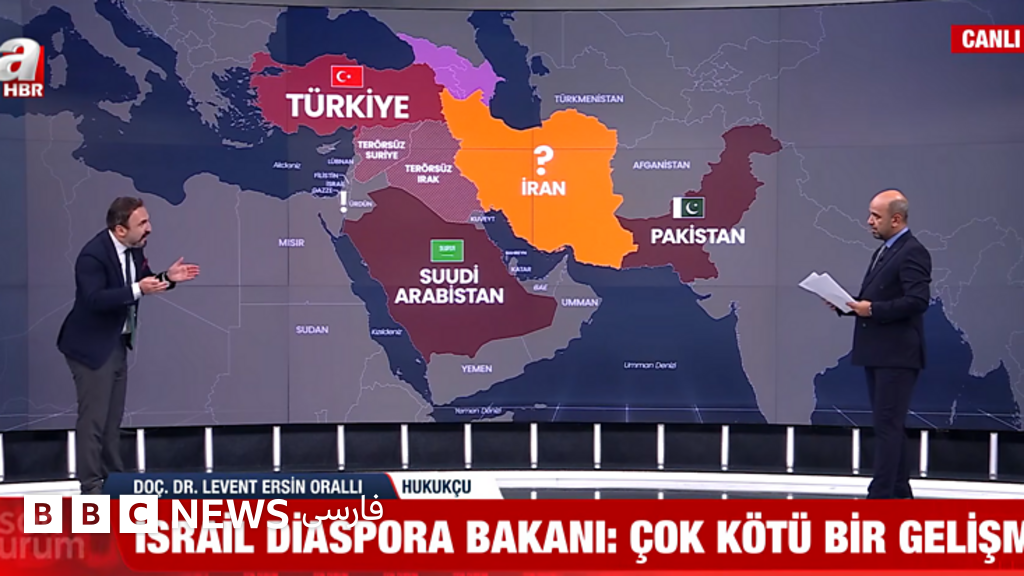
BBC Persian reviews how Turkish media has covered the new defense pact signed by Turkey, Saudi Arabia, and Pakistan. While Ankara denies the pact is aimed at Israel, much of the Turkish press has highlighted Israeli anxiety, particularly over future military cooperation that could emerge from the framework.
Turkey, Saudi Arabia, and Pakistan signed a new defense deal called the Mecca Pact. They say it isn't aimed at anyone in particular, but Turkish TV and newspapers keep talking about how worried Israel seems. Some Turkish analysts think Israel is nervous because Pakistan has nuclear weapons, and this new friendship could change who feels strongest in the region.
Analysis
Hakan Fidan's 'no specific threat' framing
Turkish Foreign Minister Hakan Fidan went on television to insist the Mecca Pact does not target any single state. He told viewers that Ankara, Riyadh, and Islamabad would focus on expanding defense industry cooperation and mutual solidarity rather than naming an adversary. In his words, there is currently no defined common threat in any written document, and the agreement is merely a starting point for closer attention to each other's security. President Recep Tayyip Erdogan reinforced this line in an interview with the Saudi daily Asharq Al-Awsat, declining to link the pact directly to Israel. This careful, deniable framing is what allows the pact to function politically inside Turkey without triggering an open rupture with Western partners or Israel, while still being read in Jerusalem as a threatening alignment.
Sabah's 'historical coalition' headline and the Greece-Cyprus subplot
Pro-government daily Sabah ran the headline "The historical Mecca coalition has concerned Israel and Greece," signaling that Ankara views the pact through a regional balance-of-power lens rather than a bilateral one. Other outlets, including the critical daily Sözcü, the aviation news site Aero News, the pro-government Akşam, and Habertürk TV, all carried reports that Israel was racing to deepen ties with Greece and Cyprus in response. This triangulation tells a story beyond the three signatories: Ankara is positioning the pact inside an existing eastern Mediterranean rivalry, where Turkey and Israel are already on opposing sides over maritime boundaries and energy exploration. By highlighting Greek-Israeli rapprochement as a reaction, Turkish media implicitly argues that the pact has already produced strategic shifts before its first clause has been implemented.
Pakistan's nuclear deterrent as the unstated card
The most pointed analysis came from commentator Ekrem Kızıltaş on A Haber, who argued that Israel is most alarmed not by the pact's text but by Pakistan's inclusion. In his framing, nuclear superiority is the most vulnerable pillar of Israel's self-image of power, and the presence of a nuclear-armed Muslim-majority state in a Turkish-Saudi alignment effectively neutralizes that edge. Veteran analyst Süleyman Özel, speaking on a YouTube program, made a complementary argument: Israel has long sought to assert dominance over Sunni Middle Eastern states, and an organized pact among the major Sunni powers is precisely the kind of structure that disrupts those plans. Together, these readings suggest that Turkish strategic commentators see the Mecca Pact as a long-term framework whose real weight lies in what its signatories could build on it, rather than in any specific article of the current text.
Key points
- Turkey, Saudi Arabia, and Pakistan recently signed a defense cooperation pact known as the Mecca Pact.
- Turkish officials, including FM Hakan Fidan and President Erdogan, publicly deny the pact targets Israel or any other specific country.
- Pro-government Turkish media such as Sabah and A Haber have nonetheless led with coverage of Israeli 'fear' and 'unease' over the agreement.
- Turkish analysts argue Israel's deepest concern is the pact's potential future military mechanisms, including the implicit nuclear counterweight from Pakistan's involvement.
- Turkish outlets report Israel is responding by strengthening ties with Greece and Cyprus, framing the pact inside a broader eastern Mediterranean rivalry.
If the Mecca Pact evolves into a functional defense cooperation mechanism, it could anchor a more stable Sunni-power security architecture in the Middle East, potentially reducing the space for unilateral military campaigns. Coordinated defense industry work between Turkey and Saudi Arabia could also generate economic spillovers for member states.
The pact risks accelerating a regional arms race, particularly if Israel doubles down on its Greece-Cyprus partnership as a counterweight. With no defined common threat, the framework could also become a vehicle for opportunistic alignments that deepen sectarian fault lines and draw Iran and its allies into a more confrontational posture.