Meta launches camera-free AI glasses amid privacy pushback
Meta unveiled new AI-powered wearables, including an audio-only, camera-free version of its smart glasses, addressing global privacy concerns. CEO Mark Zuckerberg also introduced Muse, a new personal AI assistant, which will be central to their vision for AI glasses.
Intelligence analysis by Gemini 2.5 Flash
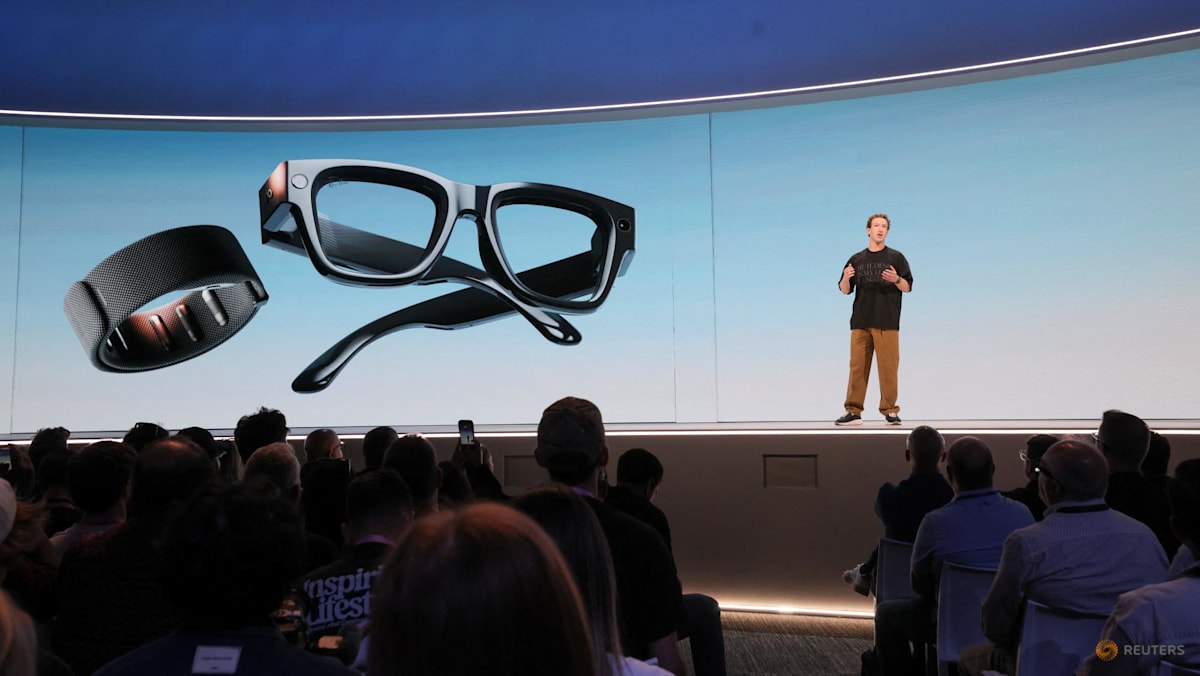
Meta is expanding its smart glasses lineup with a camera-free model, aiming to mitigate privacy backlash while integrating its new AI assistant, Muse. This move comes as the company bets on wearables as a primary interface for its AI software, despite ongoing scrutiny over recording capabilities in smart devices.
Imagine your regular glasses, but they can talk to a super-smart computer brain inside them, like a tiny helper. Meta made new ones that don't have a camera, so people feel safer about privacy, and they also showed off a new smart helper called Muse that lives in the glasses, making them like a magic assistant for your day.
Analysis
Meta's latest product unveiling at its annual Connect conference signals a strategic pivot in its approach to wearable technology and artificial intelligence. CEO Mark Zuckerberg presented a new line of smart glasses, notably featuring an audio-only, camera-free variant, directly addressing mounting global concerns regarding privacy violations associated with tiny cameras on wearables. This move is a clear attempt to assuage public apprehension, particularly in the wake of criticisms labeling camera-equipped smart glasses as 'pervert' glasses.
Meta Connect
During the Meta Connect event, Zuckerberg articulated a bold vision for the future, predicting that nearly two billion people currently wearing traditional glasses would upgrade to AI-powered versions in the coming years. This ambitious forecast underscores Meta's commitment to integrating AI into everyday life through accessible hardware. The conference also served as the platform for the introduction of Muse, Meta's new personal artificial intelligence assistant, which Zuckerberg declared would be the 'centerpiece of our vision' for these advanced wearables.
Muse is positioned as a foundational element of Meta's AI ecosystem, designed to offer users a seamless and intuitive interaction with their smart glasses. This integration suggests a future where AI assistance is not just an app on a phone but an omnipresent, hands-free companion, capable of performing various tasks through voice commands and potentially other inputs. The emphasis on Muse highlights Meta's broader strategy to establish its AI models as leading contenders in the rapidly evolving AI landscape, leveraging its vast user base across its social media platforms.
US$349
The audio-only smart glasses, priced at US$349, are set to ship on October 13, marking a significant step in Meta's effort to diversify its smart glasses offerings. This camera-free option directly responds to the widespread privacy backlash that has plagued earlier iterations of smart wearables, which allowed wearers to discreetly record photos and videos. By removing the camera, Meta aims to create a product that can be used in more public and sensitive environments without raising privacy alarms, thereby expanding its potential market.
Despite the introduction of camera-free models, Meta's vice president of AI product, Vishal Shah, acknowledged the ongoing importance of privacy features in its other smart glasses that retain recording capabilities. Shah emphasized the necessity of a clear recording indicator light, stating that Meta has made this feature more explicit over time to ensure users are aware when recording is active. This dual approach—offering both camera-equipped and camera-free options—reflects Meta's attempt to balance innovation with user trust and regulatory expectations, a challenge that continues to shape the development of wearable technology.
EssilorLuxottica
Meta's journey into smart glasses began in 2021, followed by the unveiling of 'display' glasses last year that project images onto the lens. The company has also expanded its product line beyond its initial partnership with eyewear maker EssilorLuxottica, which produces popular Ray-Ban and Oakley Meta models. Earlier this year, Meta released its own branded AI glasses, signaling a more independent development path alongside its collaborative efforts, demonstrating a comprehensive strategy to dominate the wearable tech market.
Further expanding its portfolio, Meta announced several new styles for its flagship Meta Ray-Ban glasses, with the display version, starting at US$799, soon becoming available in new markets including Britain, France, Italy, Germany, and Canada. Looking ahead, Meta plans to launch mixed reality glasses in spring 2027 for US$1,299. These Meta VR Glasses are designed to be significantly lighter than previous Quest VR headsets, weighing about as much as a deck of cards, by tethering to an external battery and memory pack. This design choice, relying on hand gestures and voice commands instead of external controls, aims to enhance user comfort and immersion, pushing the boundaries of what wearable mixed reality can offer.
Key points
- Meta launched new AI-powered wearables, including an audio-only, camera-free version of smart glasses.
- The camera-free glasses aim to address global privacy concerns regarding recording devices.
- CEO Mark Zuckerberg introduced Muse, a new personal AI assistant, as the core of Meta's AI glasses vision.
- Meta plans to upgrade nearly 2 billion traditional glasses wearers to AI glasses in the coming years.
- New display glasses and lighter mixed reality VR glasses are also part of the expanded lineup.
The introduction of camera-free smart glasses could significantly alleviate privacy concerns, fostering greater public acceptance and wider adoption of wearable AI technology. This approach might pave the way for more seamless integration of AI assistants into daily life, enhancing productivity and accessibility without compromising personal space.
Despite the camera-free option, privacy concerns might persist with other models that retain recording capabilities, potentially limiting overall market penetration due to public distrust. The reliance on external battery packs for advanced VR glasses could also hinder user experience and widespread adoption, making them less convenient than envisioned.