Moonshot AI Releases Kimi K3 Architecture Details, 1.56 TB Model on Hugging Face
Moonshot AI has unveiled the technical specifications and model weights for its Kimi K3 architecture, a 2.8 trillion-parameter multimodal mixture-of-experts model with a one-million-token context window. The 1.56 TB release on Hugging Face details its efficient design, in…
Intelligence analysis by Gemini 2.5 Flash
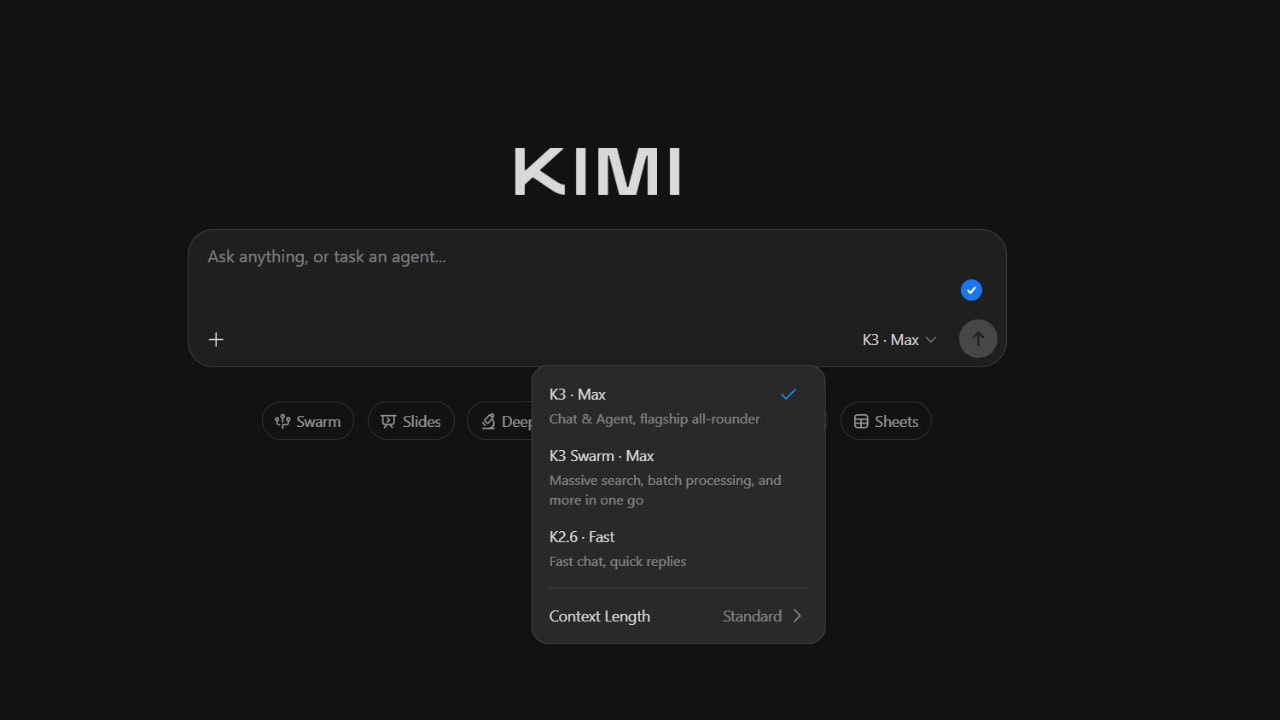
Moonshot AI's Kimi K3 model, a significant advancement in large language models, features a massive parameter count but achieves computational efficiency through sparse activation and innovative attention layers. Its release on Hugging Face, complete with a 1.56 TB dataset and infrastructure tools, presents both a powerful new AI tool and substantial deployment challenges for research…
Imagine a super-smart robot brain that can understand words and pictures, like a giant library. This new brain, called Kimi K3, is so big it takes up as much space as a thousand movies! But the clever part is that it only uses a tiny bit of its brain at a time to answer questions, making it super-fast and efficient, like a chef who only uses the ingredients needed for one dish, even if they have a huge pantry.
Analysis
Kimi K3's Architectural Innovations
Moonshot AI's Kimi K3 represents a significant leap in large language model design, particularly through its mixture-of-experts (MoE) architecture. With a staggering 2.8 trillion parameters, the model employs a sparse routing mechanism, activating only 16 out of 896 distinct experts per token. This design choice is crucial for reducing computational load, allowing the model to operate far more efficiently than its raw parameter count suggests, with only 104 billion parameters active during any given inference call. This efficiency is further bolstered by a hybrid attention system, combining 69 Kimi Delta Attention layers with 24 Gated Mixture-of-Latents layers, balancing long-range dependency tracking with computational economy. The model also boasts an impressive one-million-token context window, placing it among elite models capable of processing vast amounts of information for long-horizon reasoning tasks. Its native vision support, powered by the 401-million-parameter MoonViT-V2 encoder, makes it a truly multimodal system. Moonshot AI's application of quantization-aware training, utilizing low-precision MXFP4 weights and MXFP8 activations, further compresses the model without compromising its capabilities, contributing to a claimed 2.5 times better scaling efficiency than its predecessor, Kimi K2.
The Challenge of Deployment and Experimentation
While the release of Kimi K3's full technical specifications and model weights on Hugging Face is a boon for researchers, it also introduces substantial practical challenges. The complete repository spans an enormous 1.56 terabytes, making local experimentation a significant infrastructure hurdle. Researchers and teams aiming to finetune, further quantize, or integrate custom tools will need to allocate considerable resources for GPU memory, storage bandwidth, and accelerator interconnect capacity. This scale means that making the accessible weights practical requires solving deployment challenges that many researchers may be encountering for the first time. Beyond the core model, Moonshot AI has also provided crucial infrastructure components. These include attention kernels, Mixture-of-Experts communication protocols, and large-scale agent deployment tools. Although less "glamorous" than the base model itself, these components are vital for engineering teams looking to build robust, production-ready systems around Kimi K3. Their inclusion underscores Moonshot AI's commitment to facilitating the broader adoption and application of their advanced architecture, despite the inherent resource demands.
Implications for Global AI Development
The Kimi K3 release by Moonshot AI, a non-Western entity, signifies a growing diversification in the global AI landscape. By openly sharing its architecture and weights, Moonshot AI contributes to the broader open-source AI community, potentially accelerating innovation and fostering new applications worldwide. The emphasis on computational efficiency at frontier scale demonstrates a strategic approach to AI development that could influence future model designs, particularly in regions with varying access to high-end computing resources. For countries like Pakistan, where the tech ecosystem is rapidly evolving, such releases provide valuable blueprints and tools for local developers and researchers. While the immediate deployment of a 1.56 TB model might be resource-intensive, the underlying architectural principles and efficiency gains offer critical lessons. This transparency can help local talent understand and adapt advanced AI techniques, fostering indigenous AI capabilities and reducing reliance on proprietary Western models, ultimately contributing to digital self-reliance and innovation within the region.
Key points
- Moonshot AI released Kimi K3's technical specifications and a 1.56 TB model on Hugging Face.
- Kimi K3 is a 2.8 trillion-parameter multimodal mixture-of-experts model with a one-million-token context window.
- It uses sparse routing, activating only 104 billion parameters per inference, and a hybrid attention mechanism for efficiency.
- The model claims 2.5 times better scaling efficiency than its predecessor, Kimi K2, through architectural innovations.
- Its large size presents significant infrastructure challenges for local experimentation and deployment.
The open release of Kimi K3's architecture and weights could significantly accelerate global AI research and development, fostering innovation by providing a powerful, efficient model for experimentation. Its advanced multimodal capabilities and large context window could lead to breakthroughs in long-horizon reasoning and complex data analysis across various industries.
The immense size of the Kimi K3 model (1.56 TB) poses significant infrastructure and computational challenges, potentially limiting its practical adoption and experimentation to well-resourced institutions. Without independent scrutiny of its training recipes, the claimed efficiency gains remain unverified, and the complexity of deployment could hinder broader community engagement.