M'sian man, 23, caught with fake staff passes & stamps with Supreme Court and MHA emblems at Woodlands Checkpoint
A 23-year-old Malaysian man was caught at Woodlands Checkpoint with fake passes and stamps bearing Singapore emblems. Police say the items were believed to be meant for scams.
Intelligence analysis by GPT-5.4 Mini
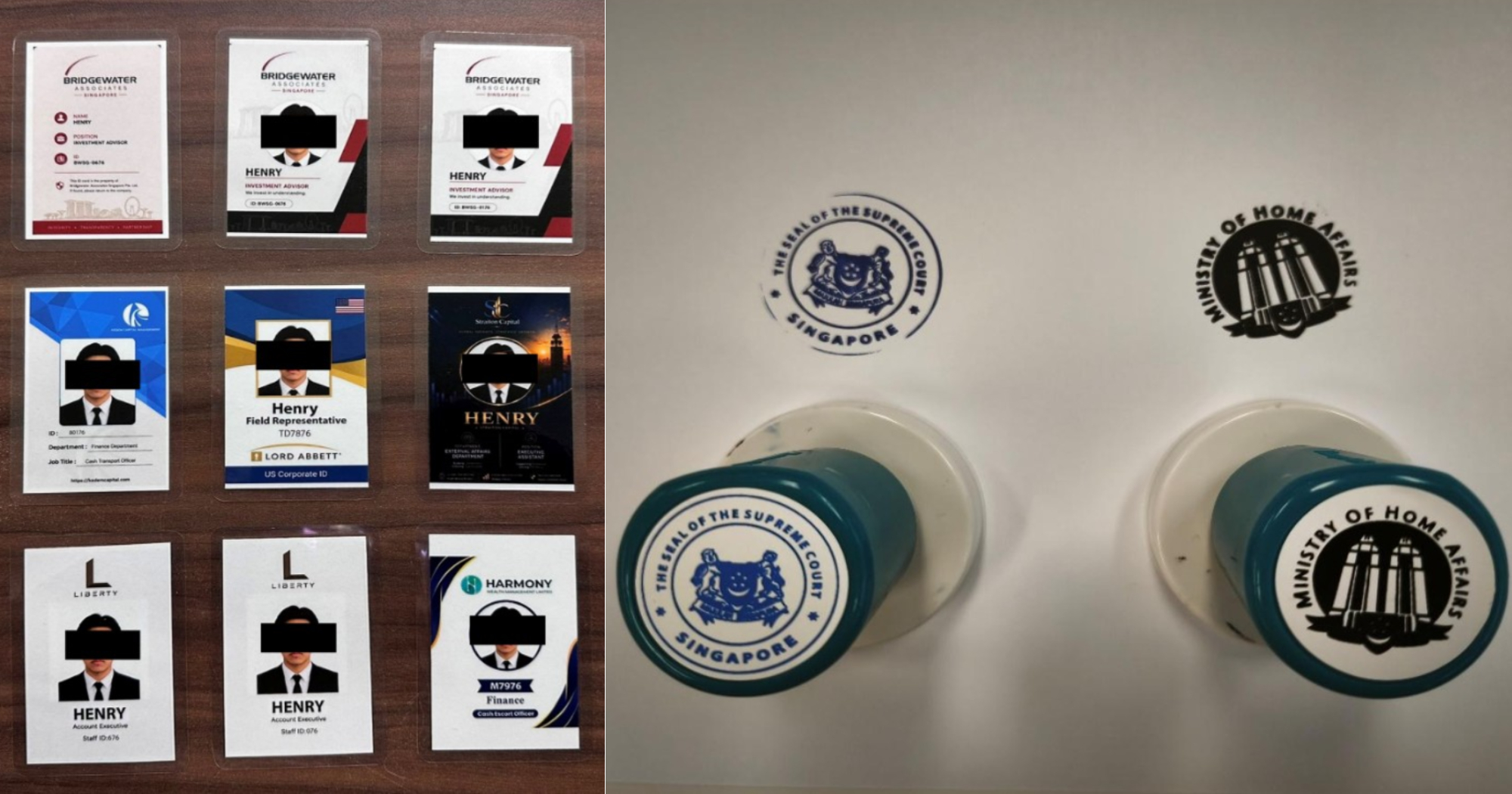
A Malaysian man was stopped at Woodlands Checkpoint after officers found fake employee passes and official-looking stamps on him. Police say such items are often used to make scams look credible.
A man was stopped at a border check because officers found fake passes and stamps that looked like they came from big government offices. It is like catching someone with fake school badges before they can trick people into opening the door.
Analysis
Woodlands Checkpoint
This case is less about one man being stopped at a border and more about how scam infrastructure can be interrupted before it gets used. Woodlands Checkpoint becomes the first line of defence here, with ICA officers directing the traveller for enhanced checks at the arrival bus hall.
That detail matters because the items found were not ordinary personal belongings. They were described as official-looking stamps and fake employee passes bearing his photograph, which suggests preparation rather than improvisation. In other words, the checkpoint search did not just catch a suspicious traveller; it exposed a toolkit built to impersonate authority.
Supreme Court
The police said the inking instruments bore the emblems of the Supreme Court and the Ministry of Home Affairs, which gives the case a sharper edge than a simple forgery charge. Using state-linked emblems is designed to borrow trust from institutions that people are conditioned to respect.
That is what makes counterfeit props so effective in scam operations. Victims are often persuaded not by a perfect story, but by a convincing visual cue, such as a stamp, badge, or pass that appears to come from somewhere official. The police statement is explicit that these are tactics commonly used to deceive victims into believing they are dealing with a legitimate organisation.
Ministry of Home Affairs
The absence of any employment history with the organisations named on the passes is important because it strips away any plausible explanation for the items. It frames the case as a deliberate possession of forged-looking instruments, not a misunderstanding about credentials.
The charge also signals that Singapore is willing to act early, before fake instruments are deployed in a broader fraud. The offence of making or possessing a counterfeit instrument with intent to commit forgery carries up to seven years in jail and a fine, which gives authorities a strong deterrent message.
The larger takeaway is that scams are becoming more professional in their props, even when the underlying operation may still be crude. As enforcement gets better at intercepting fake passes and stamps, scammers may be forced to work harder to manufacture credibility. That is a win for public trust, but only if screening, investigation, and prosecution stay equally sharp.
Key points
- A 23-year-old Malaysian man was stopped at Woodlands Checkpoint on Aug. 11.
- ICA officers directed him for enhanced checks at the arrival bus hall.
- Police said they found fake employee passes and official-looking stamps with Supreme Court and MHA emblems.
- Investigators said he had no employment history with the organisations named on the passes.
- He is set to be charged with making or possessing a counterfeit instrument with intent to commit forgery.
If the case leads to a conviction, it could discourage others from carrying fake official items for scams. It also shows that checkpoint checks can stop deception tools before they are used on the public.
If fake passes and stamps keep circulating, scammers may still find ways to look legitimate long enough to fool victims. The case also shows how easily state symbols can be copied to make fraud seem trustworthy.