New hydrocarbon reserves discovery demonstrates unstoppable nature of oil industry’
Iran has announced the discovery of new hydrocarbon reserves, including over 7,500 billion cubic feet of gas in Fars province, signaling the oil industry's continued development despite sanctions.
Intelligence analysis by Gemini 2.5 Flash
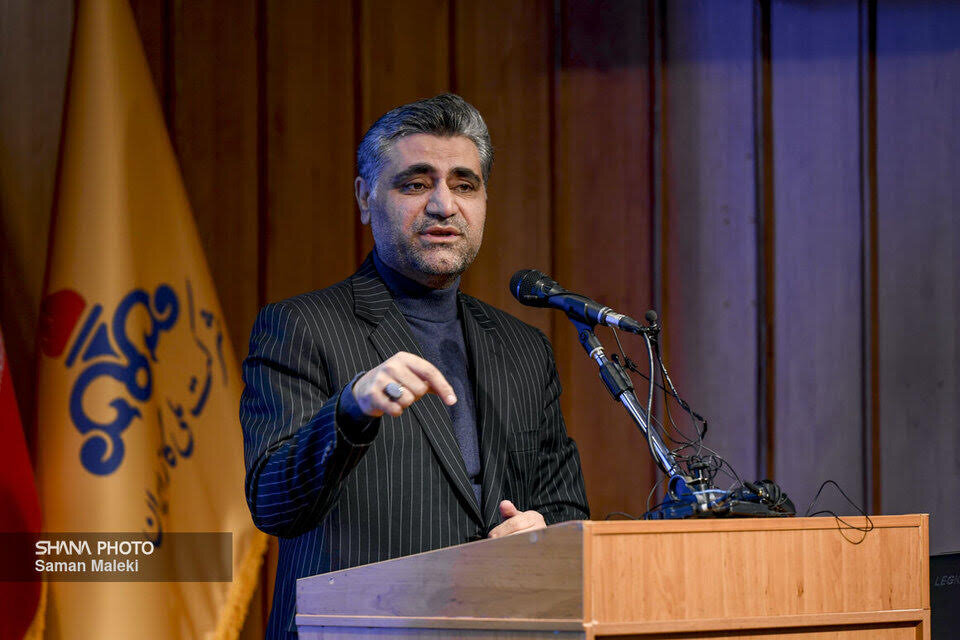
A member of Iran's Energy Committee, Mostafa Nakhaei, highlighted the recent discovery of significant gas reserves in southern Fars province as proof of the nation's oil industry's resilience. He emphasized that these findings demonstrate the industry's unstoppable progress, even amidst international sanctions and past wartime damage, positioning it as a crucial driver for Iran's broa…
Imagine Iran found a giant hidden treasure chest full of natural gas deep underground! This is super exciting because it means they have more energy to power homes and factories, even when other countries try to make it hard for them to get resources. It's like finding extra fuel for your car when you thought you were running low.
Analysis
The recent announcement of new hydrocarbon reserves in Iran underscores a persistent narrative within the country regarding its energy sector's resilience. Mostafa Nakhaei, a member of the Energy Committee of the Parliament, articulated this sentiment, emphasizing that such discoveries are a testament to the "unstoppable momentum" of the oil industry. His remarks highlight a strategic perspective that views the development of oil and gas fields as a national priority, particularly in the face of external pressures like sanctions and historical challenges such as the Iran-Iraq war.
Nakhaei's commentary frames the oil industry not merely as an energy provider but as the "driving force and locomotive of other industries." This perspective suggests that advancements in the hydrocarbon sector are expected to create a ripple effect, stimulating growth across various other economic sectors. The continuous progress, despite limitations, is presented as a significant achievement, worthy of appreciation, especially given the difficult economic conditions Iran has navigated.
Mostafa Nakhaei's Assessment
Mostafa Nakhaei, a prominent voice from the Energy Committee of the Parliament, provided a robust assessment of the recent hydrocarbon discoveries, framing them as definitive proof of the Iranian oil industry's enduring strength. He explicitly stated that the development of oil and gas fields has not ceased, even under conditions reminiscent of wartime, directly referencing the Iran-Iraq war's impact on the industry. This assertion aims to project an image of unwavering national resolve and operational capability.
Nakhaei further elaborated on the strategic importance of these findings, describing them as "good news that can create favorable conditions for the country's energy future." His analysis positions the oil and gas industry's expansion as a core national priority, essential for both energy security and broader economic stimulation. He contended that sanctions, despite their intended impact, have failed to halt the industry's forward momentum, reinforcing a narrative of self-sufficiency and defiance.
Mohsen Paknejad's Announcement
The official confirmation of the significant gas discovery came from Oil Minister Mohsen Paknejad, who made the announcement on August 22, 2026, coinciding with Iran's Government Week. This timing likely aimed to highlight governmental achievements and reinforce public confidence in the administration's economic stewardship. Paknejad's statement provided concrete figures, detailing the scale of the newly identified reserves.
The minister specified the discovery of over 7,500 billion cubic feet of gas. Crucially, he also provided an estimate for the recoverable volume, indicating that with a recovery factor of approximately 72%, around 5,700 billion cubic feet of gas could be extracted from this new field. Such detailed figures are intended to underscore the tangible economic potential and the technical viability of the discovery, offering a clear measure of its future contribution to Iran's energy portfolio.
Fars Province Discovery
The newly identified hydrocarbon reserves are located in the south of Fars province, a region that has historically been significant for Iran's energy sector. This geographical detail is important as it points to the continued exploration success within established energy-rich areas, potentially leveraging existing infrastructure or expertise. The specific location suggests a strategic expansion of known resource bases rather than venturing into entirely new, unproven territories.
The sheer volume of the discovery, particularly the 7,500 billion cubic feet of gas, represents a substantial addition to Iran's proven energy reserves. This influx of natural gas could play a pivotal role in meeting the nation's growing domestic energy demands, reducing reliance on other energy sources, and potentially freeing up existing production for export. The high recovery factor of 72% further enhances the economic viability of this particular find, indicating that a significant portion of the discovered gas can be practically extracted and utilized.
Key points
- Iran announced the discovery of new hydrocarbon reserves, including significant natural gas.
- Over 7,500 billion cubic feet of gas were found in the south of Fars province.
- Approximately 5,700 billion cubic feet of this gas is recoverable.
- The discovery demonstrates the Iranian oil industry's resilience against sanctions and difficult conditions.
- The oil industry is seen as a crucial driver for other economic sectors in Iran.
The discovery of substantial new gas reserves could significantly enhance Iran's energy independence and provide a much-needed boost to its economy. It may enable the country to meet domestic energy demands more effectively and potentially increase its capacity for energy exports, strengthening its position in global energy markets over the long term.
Despite the positive discovery, the persistent international sanctions could still impede Iran's ability to fully develop and monetize these new hydrocarbon reserves. Challenges in accessing necessary technology, foreign investment, or export markets might limit the immediate economic benefits and slow down the full realization of the discovery's potential.