Onshore windfarm applications hit 10-year high in England
Onshore windfarm applications in England have reached their highest level in a decade, following the lifting of a de facto ban by the government.
Intelligence analysis by Qwen 2.5 (3B)
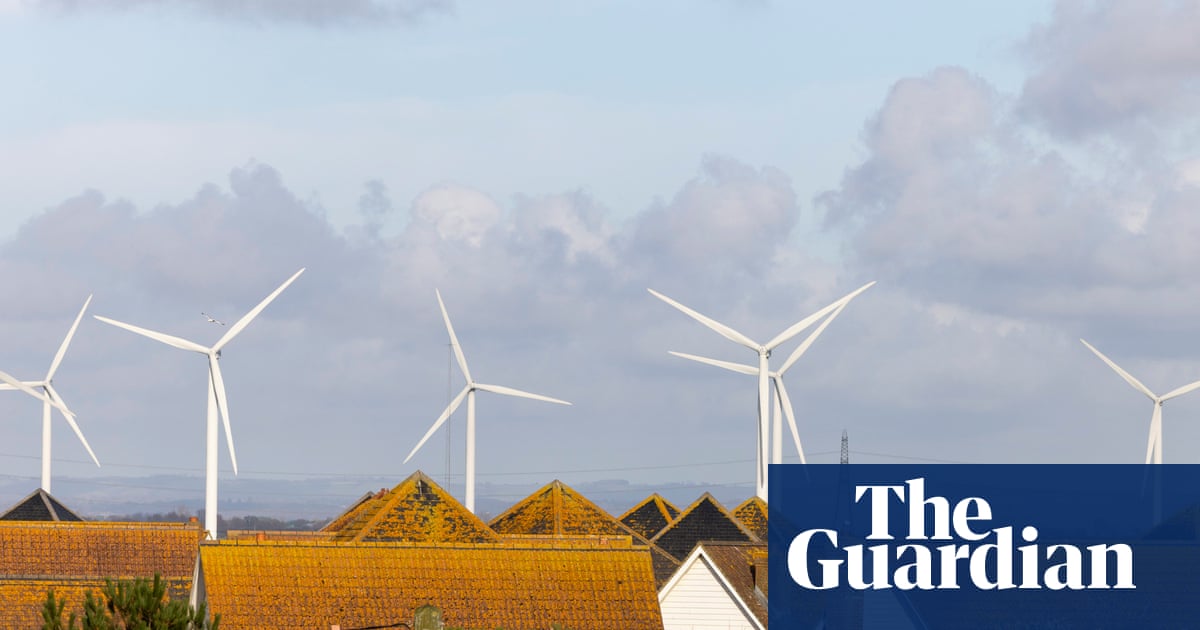
Onshore windfarms in England have seen a significant increase in applications, with about 45 plans submitted in the year to March, up from 9 megawatts per month before the ban.
The government lifted a ban on onshore windfarms in England, which led to a big increase in plans for new windfarms. This is good because it can help make energy cheaper and stronger.
Analysis
{"
Before the Ban: A Decade Period for Onshore Windfarms in England":"Before the lifting of the de facto ban, applications for onshore windfarms were averaging about 9 megawatts per month. This was a stark contrast to the period before September 2023, when applications averaged about 1 megawatt per month. The lifting of the ban has led to a significant increase in applications, with the average now at about 36 megawatts per month. This surge in applications is a positive sign for the renewable energy sector in England.","
The Government's Role in the Onshore Windfarms Revival":"The government's decision to lift the ban on onshore windfarms has been a significant factor in the revival of the sector. The government spokesperson stated that lifting the ban was a step towards strengthening energy security, growing the economy, and reducing bills for households and businesses. The government's support has been instrumental in encouraging renewable energy developers to return to England.","
The Impact of the Onshore Windfarms Revival":"The revival of the onshore windfarms sector has had a positive impact on the economy. The UK's onshore wind supply chain could add up to £56 billion to the economy by 2050 by increasing the manufacturing of high-value components such as blades, towers, and cables. Developers' life cycle spending is also predominantly spent in the UK, with about 70% of their spending taking place in the country. This highlights the significant economic benefits of the onshore windfarms revival in England."}
Key points
- Onshore windfarm applications in England have reached their highest level in a decade
- The lifting of the de facto ban by the government has led to a significant increase in applications
- The revival of the onshore windfarms sector has positive economic impacts
- The UK's onshore wind supply chain could add up to £56 billion to the economy by 2050
- Developers' life cycle spending is predominantly spent in the UK
The revival of the onshore windfarms sector can lead to more jobs and lower energy bills for people and businesses.
However, there could be challenges in implementing these windfarms, such as local opposition and environmental concerns.