Shein aims for almost $27bn valuation in stock market debut
Shein plans to raise up to HK$13.86bn in its Hong Kong IPO on 1 September, valuing the fast-fashion giant at almost $27bn — far below its 2022 $100bn private peak.
Intelligence analysis by Llama
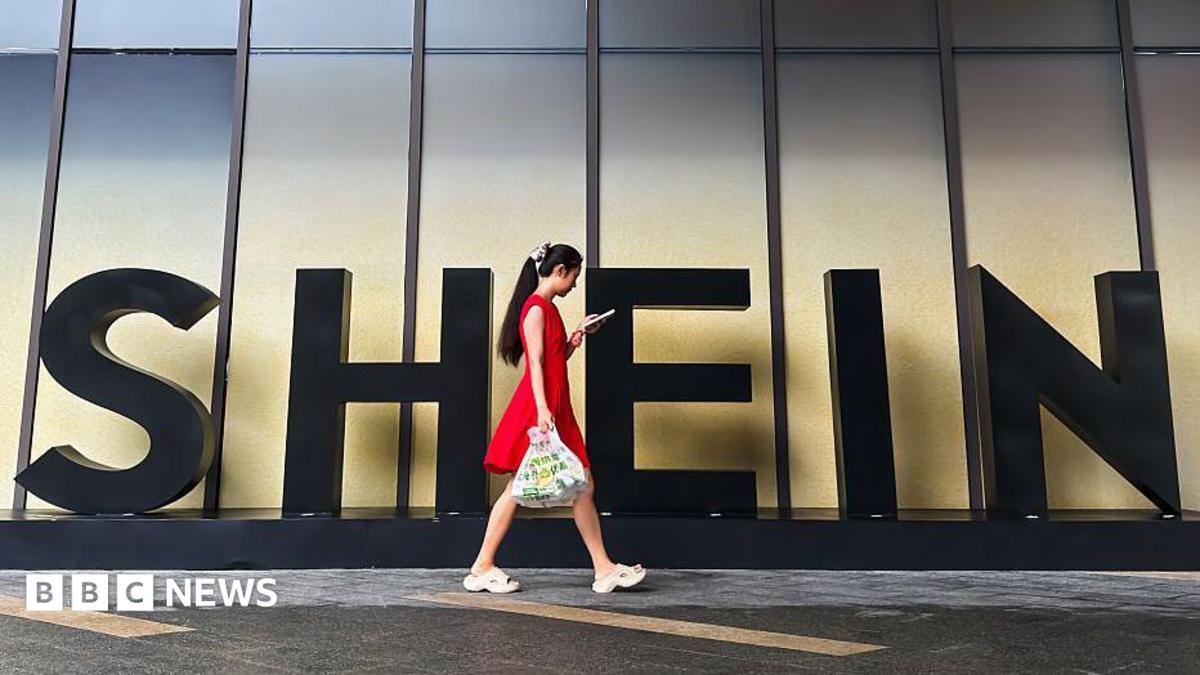
Fast-fashion giant Shein is heading to the Hong Kong stock market on 1 September, targeting a valuation of almost $27bn — a steep markdown from its 2022 private peak of $100bn. The IPO comes amid quarterly losses, US tariff pressure, and supply-chain scrutiny that sank earlier London and New York listing attempts.
Shein sells really cheap clothes online. The company wants to sell tiny pieces of itself — called shares — to investors on the Hong Kong stock market starting 1 September, each priced around $6. Despite 281 million customers worldwide, Shein recently lost money because the US started charging extra tax on packages from China.
Analysis
The $100bn-to-$27bn reset
The gap between Shein's 2022 private valuation and its targeted 2026 public valuation tells the story of a fast-fashion cycle turning harder. Private investors once pegged Shein near $100bn at the peak of the pandemic e-commerce boom; the new Hong Kong float puts a ceiling of almost $27bn on the same business. According to the company, weaker sales growth and higher costs are responsible. The first quarter of 2026 produced a $99m loss, reversing $395m of net income a year earlier, and a separate $328m paper loss from an accounting change on special investor shares deepened the optics.
The reset is not just a pricing story; it is a recognition that the economics underneath Shein's hyper-growth model have shifted. Donald Trump's removal of the US import duty exemption on small packages removed a structural subsidy that underpinned the "ultra-cheap" pitch to American shoppers. With the US-China tariff exchange still paused rather than resolved, Shein is openly planning to raise US prices to claw back margins — a move that risks further pressuring volume in its largest market.
Goldman, Morgan Stanley, and JPMorgan underwrite the Hong Kong listing
The choice of Hong Kong, backed by Goldman Sachs, Morgan Stanley, and JPMorgan, is itself a strategic signal. New York was blocked by regulatory friction, and the London Stock Exchange collapsed after Shein refused to answer questions about its supply chain. Hong Kong offers proximity to Chinese capital and a regulatory regime the company appears more comfortable navigating, even though Shein relocated its headquarters to Singapore and only retains its factory network and founding identity in China.
That dual identity — Singapore headquarters, Chinese manufacturing base — is the unresolved tension Wall Street's underwriters are signing up to sell. Investors are being asked to underwrite a consumer brand whose cost advantage depends on Chinese factories at a moment when geopolitical risk premia for China-exposed listings are unusually high. The IPO's reception will be read as a referendum on whether global capital is willing to reprice that exposure rather than shun it.
281 million active customers mask a $99m quarterly loss
The underlying scale is genuinely large. Shein closed March 2026 with 281 million active customers across more than 150 countries, up 16% year-on-year, placing more than one billion orders in the period. Revenue has long outstripped legacy fast-fashion peers H&M and Zara. Yet the quarterly loss exposes how thin that volume advantage becomes when the duty regime changes and a war in Iran, cited by Shein, disrupts deliveries and demand in adjacent markets.
Reputational headwinds compound the financial ones. Allegations of forced labour in the supply chain and concerns over environmental impact remain unresolved, and the London collapse showed regulators are willing to block listings over those questions. Shein has told the BBC it maintains "zero tolerance for forced labour", but the statement has not closed the issue. For the Hong Kong bookrunners, the bet is that scale and growth narrative still carry the day; the counter-bet is that 281 million customers cannot offset a business model whose unit economics have visibly deteriorated.
Key points
- Shein targets a valuation of almost $27bn at the top of its HK$47.60–HK$49.50 price range, a steep markdown from its 2022 private peak of $100bn.
- The Hong Kong listing on 1 September is backed by Goldman Sachs, Morgan Stanley, and JPMorgan after failed New York and London attempts.
- Shein swung to a $99m quarterly loss in Q1 2026, reversing $395m of net income a year earlier, partly due to the removal of a US small-package duty exemption.
- The company has 281 million active customers across more than 150 countries, with over one billion orders placed in the latest reporting period.
- Supply-chain scrutiny over forced-labour allegations and the company's Singapore-China corporate structure remain unresolved risks for institutional investors.
If the IPO clears the top of the range and trades well, Shein secures growth capital while validating Hong Kong as a listing venue for Chinese-origin consumer brands shut out of New York and London. The 281 million-customer base and 16% year-on-year active-user growth give the underwriters a scale narrative that few peers can match, and planned US price increases could rebuild margins without fatally damaging volume.
The $27bn ceiling is roughly a quarter of the 2022 private mark, and the company is already loss-making before factoring in the $328m paper charge. If US tariffs snap back after the current pause or the Iran conflict extends, both demand and costs deteriorate simultaneously. Forced-labour and environmental scrutiny, which sank the London listing, remains unresolved and could weigh on institutional demand.