Organic eggs have worse impact on climate than eggs from caged chickens
Organic eggs are twice as bad for the climate as eggs from chickens living in cages, research suggests. Switching the UK's entire egg production to an organic free-range model would lead to greenhouse gas emissions equivalent to 2,316,000 tonnes of CO2.
Intelligence analysis by Llama
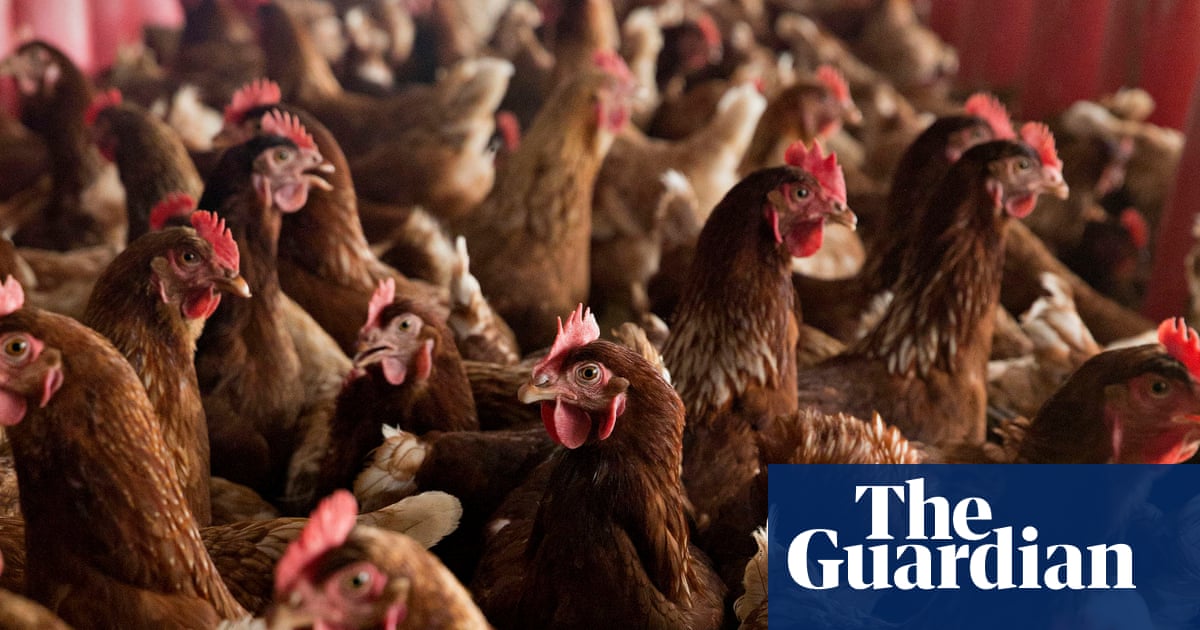
A study found that organic free-range egg production has a worse environmental impact than caged systems, due to higher greenhouse gas emissions, water eutrophication, acidification, and land use. The research also highlighted a trade-off between animal welfare and environmental impact.
Imagine you have a big farm with lots of chickens. If you let the chickens roam free, you need more of them to produce the same number of eggs. This makes the farm produce more greenhouse gas emissions, which is bad for the climate. On the other hand, keeping the chickens in cages makes them more efficient, but it's not as good for their welfare.
Analysis
A Surprising Trade-Off in Egg Production
The study's findings suggest that organic free-range egg production has a worse environmental impact than caged systems. This is due to the fact that organic free-range models require more chickens to produce the same number of eggs, leading to higher greenhouse gas emissions. The research also found that organic free-range production has a higher potential for water eutrophication, acidification, and land use.
The Welfare Conundrum
The study's authors highlight a trade-off between animal welfare and environmental impact. While organic free-range systems are generally regarded as being better for animal welfare, they can have higher environmental impacts. This raises questions about the sustainability of organic free-range egg production and the need for a more nuanced understanding of the environmental impact of different farming methods.
The Need for a More Comprehensive Approach
The study's findings highlight the need for a more comprehensive approach to understanding the environmental impact of egg production. This includes considering not only greenhouse gas emissions but also other environmental impacts such as water eutrophication, acidification, and land use. It also highlights the need for a more nuanced understanding of the trade-offs between animal welfare and environmental impact.
Key points
- Organic eggs have a worse environmental impact than eggs from caged chickens.
- Organic free-range production requires more chickens to produce the same number of eggs, leading to higher greenhouse gas emissions.
- The study highlights a trade-off between animal welfare and environmental impact.
- A more comprehensive approach is needed to understand the environmental impact of egg production.
If the egg production industry adopts more sustainable practices, such as reducing the number of chickens needed to produce eggs, it could lead to lower greenhouse gas emissions and improved animal welfare.
If the egg production industry continues to prioritize efficiency over animal welfare, it could lead to higher greenhouse gas emissions and negative impacts on the environment.