Over 80% of India’s elderly could face dangerous heat levels at 3°C global warming, says Lancet study
A new study published in The Lancet Planetary Health estimates that over 80% of India's elderly could face dangerous heat waves day and night for up to three months once global warming reaches 3°C or more. India stands out as one of the world's most vulnerable countries, …
Intelligence analysis by Llama
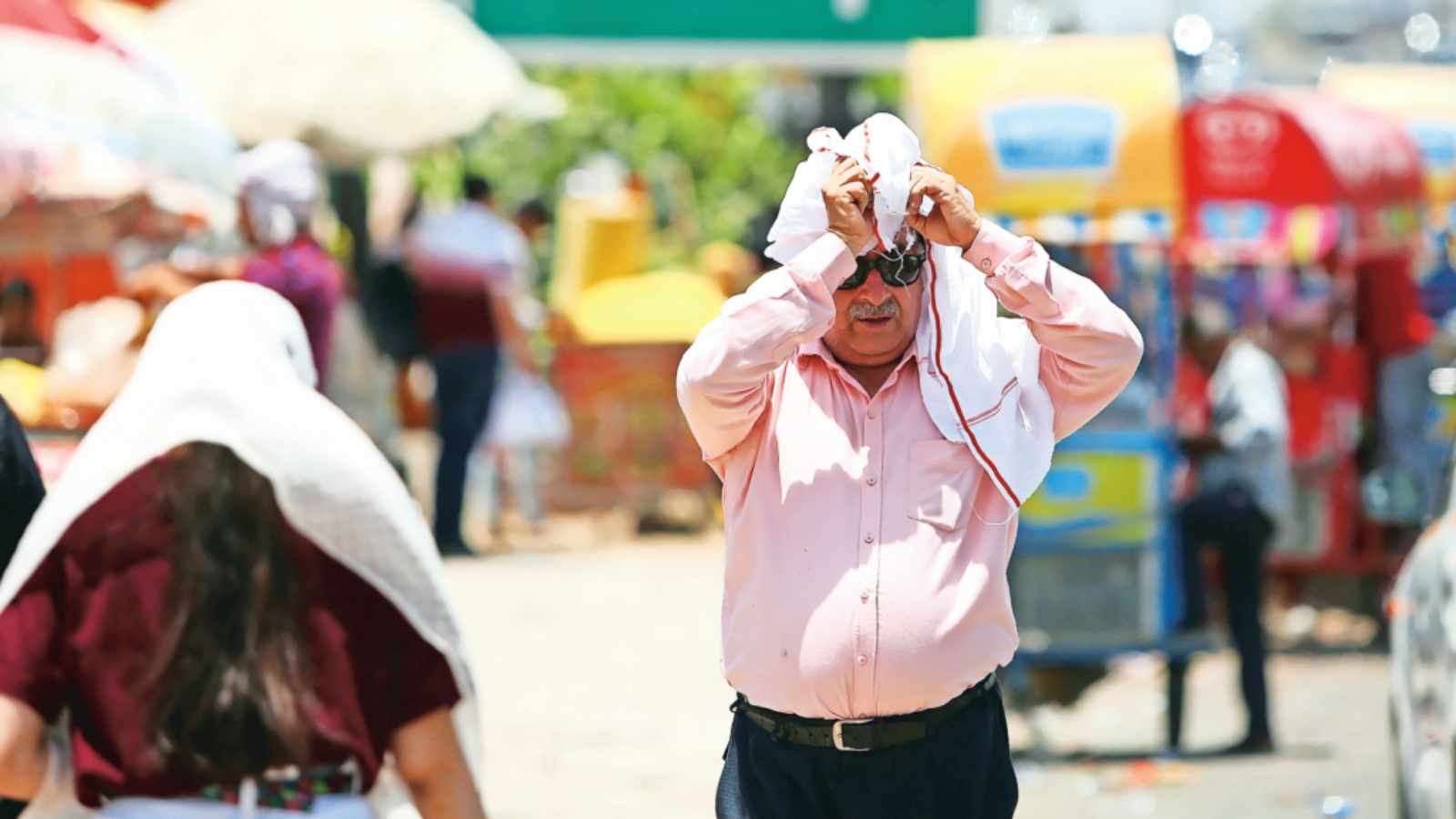
A new study published in The Lancet Planetary Health estimates that over 80% of India's elderly could face dangerous heat waves day and night for up to three months once global warming reaches 3°C or more. India stands out as one of the world's most vulnerable countries, with more than half of its population and over 80% of its older adults projected to experience at least 180 hours o…
Imagine you're working outside in the hot sun. As you get older, your body has trouble cooling down, and you might feel really uncomfortable even when it's not that hot. A new study found that older people in India and other countries might experience really bad heat for up to three months a year if the Earth gets too hot. This could be a big problem for people who work outside, like farmers, and for people who don't have air conditioning at home.
Analysis
Age-Related Vulnerability to Heat Stress
The study's findings underscore the importance of considering age-related vulnerability to heat stress. Older adults are generally less able to regulate body temperature, sweat less, and have slower blood vessel responses. As a result, earlier studies may have underestimated the number of people at risk from extreme heat by at least two-fold. The study's use of laboratory experiments to measure heat tolerance in three age groups— younger adults (15–39), middle-aged adults (40–59), and older adults (60 and above)—provides a more accurate representation of heat-related risks.
Regional Vulnerability
The study highlights the regional vulnerability of South Asia, particularly India, Pakistan, Bangladesh, and Myanmar. These countries combine large population exposure and high poverty rates, which limit their capacity to adapt to heat stress. The study's findings should be treated as a grave public health warning, emphasizing the need for heat action plans to account for age-related vulnerability, temperature and humidity, duration of exposure, night temperatures, and local demographics.
Implications for Outdoor Work
The study's findings have significant implications for outdoor work in India. In the Indo-Gangetic Plain, the period of greatest heat exposure coincides with the peak agricultural season, when many workers are engaged in outdoor activities. The study's estimates of heat-related risks should inform the development of heat action plans and heat-health early warning systems, which should account for age-related vulnerability, temperature and humidity, duration of exposure, night temperatures, and local demographics.
Key points
- A new study published in The Lancet Planetary Health estimates that over 80% of India's elderly could face dangerous heat waves day and night for up to three months once global warming reaches 3°C or more.
- India stands out as one of the world's most vulnerable countries, with more than half of its population and over 80% of its older adults projected to experience at least 180 hours of intolerable heat a year at 3°C of warming.
- The study defines 'intolerable heat' as at least 180 hours of dangerous heat annually, assuming roughly six hours of such exposure per day.
- Young adults would not face a similar level of risk until 4°C of warming, when 17%—about 490 million people—would be affected.
If the world can reduce greenhouse gas emissions and limit global warming to 1.5°C, the number of people at risk from extreme heat could be significantly reduced. This would give countries like India more time to develop heat action plans and heat-health early warning systems, which could help protect vulnerable populations from heat-related risks.
If global warming continues to rise, the number of people at risk from extreme heat could increase exponentially. This would put enormous pressure on access to cooling, electricity, health services, and heat-response programs, particularly in countries like India, where the elderly population is projected to experience extreme heat for extended periods.