Picture book about hair and belonging: Curls just the way I like them
A review of Catherine Adufe Folawiyo's children's picture book 'Der Haarkunstshop – Einmal glatte Haare, bitte!', which tells the story of a girl named Lara whose curly hair is mocked by classmates, and who then discovers the cultural history of Black hairstyles.
Intelligence analysis by Llama
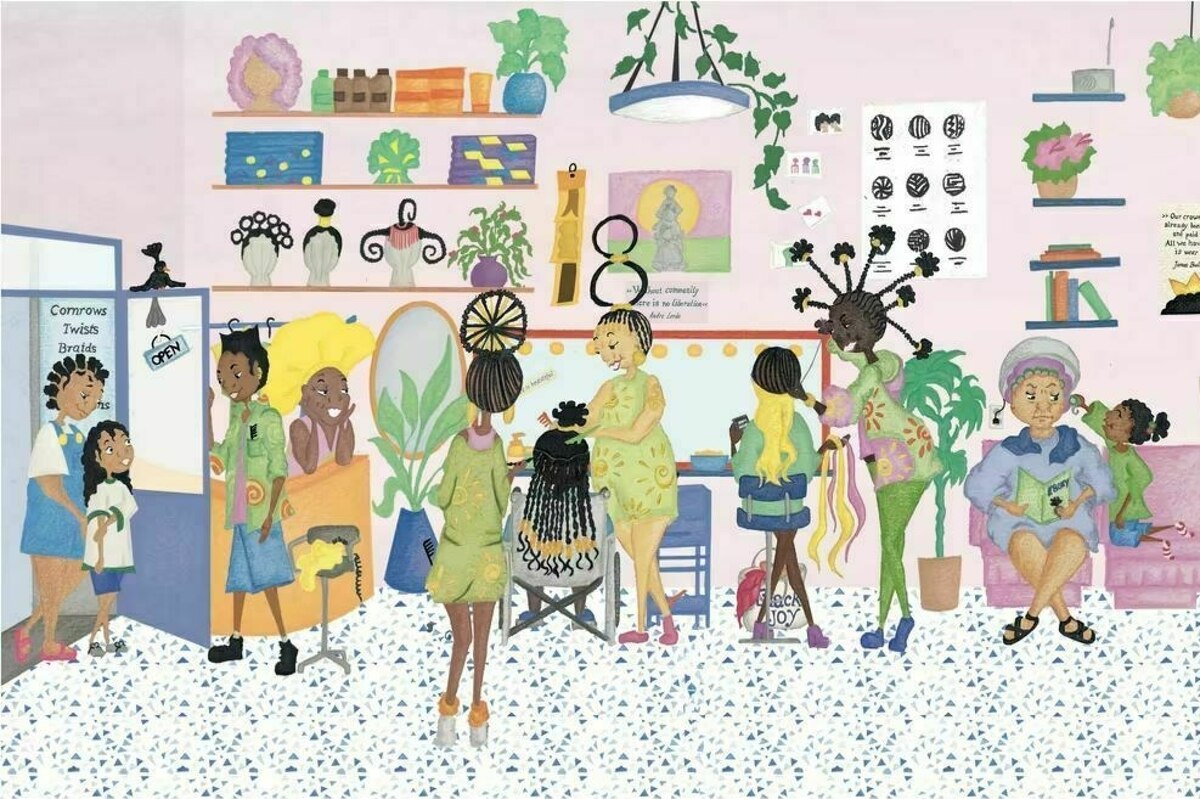
taz reviews Catherine Adufe Folawiyo's picture book about a girl mocked for her curls, who learns the rich history behind braids, beads, and cornrows. The review frames the book as a timely tool for fostering belonging in a Germany where right-wing forces are growing.
A new picture book tells the story of Lara, a girl whose curly hair gets laughed at by a classmate. At a special hair shop, she meets a kind hairdresser who teaches her that braids, beads, and cornrows have a rich history and were even used to send secret messages during slavery. It is a book that helps kids feel proud of who they are.
Analysis
Der Haarkunstshop and Laras gelbes Haarband
The narrative engine of Catherine Adufe Folawiyo's picture book is a small, charged object: a bright yellow hairband that Lara's mother gives her. For a brief moment, the gift transforms how the girl sees herself — she is radiant, proud, ready for class-photo day. That glow is extinguished by a classmate's public comment that her bushy curls hide her face and that she does not fit in. The scene, rendered by Folawiyo in closely observed, playful illustrations, crystallises a feeling the review calls both painful and universal: exclusion. The yellow hairband ends up in the wastebasket when Lara returns home, and she begins an almost violent campaign against her own hair — brushing, oiling, even reaching for an iron. The book reads, according to taz, as a sympathetic invitation to understand why children internalise such rejection and how the knowledge of tradition can be restorative.
Catherine Adufe Folawiyo and the Orlanda Verlag
Folawiyo, who wrote and illustrated the book, is published by Orlanda Verlag in Leipzig, a house with a long track record of feminist and post-migrant German literature. The 44-page, 21-euro volume situates its fictional hair salon — the Haarkunstshop — as a kind of classroom, where Lara meets an empathetic hairdresser who walks her through beads, braids, weaves, and cornrows, and explains how silk scarves and long-toothed Afro combs can both style and protect textured hair. The review praises the way the book embeds micro-quotes from important Black figures directly into the drawings, layering personal narrative with collective memory. By publishing a children's book that treats Black hair history as a subject worth teaching rather than a problem to be corrected, Orlanda and Folawiyo are intervening in a German children's literature market that has long lacked such representations, the review implies.
Cornrows, Versklavung and the AfD backdrop
The book does not shy away from the harder chapters of that history. The review notes that Folawiyo uses the hairdresser character to explain how, during the era of enslavement, cornrows served as a covert communication system for escape routes. The patterns of cornrows themselves could signal status, group belonging, or even age — knowledge that is largely absent from mainstream German education. The taz review explicitly ties this educational mission to the political present, pointing to the AfD's threatening success in upcoming state elections and arguing that solidarity and cohesion are needed now more than ever. The juxtaposition is deliberate: a picture book that teaches children to marvel at cultural inheritance is offered as a quiet counterweight to a political climate in which belonging is being increasingly policed. Whether a single children's volume can shift that climate is left open, but the review insists that the act of representation itself matters.
Key points
- Catherine Adufe Folawiyo's 'Der Haarkunstshop – Einmal glatte Haare, bitte!' is a 44-page, 21-euro picture book published by Orlanda Verlag in Leipzig in 2026
- The story follows Lara, a girl mocked by a classmate for her curls, who discovers the cultural history of Black hairstyles including beads, braids, weaves, and cornrows
- The book explains how cornrows were historically used to signal status, group belonging, age, and even to communicate escape routes during enslavement
- taz frames the book as a timely intervention given the AfD's expected success in upcoming German state elections and the need for solidarity and cohesion
- Illustrations are accompanied by quotes from important Black figures woven into the drawings
Books like Folawiyo's could help shape a generation of German children more fluent in the histories and aesthetics of their Black classmates, making exclusionary comments like the one Lara experiences less common. The taz framing positions the book as a small but meaningful contribution to a broader civic culture of solidarity at a moment when such resources are scarce.
The review itself flags the risk: with the AfD poised for success in upcoming state elections, right-wing forces in Germany are strong enough to marginalise the very children such books aim to support. A single picture book, however well-made, is unlikely to offset a wider political climate in which belonging is increasingly contested.