Qalibaf: Unity key to defeating the ‘enemy’
Parliament Speaker Mohammad Baqer Qalibaf emphasized that national unity is essential for Iran to achieve victory against the United States and Israel, echoing similar statements from other high-ranking officials.
Intelligence analysis by Gemini 2.5 Flash
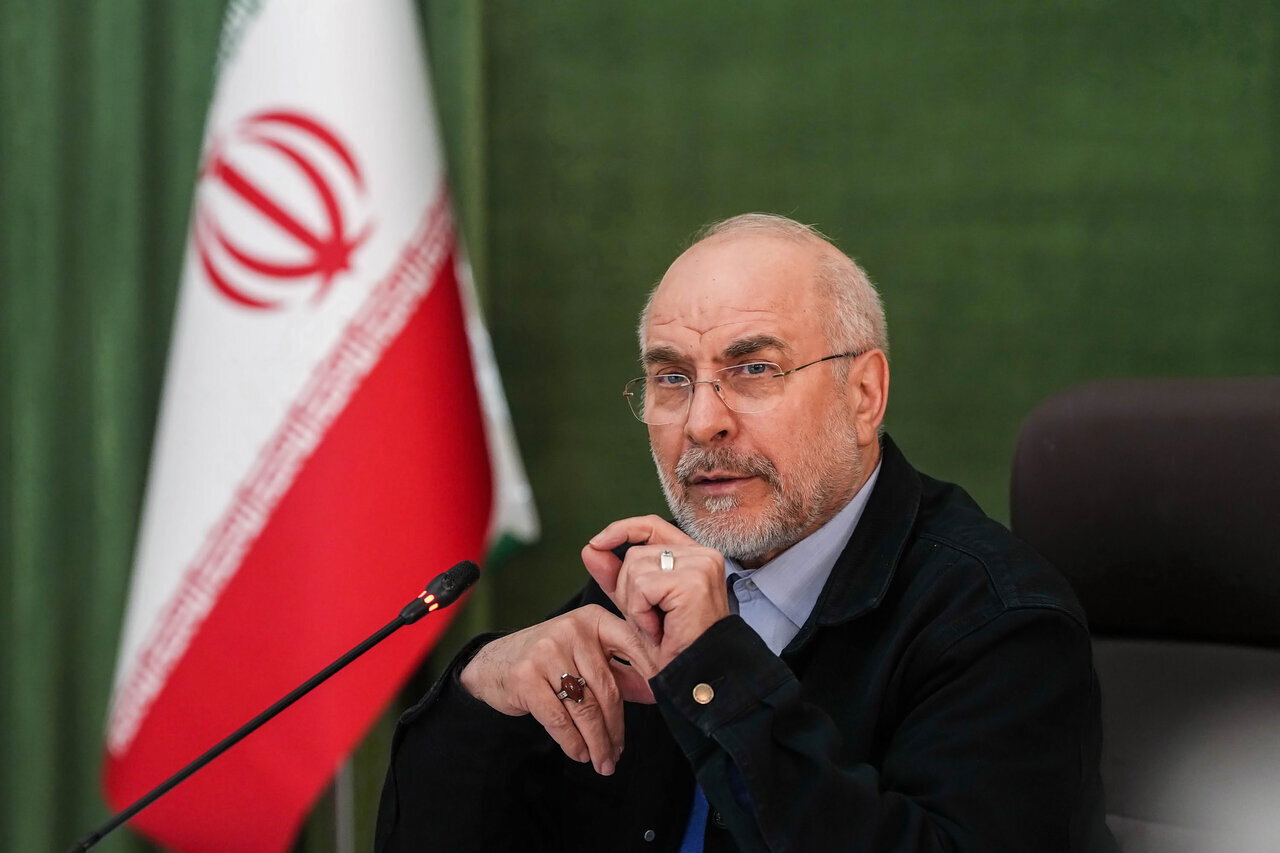
Iranian leaders, including Parliament Speaker Qalibaf, President Pezeshkian, and the Leader of the Islamic Revolution, are strongly advocating for national unity as a critical strategy to counter perceived foreign aggression. They explicitly reject U.S. claims of internal divisions within Iran, framing them as baseless attempts to sow discord and weaken the country's resolve.
Imagine a big team, like a soccer team, where the coach, captain, and star players all agree that the most important thing is for everyone to work together to win the game. Some people on the other team are trying to say that this team is actually fighting amongst themselves and isn't strong. But the team leaders are saying, 'No way! We are all united, and sticking together is how we will beat our opponents!' They believe that when others try to cause trouble, it just makes their team even stronger.
Analysis
The Unifying Message from Tehran's Leadership
Parliament Speaker Mohammad Baqer Qalibaf's recent statement underscores a consistent theme within Iran's political discourse: the paramount importance of national unity. Qalibaf, in a message published on X, declared that "Upholding sacred unity is not simply a moral or social recommendation—it is an indispensable condition for achieving victory in the struggle against the enemy." This sentiment is not isolated but is presented as a collective directive, aligning with a message from the Leader of the Islamic Revolution, Ayatollah Seyyed Mojtaba Khamenei, and reinforced by President Masoud Pezeshkian.
Pezeshkian, on Saturday, similarly affirmed that internal cohesion forms the "bedrock of the country's governance and its historic resistance against arrogant global powers." This synchronized messaging from the presidency, parliament, and judiciary is portrayed as evidence that the Islamic Republic operates as a "single, unyielding front." Such unified declarations aim to project an image of strength and resolve, both internally to the Iranian populace and externally to international observers.
Countering External Narratives of Division
The Iranian leadership's emphasis on unity directly confronts claims made by figures like former U.S. President Donald Trump, who alleged "internal fractures, confusion, and deep divisions" among Iranian officials and within society. Trump's assertions, which posited extreme infighting between "hardliners" and "moderates," are dismissed by Iran as "groundless claims" used to rationalize U.S. foreign policy failures in the region. Iranian officials contend that these terms are "foreign constructs absent from the vocabulary of the Islamic Revolution."
From Tehran's perspective, these U.S. narratives are a "desperate, transparent attempt by the global arrogance to sow discord where none exists." The article argues that by fabricating an image of internal collapse, the United States seeks to undermine the "resolve of the Axis of Resistance" and manipulate international public opinion. The Iranian response highlights that, despite minor procedural debates inherent in any robust governance, all institutions and societal segments remain unified under the Leader's strategic guidance.
Implications for Iran's Geopolitical Stance
The article posits that foreign aggression, including "illegal blockades and military provocations," has historically had the counterintuitive effect of solidifying national identity and resolve among the Iranian people, rather than fracturing society. This suggests that external pressure is viewed not as a weakness but as a catalyst for greater internal cohesion, reinforcing a collective sense of purpose against perceived adversaries like the U.S. and Israel.
The unified front presented by Iran's military and political officials is intended to convey a clear message: the nation's defensive capabilities and diplomatic levers are firmly aligned. This alignment, according to the article, ensures that "any miscalculation by the American-Israeli apparatus will result in definitive failure on the battlefield." This strong rhetoric underscores Iran's determination to resist external pressures and maintain its strategic autonomy, framing national unity as the ultimate guarantor of its security and success in regional and international arenas.
Key points
- Parliament Speaker Mohammad Baqer Qalibaf stressed national unity as vital for Iran's victory against the U.S. and Israel.
- His remarks align with messages from the Leader of the Islamic Revolution and President Masoud Pezeshkian, demonstrating a unified leadership stance.
- Iranian officials reject U.S. claims of internal divisions as baseless attempts to sow discord and weaken the country.
- They assert that foreign aggression historically strengthens national identity and resolve among the Iranian people.
- The Islamic Republic's leadership presents a single, unyielding front across its institutions, aligning defensive and diplomatic capabilities.
If the emphasized national unity genuinely holds and strengthens, Iran could present a more formidable and resilient front against external pressures, potentially deterring adversaries and fostering greater internal stability. This cohesion might enable more effective navigation of international challenges and bolster national confidence in its strategic direction.
Despite official rhetoric, if underlying societal or political divisions exist, the strong emphasis on unity could mask deeper fragilities, potentially leading to internal dissent or ineffective governance in the long run. An overly rigid stance on unity might also stifle necessary internal debate or reform, hindering the country's adaptability to evolving challenges.