Queen Camilla visits shelter supporting abuse survivors
Queen Camilla visited a shelter in Norfolk, UK, to meet staff and survivors of domestic abuse and homelessness, continuing her long-standing advocacy for vulnerable women and families.
Intelligence analysis by Gemini 2.5 Flash
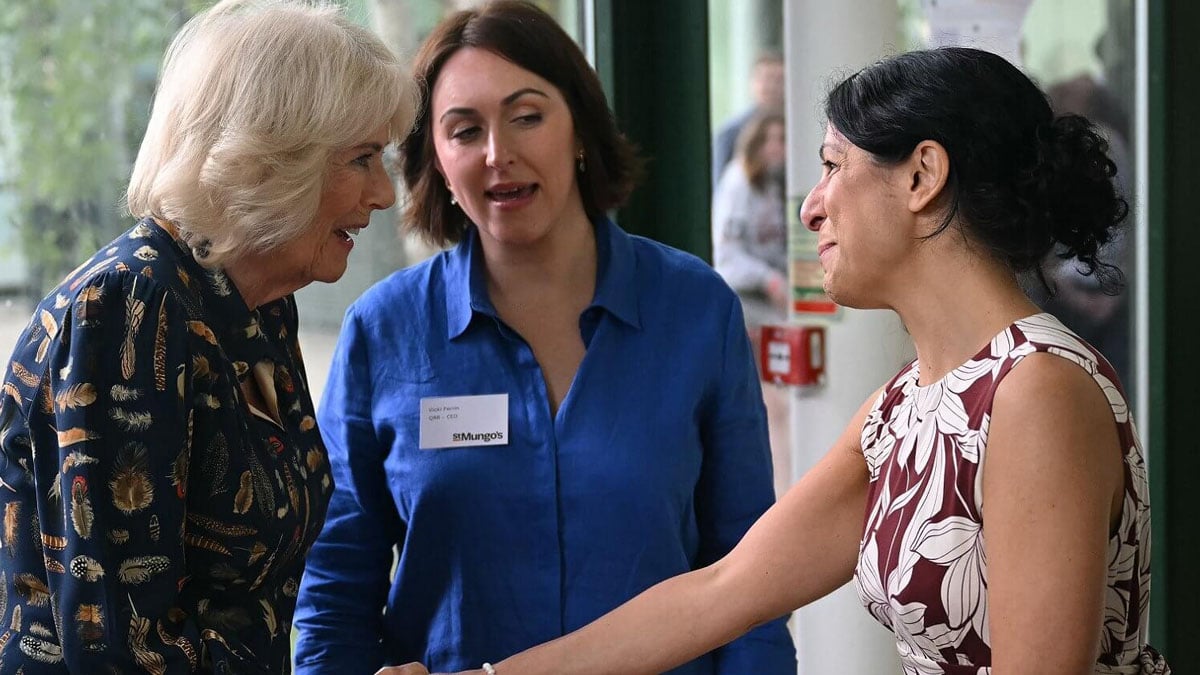
The Queen's visit highlighted the critical link between domestic abuse and homelessness, emphasizing the need for safe refuge and support services for survivors. She spoke privately with individuals, acknowledging their journeys and the tireless work of frontline staff who provide essential aid.
Imagine a queen visiting a special house where people who have been hurt at home can go to be safe. She wants everyone to know that it's not okay for people to be mean to each other, and that if someone is in trouble, there are helpers who can give them a safe place to live and start fresh, just like a superhero helping someone find a new, happy home.
Analysis
Royal Advocacy for Vulnerable Women
Queen Camilla's recent visit to a shelter in Norfolk, supporting survivors of domestic abuse and homelessness, marks a continuation of her dedicated public work over the past decade. Her Majesty has consistently focused on preventing domestic abuse and aiding survivor recovery, making this a central theme in her engagements. By meeting privately with survivors and listening to their personal stories of escaping violence, finding secure housing, and rebuilding their lives, the Queen provides a powerful platform for these often-silenced voices. Her message, "To every survivor of every kind of violence… please know that you are not alone," resonates deeply, aiming to strip away the shame and stigma associated with domestic abuse.
This royal engagement also serves to acknowledge the crucial role of frontline staff, whom the Queen described as 'lifelines'. These individuals work tirelessly, day and night, to provide support, advice, and safe refuge during moments of intense crisis and despair. The Queen's consistent engagement with organizations like SafeLives and Refuge, as well as regional community shelters, demonstrates a sustained commitment to understanding the complexities of the issue and advocating for tangible change.
The Intertwined Crises of Abuse and Homelessness
The article explicitly highlights the "crucial link between domestic abuse and homelessness," a theme central to the Queen's advocacy. Charities in the UK emphasize that a significant portion of women's homelessness experiences begin with fleeing coercive control, physical violence, or financial abuse. This stark reality forces many individuals to make an impossible choice: remain in an abusive environment or leave with no safe place to go. The lack of adequate emergency refuge provision exacerbates this crisis, leaving vulnerable individuals, often with children, without immediate protection.
The statistics cited, such as nearly 4,000 incidents of street homelessness or housing instability among women in the UK last year directly resulting from escaping domestic abuse, underscore the severity of this societal problem. This connection between violence in the home and subsequent housing insecurity is a critical area for policy intervention and community support. The Queen's visit brings this often-overlooked consequence of domestic abuse into sharper public focus, advocating for greater resources and systemic solutions to ensure survivors have a safe pathway to recovery and independence.
Global Relevance and Local Action
While the Queen's visit took place in the UK, the issues it addresses—domestic abuse, homelessness, and the need for robust support systems—are globally relevant. In many countries, including Pakistan, women and families face similar, if not more pronounced, challenges in escaping abusive situations and finding safe havens. The cultural stigma surrounding domestic violence, coupled with limited resources and societal structures, often leaves survivors isolated and vulnerable. The Queen's efforts to raise public awareness, lobby for more funding for refuge facilities, and bring the issue to the forefront of public policy discussions offer a model for advocacy that can be adapted and pursued in diverse contexts.
The call for local communities to 'reach in' and help identify anyone experiencing domestic abuse is particularly vital. This community-level engagement is essential for early intervention and ensuring that individuals at risk receive timely support. By highlighting the dedication of frontline staff and the importance of safe refuge, the Queen's visit implicitly advocates for a universal commitment to protecting vulnerable populations. The story serves as a reminder that addressing domestic abuse requires a multi-faceted approach, encompassing royal patronage, governmental policy, charitable work, and active community participation, all of which are critical for fostering safer societies worldwide.
Key points
- Queen Camilla visited a shelter in Norfolk, UK, supporting survivors of domestic abuse and homelessness.
- Her Majesty's visit continues her decade-long focus on preventing domestic abuse and aiding survivor recovery.
- The Queen spoke privately with survivors and acknowledged the tireless work of frontline staff.
- The article highlights the critical link between domestic abuse and homelessness, noting that many women's homelessness experiences begin with fleeing violence.
- The Queen's engagements aim to strip away stigma, raise public awareness, and lobby for more funding for refuge facilities.
Queen Camilla's continued advocacy could lead to increased public awareness and reduced stigma surrounding domestic abuse, encouraging more survivors to seek help. Her efforts may also galvanize greater funding and policy support for shelters and services, ensuring more safe havens are available for those fleeing violence.
Despite royal attention, the persistent lack of emergency refuge provision and societal stigma could continue to leave many survivors without safe options. Without sustained political will and community engagement, the crucial link between domestic abuse and homelessness may remain an under-addressed crisis.