Relentless strikes until peace returns to the southern coast
The United States has launched airstrikes inside Iran in violation of an interim agreement, prompting a strong military response from Iranian armed forces. The US attacks have killed 38 civilians and injured over 400, with Iran declaring the Strait of Hormuz closed until …
Intelligence analysis by Llama

Iranian armed forces have delivered a strong military response to US airstrikes, targeting American military bases and assets across the Persian Gulf region and wider West Asia. The US attacks have killed 38 civilians and injured over 400, with Iran declaring the Strait of Hormuz closed until further notice.
Imagine a big country, Iran, that's being attacked by a smaller country, the US. Iran is fighting back, trying to protect its people and its important places. The US is trying to hurt Iran's economy and its people, but Iran is not going to let that happen. This is a very serious situation, and it could get even worse if the US and Iran don't stop fighting.
Analysis
A $60B Vote of Confidence
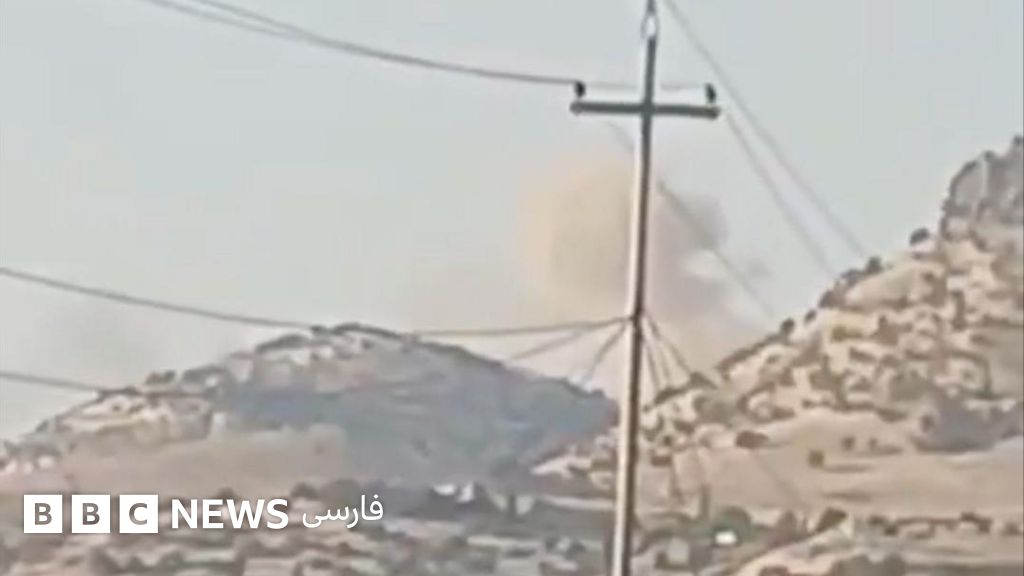
The recent US airstrikes on Iranian civilian infrastructure have sparked a strong military response from Iranian armed forces, with the IRGC unleashing heavy retaliatory salvos of ballistic missiles and combat drones against American military installations and equipment across Bahrain, Kuwait, Syria, and Oman. The US attacks have killed 38 civilians and injured over 400, with Iran declaring the Strait of Hormuz closed until further notice. This escalation directly follows threats by President Donald Trump to target Iran's critical civilian infrastructure, including transportation networks and power grids. The maritime control tower in Chabahar was struck for the third time by US warplanes on Friday morning, causing its complete collapse. Chabahar holds immense strategic significance as Iran's only deep-water port with direct access to the Arabian Sea and the Indian Ocean, bypassing the Strait of Hormuz entirely. This gateway serves as a critical alternative trade route for Iran, gaining further significance as the US attempts to reimpose a naval blockade on Iranian ports.
Why Cursor?
The US military has relocated the forward headquarters of US Central Command (CENTCOM) forces from Qatar to Al Azraq Air Base in Jordan following Iran's high-precision strike on Al Udeid Air Base last year. The IRGC stated that the Al Azraq base hosts dozens of US aerial refueling aircraft alongside F-35, F-15, and F-16 fighter jets utilized to launch hostile operations against Iran. According to the statement, US forces utilized these Jordanian assets on Thursday night to strike civilian targets in Bandar Abbas, including bridges, residential neighborhoods, and a water pumping station. In retaliation, the IRGC launched the 14th wave of Operation Nasr 2, firing multiple ballistic missiles and numerous drones at the US aircraft assets in Jordan.
The Road Ahead
The escalating conflict between the US and Iran has significant implications for regional and global security, with the potential for further destabilization and humanitarian crises. The US attacks have killed 38 civilians and injured over 400, with Iran declaring the Strait of Hormuz closed until further notice. The IRGC has vowed to continue its military response until peace returns to the southern coast, with the US and Iran engaging in a high-stakes game of military brinksmanship.
Key points
- The US has launched airstrikes inside Iran in violation of an interim agreement.
- Iranian armed forces have delivered a strong military response to US airstrikes.
- The US attacks have killed 38 civilians and injured over 400.
- Iran has declared the Strait of Hormuz closed until further notice.
- The IRGC has vowed to continue its military response until peace returns to the southern coast.
If the US and Iran can come to a peaceful agreement, the conflict could be resolved without further bloodshed. This would allow for the reopening of the Strait of Hormuz and the resumption of trade and economic activity in the region.
The conflict between the US and Iran could escalate further, leading to more civilian casualties and economic damage. The US could continue to target Iranian civilian infrastructure, and Iran could retaliate with more military strikes.