Samsung’s Smartphone Business Expected to Suffer Its First Loss Ever
Samsung's mobile division is projected to report its first-ever operating loss in Q2 2026, despite the company's overall record profit driven by its booming semiconductor business.
Intelligence analysis by Gemini 2.5 Flash
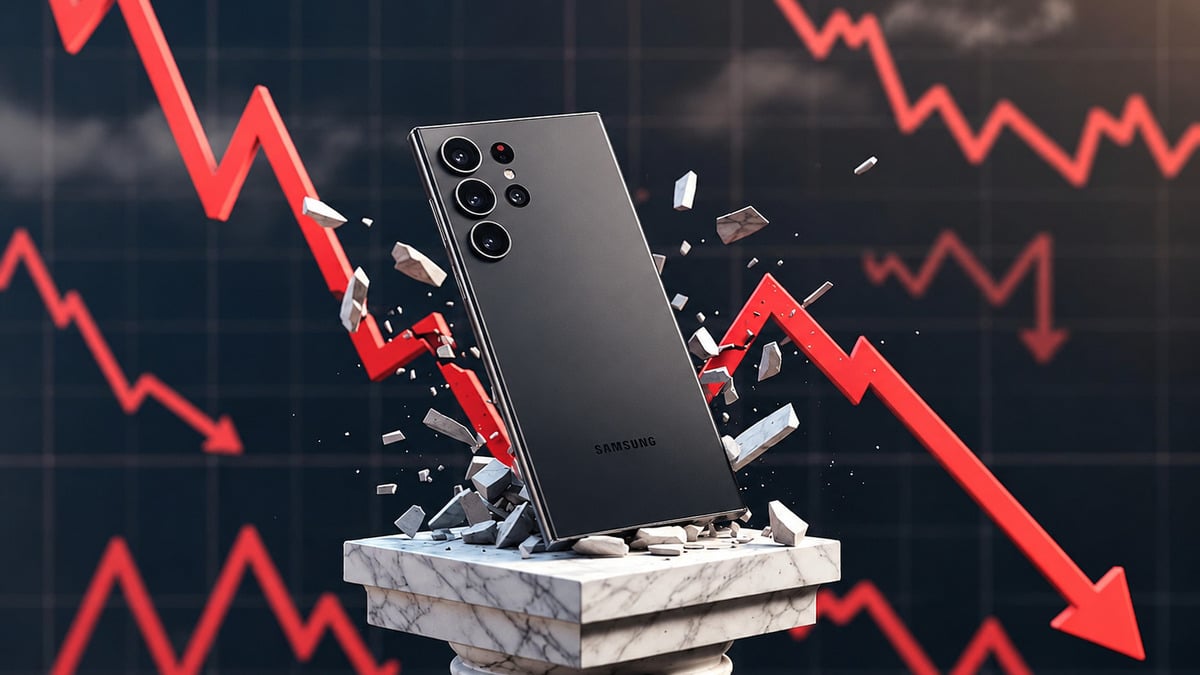
While Samsung Electronics is poised for record overall profits in Q2 2026, largely due to surging demand and prices for memory chips, its mobile (MX) division faces a starkly different outlook. Analysts predict the MX division could report an operating loss of $364 million to $729 million, a historic first, as the very same high memory chip prices that benefit its semiconductor arm ar…
Imagine Samsung is like a big company that makes two main things: super-smart computer brains (chips) and cool toy phones. Right now, everyone wants the super-smart brains, so they're selling for a lot of money, making the company rich overall. But the tiny memory parts needed to build the toy phones have also become super expensive because everyone wants them for the computer brains. So, even though lots of kids are buying the new toy phones, it costs so much to make them that the toy phone part of the company might actually lose money for the very first time, which is a bigger problem than when one of their toys had a battery issue years ago!
Analysis
The Paradox of Profit and Loss
Samsung Electronics is navigating a peculiar financial landscape in Q2 2026, where its overall corporate performance is expected to be stellar, yet a key division faces unprecedented headwinds. The company is projected to report a record operating profit of KRW 89.4 trillion (approximately $58.44 billion), a nineteen-fold increase year-over-year, with revenue also anticipated to climb to KRW 171 trillion. This robust growth is almost entirely attributed to its semiconductor business, which is benefiting immensely from a sharp rise in memory chip prices, particularly DRAM and NAND, fueled by escalating AI demand.
However, this very boom in memory chip prices is creating a significant drag on Samsung's mobile (MX) division. The MX division, which relies heavily on these components for its smartphones, is seeing its production costs soar. This creates a paradoxical situation where one part of the conglomerate thrives due to market conditions that simultaneously cripple another, highlighting the complex interdependencies within a diversified tech giant's operations.
Unprecedented Cost Pressures
Analysts from DealSite South Korea and Sammy Fans indicate that the MX division could report an operating loss ranging from KRW 1.9 trillion profit to a KRW 1.5 trillion loss, with the most likely estimate pointing to a loss of $364 million to $729 million. This potential loss is particularly striking given that Samsung's flagship Galaxy S26 series has reportedly performed strongly in sales. However, the increased cost of components, with DRAM's share of premium smartphone component costs rising from 14 percent to 23 percent in a year, is proving too substantial for even robust sales figures to offset.
Samsung had previously acknowledged these cost pressures in its Q1 2026 results, stating that its mobile business would pursue efficiency measures to mitigate the impact of rising expenses. Despite these efforts, the Q2 projections suggest that the full brunt of higher component costs has now been reflected, severely weakening the MX division's profitability and pushing it into a precarious financial position.
A Historic Setback for Mobile
The prospect of an operating loss for Samsung's mobile division marks a historic and deeply concerning milestone for the company. Even during the infamous Galaxy Note7 battery crisis in 2016, which led to a massive recall and significant reputational damage, the mobile division managed to maintain a small operating profit. At that time, the IT and Mobile Communications division's operating profit dropped by nearly 98 percent but did not dip into negative territory.
This comparison underscores the severity of the current situation. A potential Q2 2026 loss would imply that the inflationary pressures on component costs are creating a financial strain even greater than one of Samsung's most significant product crises. It suggests a fundamental challenge to the division's business model, where the cost of essential components has become an overwhelming factor, potentially forcing Samsung to re-evaluate its supply chain strategies, pricing, or product development in the long term.
Key points
- Samsung's mobile (MX) division is projected to report its first-ever operating loss in Q2 2026, estimated between $364 million and $729 million.
- This potential loss occurs despite Samsung Electronics expecting record overall profits, driven by its booming semiconductor business due to high memory chip demand.
- Rising costs for DRAM and NAND flash storage, essential components for smartphones, are significantly increasing production expenses for the MX division.
- Even strong sales of the Galaxy S26 series are not expected to offset these higher component costs.
- A loss would be more severe than the financial impact experienced during the 2016 Galaxy Note7 battery crisis, highlighting unprecedented cost pressures.
Samsung's overall strong financial performance, driven by its semiconductor business, provides a significant buffer that could absorb the mobile division's losses. This allows the company time to implement further cost-efficiency measures or for memory chip prices to stabilize, potentially restoring profitability to the mobile division in subsequent quarters.
If memory component costs continue their upward trend or remain persistently high, Samsung's mobile division could face sustained profitability challenges. This might force the company to either increase smartphone prices, potentially impacting market share, or compromise on device specifications to manage costs, affecting its competitive edge.