"Signature Crisis" in Baghdad; Is Iran Opposed to Turkey's Strategic Project?
A "signature crisis" during a joint press conference between Turkish and Iraqi leaders has fueled speculation that Iran opposes Turkey's strategic "Development Road" project, after Iraq's Transport Minister, reportedly close to Tehran, initially refused to sign the agreem…
Intelligence analysis by Gemini 2.5 Flash
Turkish analysts suggest Iran orchestrated the Iraqi Transport Minister's initial refusal to sign a key agreement for the "Development Road" project, viewing it as an attempt to safeguard its regional economic and geopolitical influence against a new Turkey-Iraq corridor.
Imagine two friends, Turkey and Iraq, want to build a super-fast new road and train track to connect their homes and make trade easier, like a big shortcut. But then, one of Iraq's helpers, who is also friends with another country, Iran, didn't want to sign the paper to start building. Some people think Iran didn't want the new shortcut because it might make their own old shortcut less important, like when a new toy comes out and everyone forgets the old one.
Analysis
The "Signature Crisis" and its Immediate Aftermath
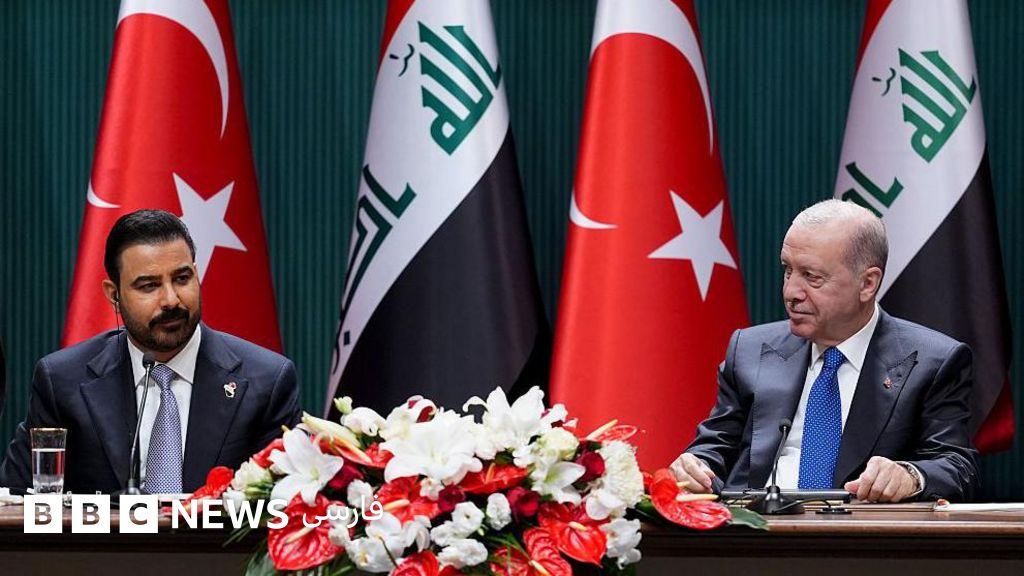
A diplomatic incident unfolded during a joint press conference in Baghdad on July 28, involving Turkish President Recep Tayyip Erdoğan and Iraqi Prime Minister Ali Zaidi. What was expected to be the signing of five bilateral agreements saw only four documents on the table, prompting Erdoğan to inquire about the missing accord. This moment of confusion revealed that Wahab Salman al-Hasani, Iraq's Minister of Transport, had initially refused to sign the agreement for the "Development Road" project.
Al-Hasani is known to be a senior figure within the Iran-aligned Badr Organization, a detail that immediately sparked speculation among Turkish commentators about Tehran's potential involvement. Although the agreement was eventually signed after Prime Minister Zaidi's intervention, the incident had already highlighted underlying regional tensions and ignited a debate about power dynamics.
Iran's Alleged Motivations and Regional Influence
Turkish analysts quickly interpreted the Iraqi minister's initial refusal as a deliberate act, potentially orchestrated by Iran. Ahmed Hakan, editor-in-chief of the pro-government Hürriyet newspaper, explicitly linked al-Hasani's actions to his "affiliation with Iran," questioning whether such a move could have occurred without Tehran's knowledge or support. This perspective suggests Iran's keenness to protect its strategic importance in regional transit and trade.
Commentators argued that Iran views the "Development Road" project as a direct economic and geopolitical competitor. An analyst on Cüneyt Özdemir's YouTube program suggested the new corridor would effectively "marginalize" Iran's existing energy corridor, establishing a new one between Iraq and Turkey. This could diminish Iran's leverage, particularly concerning its position in the Strait of Hormuz. Professor Ahmed Oysal further contended that Iran utilizes groups like the Badr Organization to undermine Iraqi interests, implying a broader strategy to maintain its influence within Iraq's political and economic landscape.
Turkey's Strategic Vision and Geopolitical Implications
The "Development Road" project is a cornerstone of Turkey's regional strategy, aiming to connect Iraq's Basra region to Europe via an extensive network of roads and railways through Turkish territory. This initiative promises substantial economic and geopolitical advantages for Ankara, positioning Turkey as a crucial transit hub between the Middle East and Europe. The project's design, which entirely bypasses Iranian territory, is a significant point of contention for Tehran.
Turkish politicians and researchers, such as Oktay Vural and Can Akın, emphasize that Iran's opposition stems from a perception that the project is not merely an economic rival but a geopolitical corridor. They believe it is designed to limit Tehran's influence over Iraq in critical sectors like transport, trade, and politics. Akın further elaborated that this project, alongside others like the "Zangezur Corridor" and "Hejaz Railway," reflects Ankara's broader "regional ownership" policy, which, while framed as beneficial for all neighboring countries, is clearly perceived by Tehran as a challenge to its established regional dominance and strategic importance.
Key points
- Iraq's Transport Minister initially refused to sign an agreement for Turkey's "Development Road" project during a joint press conference.
- Turkish analysts speculate that Iran orchestrated the refusal to protect its regional economic and geopolitical interests.
- The "Development Road" aims to connect Iraq's Basra to Europe via Turkey, potentially bypassing Iran's existing transit routes.
- Commentators suggest Iran fears the project could diminish its influence in Iraq and its strategic importance in regional trade.
- The agreement was eventually signed after the intervention of the Iraqi Prime Minister.
If Iran's alleged opposition continues to obstruct the Development Road project, it could lead to increased regional tensions and hinder Iraq's economic development by delaying crucial infrastructure. This could also diminish Iran's long-term influence if alternative corridors gain traction, potentially isolating Tehran further in regional trade and transport networks.