Stock market turmoil sheds stark light on the opaque AI economy
Chinese advancements in chipmaking, including a soaring IPO for CXMT and a breakthrough in deep-ultraviolet lithography, triggered significant global stock market volatility, particularly impacting Western chipmakers.
Intelligence analysis by Gemini 2.5 Flash
The global stock market experienced a turbulent week as China demonstrated significant progress in its domestic chipmaking capabilities, challenging the long-held dominance of Western firms like ASML and raising concerns about future competition for GPU giants like Nvidia, despite experts suggesting an initial market overreaction.
Imagine a special factory that makes tiny, super-smart brains for computers, called chips. For a long time, only a few big companies in the West knew how to make the best ones, especially a special machine that draws the tiny lines on them. But last week, a Chinese company that makes memory chips became super valuable, and another Chinese company figured out how to make that special drawing machine all by itself! This made investors around the world worried that the old chip-making giants might face tough competition, causing their company values to drop like a stone, even though experts say it will take a while for China to catch up fully.
Analysis
China's Chipmaking Ascendance
Last week's market volatility was primarily ignited by two significant developments from China, signaling a potential paradigm shift in the global AI economy. First, the memory chipmaker CXMT made a spectacular debut on the Shanghai stock market, with its value surging by 466% to 3.3 trillion yuan (£365bn). While CXMT produces DRAM chips, which are complementary to GPUs rather than directly competitive with Nvidia, its rapid growth underscores China's ambition and capability in a crucial segment of the chip supply chain, addressing a global shortage.
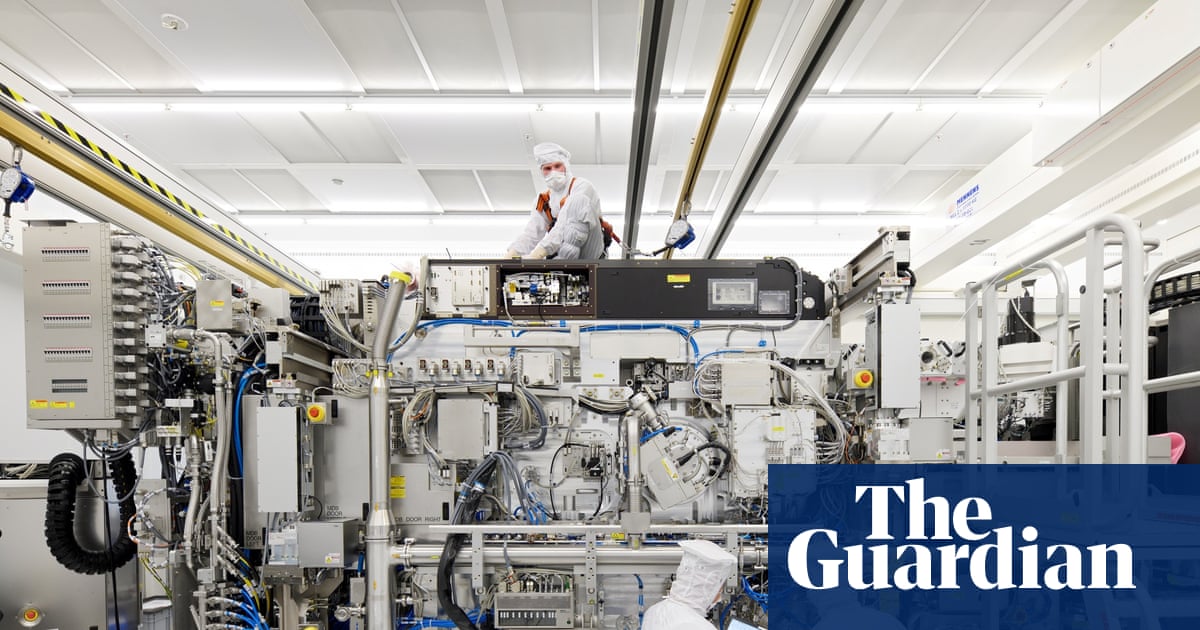
The second, and arguably more impactful, development was the report that China has successfully developed its own deep-ultraviolet (DUV) lithography tools. This technology, previously monopolized by the Dutch company ASML, is essential for etching the intricate circuits onto silicon wafers. This breakthrough suggests that China could, in theory, eventually produce advanced GPUs that rival those from Western manufacturers, a prospect that sent shockwaves through the market.
Market Overreaction vs. Long-Term Threat
The immediate market reaction was severe, with AI-linked shares plummeting globally. South Korea's Kospi index, heavily reliant on semiconductor giants like SK Hynix and Samsung Electronics, saw its worst weekly slump since 2008. Nvidia, a bellwether for the AI economy, lost over 5% and was briefly surpassed by Apple as the world's largest listed company. However, analysts like Alvin Nguyen of Forrester suggested this was an "overreaction," particularly regarding memory chipmakers, given the persistent global shortage expected until 2030.
Experts also tempered concerns about an immediate threat to GPU dominance. Mark Boost, CEO of Civo, noted that while China's DUV lithography achievement is a "massive symbolic victory," it is not an "overnight commercial replacement" for ASML. Developing efficient, high-yield fabrication plants takes years, implying that a serious competitor to Nvidia's GPUs is still a distant prospect. The market did see a rebound later in the week, fueled by strong results from Amazon and Microsoft, indicating that some of the initial panic subsided.
The Opaque AI Economy and Future Implications
Despite the short-term market correction, the long-term implications of China's advancements are profound. US export controls have compelled China to accelerate its domestic capabilities, a predictable outcome that is now materializing. Chris Beauchamp of IG suggests that Chinese chip companies are poised to replicate their strategy in other industries like steel and automobiles: undercutting and outcompeting on price once their technology matures.
The episode also highlighted the inherent opacity and circularity of the AI economy, which, as the article notes, "rests heavily on the fate of a single company, Nvidia." Further contributing to investor skittishness was a reported $250bn backstop Nvidia was considering for OpenAI's datacentre project, underscoring the intertwined and often complex financial relationships within the AI sector. These developments signal a future where the global AI chip landscape will be far more competitive and less reliant on a few dominant Western players.
Key points
- Chinese memory chipmaker CXMT's IPO soared by 466%, reaching a value of £365bn, signaling China's growing strength in the chip sector.
- China reportedly developed its own deep-ultraviolet (DUV) lithography tools, breaking ASML's monopoly on this essential chipmaking technique.
- Global AI-linked shares, particularly chipmakers, dropped significantly, with South Korea's Kospi falling 11.5% and Nvidia losing over 5%.
- Experts suggest the market's immediate reaction was an overreaction, as a serious Chinese competitor to Nvidia's GPUs is still years away.
- The advancements highlight China's strategic response to US export controls and its long-term potential to outcompete Western chipmakers on price.
China's advancements could alleviate the global shortage of memory chips, potentially making phones and computers more affordable in the long run. Increased competition in the chipmaking sector could also drive innovation and efficiency, benefiting the broader technology industry and consumers.
The rise of Chinese chipmakers poses a significant long-term threat to the dominance and profitability of Western companies like Nvidia and ASML. This could lead to intense price wars, reduced market share for established players, and continued stock market volatility as investors grapple with a rapidly changing competitive landscape.
Market signals
- CXMT The company's IPO saw its value soar by 466% on the Shanghai stock market.
- NVDA Nvidia lost over 5% and was temporarily overtaken as the world's largest listed company amid market turmoil.
- SK Hynix South Korea's main share index, Kospi, fell significantly, dragged down by semiconductor makers like SK Hynix.
- ^IXIC The main US tech index fell into correction territory after dropping more than 10% from its recent high.
AI-generated analysis of potential market relevance. Not financial advice.