Stocks suffer fresh blow as markets hit by perfect storm
Global markets tumbled on Friday as a perfect storm of resurgent Middle East conflict, oil prices back above US$100, and AI investment worries hammered Wall Street and Asia.
Intelligence analysis by Llama
Asian and US markets sold off sharply as the resurgent US-Iran war pushed oil back above $100 while investors questioned the massive AI capex of the Magnificent Seven, which lost $800B in a day.
Imagine three big problems hitting the world at the same time: a war in the Middle East making oil expensive, AI costing too much money to build, and investors feeling scared. When that happens, people sell their stocks and prices fall everywhere, even in faraway countries like Singapore.
Analysis
Three Fires, No Offsets
The article captures a rare alignment of three distinct market pressures hitting simultaneously, with traders now unable to do what they have historically managed: rotate from one worry to another. The first fire is the resurgent Middle East war. The US-Iran truce that sent oil prices lower last month has fractured, with tit-for-tat attacks resumed and Yemen's Houthi rebels striking Saudi shipping in the Red Sea. The second is oil itself, with Brent crude jumping 7% back above US$100 in a single session. The third is the AI investment boom, where markets are now questioning when the colossal sums funnelled into AI hardware, factories and research will produce returns. As Angelina Lai of St. James's Place Asia and Middle East wrote in the article, future outcomes are likely to depend less on exposure to a theme and more on which businesses can translate investment into sustainable earnings growth.
Asia's Chip Heartland Feels the Pain
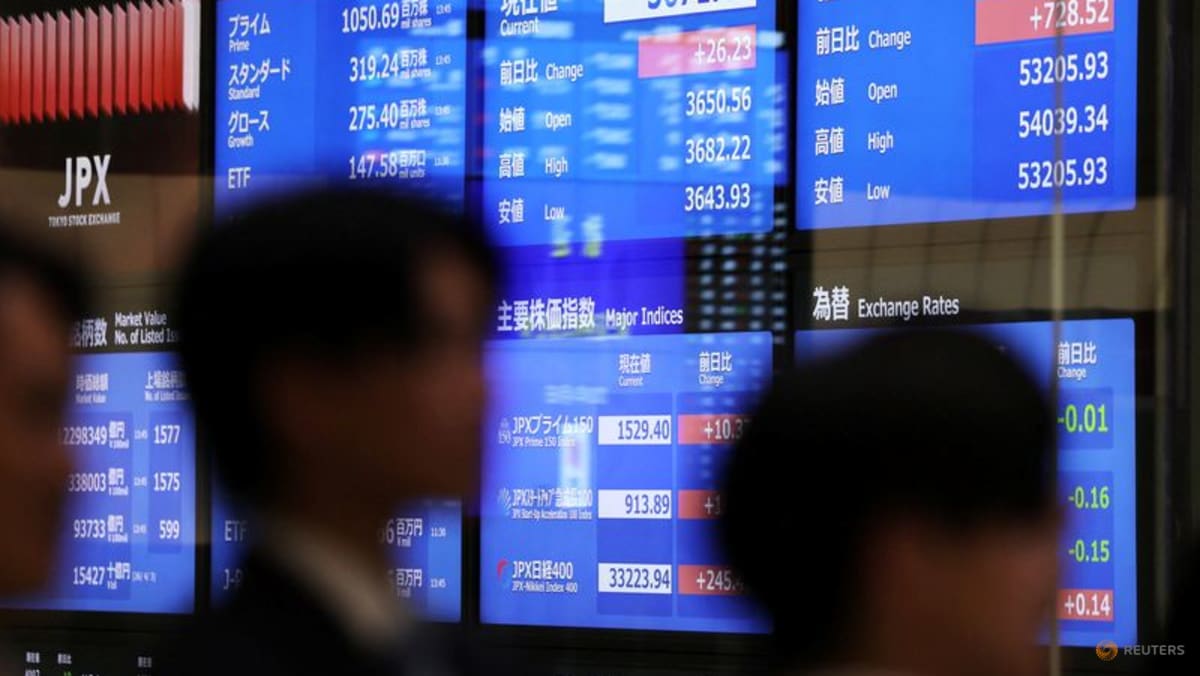
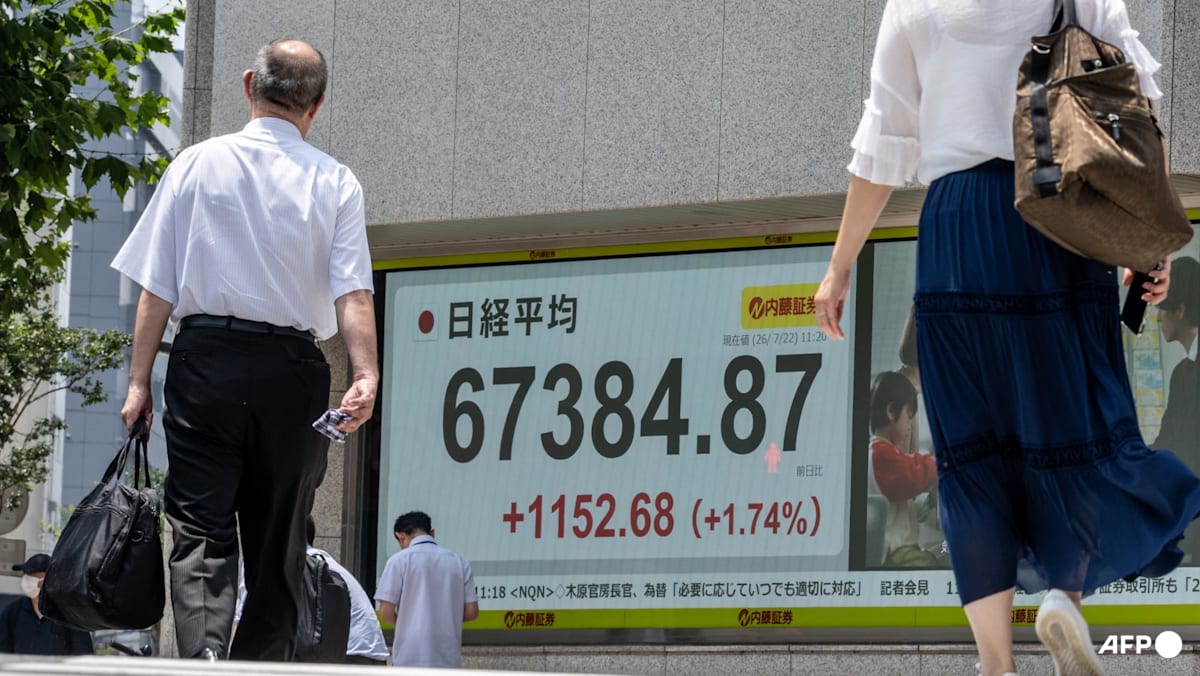
The selloff that began on Wall Street bled heavily into Asia's technology-heavy markets. Seoul dropped more than 3%, with Samsung and SK Hynix each shedding more than 7% as chipmakers were hammered. Tokyo's Nikkei index was sharply lower, with memory and equipment names taking the worst hits: Kioxia tanked almost 10%, Advantest lost more than 5%, and Tokyo Electron fell nearly 7%. Hong Kong, Shanghai, Sydney, Singapore, Taipei and Manila were all marked well down in the report. Singapore's exposure here is twofold: as a market directly caught in the regional selloff, and as a financial hub where sentiment shocks and oil price moves feed quickly into currency, REIT and shipping counters.
The Magnificent Seven's $800 Billion Reckoning
The shockwave's epicentre was Thursday's Wall Street session, where the Magnificent Seven suffered their biggest one-day drop since the April 2025 tariff tantrum. An index of the group shed almost US$800 billion in market value in a single day. Alphabet dived almost 7% and Tesla plunged more than 14% as scrutiny fell on their capital spending drives. Meta, Microsoft, and Amazon have already flagged that they will spend more than US$700 billion this year on AI ambitions, with their earnings due next week. The session crystallised a market mood that has shifted from AI capex as inevitability to AI capex as a question that must be answered soon, a higher bar that, according to the article's analysts, will reward only those businesses able to translate investment into sustainable earnings growth.
Key points
- Asian markets tracked a Wall Street selloff as a perfect storm of Middle East war, oil above $100, and AI capex doubts hit simultaneously.
- The Magnificent Seven lost almost US$800 billion in a single day, their biggest drop since the April 2025 tariff tantrum, with Alphabet -7% and Tesla -14%.
- Seoul fell more than 3% with Samsung and SK Hynix both down 7%+; Tokyo's Nikkei was sharply lower with Kioxia -10% and Tokyo Electron -7%.
- Brent crude jumped 7% back above US$100 after the US-Iran truce collapsed and Houthi rebels struck Saudi shipping in the Red Sea.
- Hong Kong, Shanghai, Sydney, Singapore, Taipei and Manila were all marked well down as the selloff swept the region.
If the US-Iran conflict continues to escalate and Houthi strikes on Red Sea shipping persist, Brent could push further above $100 and rekindle inflation fears that force central banks to lift rates, deepening the equity selloff. With Meta, Microsoft and Amazon due to report earnings next week and the bar for AI capex justification now higher, a disappointing print could compound the Magnificent Seven's $800 billion Thursday loss and drag Asian chip-heavy indices further.