Supreme Court declines to let Alabama move forward with nitrogen gas execution
The Supreme Court refused Alabama’s bid to execute Jeffrey Lee by nitrogen gas after lower courts found the method unconstitutional.
Intelligence analysis by GPT-5.4 Mini
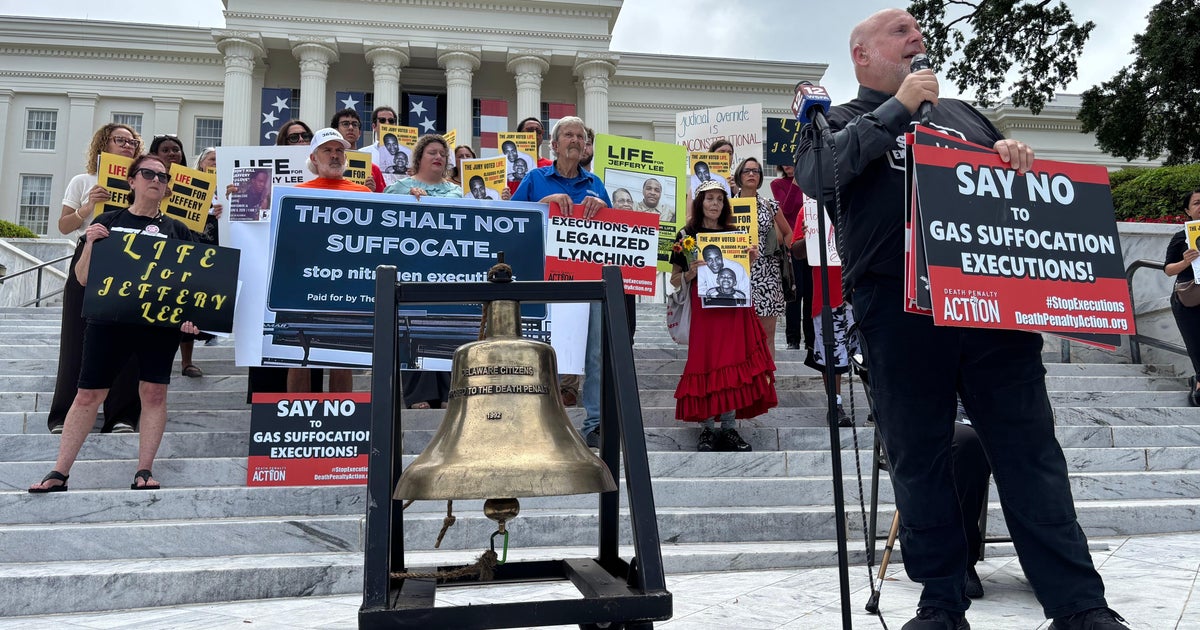
The justices let stand a lower-court order blocking Alabama’s nitrogen hypoxia protocol for Jeffrey Lee, at least for now. The case centers on whether the state’s newest execution method amounts to cruel and unusual punishment under the Eighth Amendment.
A court told Alabama it cannot use a new gas method to execute Jeffrey Lee because judges said it may be cruel. It is like a referee stopping a game because one team’s move breaks the rules.
Analysis
What happened
The Supreme Court declined Alabama’s request to proceed with Jeffrey Lee’s scheduled execution using nitrogen hypoxia. The decision leaves in place a federal judge’s order that permanently barred the state from using that method on Lee.
Why the case mattered
Alabama had asked the high court to undo a ruling by U.S. District Judge Emily Marks, who found the state’s nitrogen protocol unconstitutional under the Eighth Amendment. A federal appeals court had already denied Alabama’s request for a stay, and the state then turned to the Supreme Court. Justices Clarence Thomas, Samuel Alito, and Neil Gorsuch dissented from the decision not to intervene.
Marks’ ruling reversed her earlier position. In the later decision, she said Lee had shown the protocol amounted to cruel and unusual punishment. The appeals court had described the method as posing “a substantial risk of serious harm,” including severe air hunger, anxiety, physiological stress and physical discomfort before death.
What Alabama argued
Alabama said executing Lee by firing squad was not feasible because the state does not currently have a protocol for that method. The state also argued that its nitrogen procedure had been mischaracterized and that inmates lose consciousness quickly. Gov. Kay Ivey’s office said before the ruling that the governor remained prepared to move forward and that the state would keep defending its execution protocol.
Broader context
Lee has been on death row for more than two decades for a 1998 double murder and robbery. His jury voted 7-2 for life without parole, but the trial judge overrode that recommendation, a practice Alabama later outlawed in 2017. The article also notes that nitrogen hypoxia remains controversial, with witnesses to prior executions describing thrashing, gasping and signs of distress. Alabama has defended the method as humane, and further legal challenges are set for trial in 2027.
Key points
- The Supreme Court declined Alabama’s request to carry out Jeffrey Lee’s nitrogen gas execution.
- A federal judge had permanently barred the state from using nitrogen hypoxia on Lee, calling it cruel and unusual punishment.
- The appeals court said the protocol could cause severe air hunger, anxiety and physical distress before death.
- Three justices dissented from the Supreme Court’s refusal to вмеш intervene.
- Alabama says its protocol is humane and that it will keep defending it in court.
The ruling keeps Lee from being executed with a method that a federal judge found unconstitutional. If that decision holds, it could reinforce limits on how states carry out executions and keep the focus on the jury’s original life sentence recommendation.
Alabama can still keep defending its nitrogen protocol in court, and the broader legal fight is not over. The article says more challenges to the method are scheduled for trial in 2027, so the dispute could continue for years.