The Getaway Truck; When Trump Gets Stuck in Iran's Quagmire
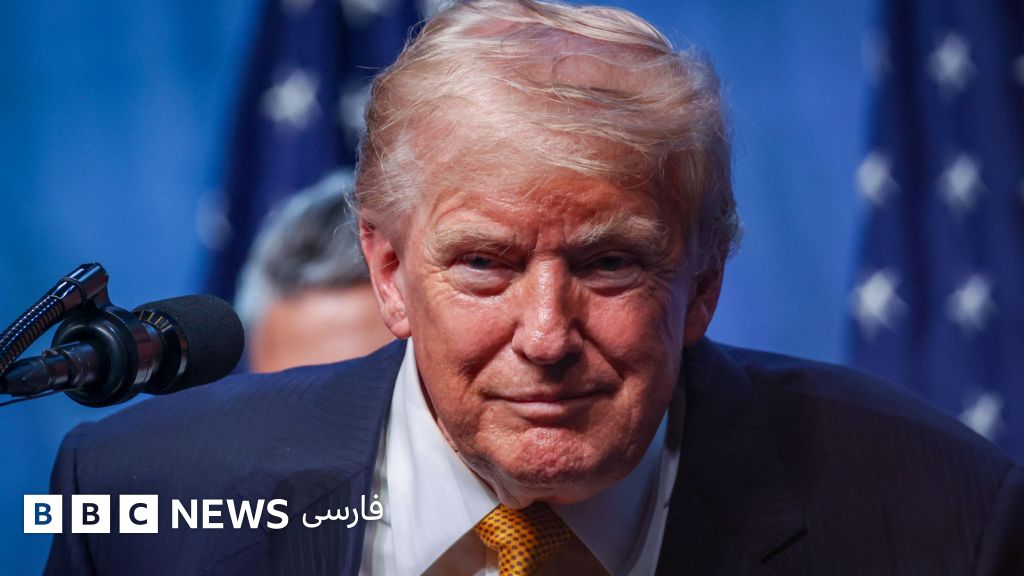
US President Donald Trump was secretly transferred from a Turkish airport to a British airbase in a food truck after an assassination threat. The incident highlights the vulnerabilities of the US president and the complexities of the Iran-US war.
Intelligence analysis by Llama

US President Donald Trump was secretly transferred from a Turkish airport to a British airbase in a food truck after an assassination threat, highlighting the complexities of the Iran-US war and the vulnerabilities of the US president.
Imagine you're the president of the United States, and you're on a secret trip to visit another country. But someone threatens to attack your plane, so you have to sneak away in a food truck to stay safe. This is what happened to President Trump recently, and it shows how complicated and unpredictable the world can be.
Analysis
The recent incident of US President Donald Trump being secretly transferred from a Turkish airport to a British airbase in a food truck has sparked a lot of debate about the security of the US president and the complexities of the Iran-US war. The incident highlights the vulnerabilities of the US president and the complexities of the Iran-US war. The 40-day war not only failed to produce the quick and inexpensive results that Washington had hoped for, but also called into question many of America's calculations about Iran. Iran demonstrated that, even under intense military pressure, it had the capacity to continue resisting, to respond, and to impose costs. This transformed the war from a limited operation to achieve specific objectives into a complex and eroding crisis. The most important issue for America is that it cannot easily predict the outcome of such a war. In many past wars, Washington has tried to swing the balance in its favor in a short period of time with air superiority and massive firepower. But with Iran, the situation is different. Its geographical size, scattered infrastructure, missile and drone capabilities, decades of experience in dealing with external pressure, and capabilities that the other side does not have complete information about, make it difficult to plan for a new war. Iran is not a country that can be defined by a few military objectives on a map. Any major conflict with Iran could have far-reaching implications beyond its borders. U.S. military bases in the region, energy routes, the security of the Persian Gulf and the Strait of Hormuz, and even the global economy could be affected. For this reason, any military decision against Iran is not just a decision about the battlefield; it is a decision about a set of regional and global consequences. On the other hand, the continuation of the war has created heavy costs for America itself. The Washington Post previously reported that the Pentagon has faced pressure on financial resources and weapons stocks as a result of the war with Iran, and even some budgets related to training and maintenance of military equipment have been under pressure. This is a big deal. The United States is a great military power, but its military resources are not unlimited. A prolonged war with Iran could sap some of the capacity America needs to compete with China, Russia, and other global threats. As a result, the question for Washington today is no longer simply, “How do we defeat Iran?” The more important question is, “What are the consequences of our actions, and how will they affect the region and the world?”
Key points
- US President Donald Trump was secretly transferred from a Turkish airport to a British airbase in a food truck after an assassination threat.
- The incident highlights the complexities of the Iran-US war and the need for a more nuanced approach to security and diplomacy.
- The war has created heavy costs for America itself, including pressure on financial resources and weapons stocks.
- Any major conflict with Iran could have far-reaching implications beyond its borders, including the security of U.S. military bases in the region, energy routes, and the global economy.
The incident highlights the complexities of the Iran-US war and the need for a more nuanced approach to security and diplomacy. If the US and Iran can find a way to de-escalate the conflict and work towards a peaceful resolution, it could have a positive impact on the region and the world.
The continuation of the war with Iran could have far-reaching implications beyond its borders, including the security of U.S. military bases in the region, energy routes, and the global economy. The heavy costs of the war for America itself could also sap some of the capacity it needs to compete with other global threats.