The Lebanese Army Says Israeli Forces Fired Near Its Units During Deployment in a Pilot Zone
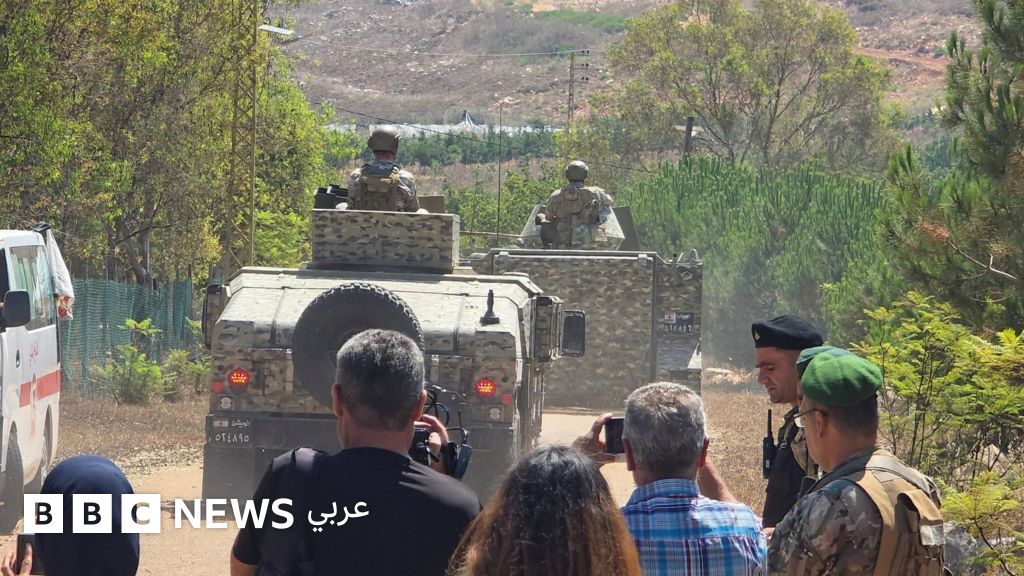
The Lebanese Army said Israeli forces fired near its units in West Zoutar as they deployed in a pilot zone in southern Lebanon. The incident could complicate the first phase of a US-brokered arrangement with Israel.
Intelligence analysis by GPT-5.4 Mini
This is the first on-the-ground stress test of a fragile framework meant to let Lebanese forces move into areas Israel is withdrawing from. The shooting allegation, and the army’s warning that it could slow deployment, shows how easily the deal can be derailed before it takes hold.
Think of neighbors trying to hand over a shared yard safely, but one side keeps waving a warning flag too close to the other. The Lebanese Army is trying to move in, but shots near its troops could make the whole handover stop halfway.
Analysis
West Zoutar as the Deal's First Test
The article frames West Zoutar as more than just one village. It is one of the first places where the Lebanese Army is trying to take up positions under the new arrangement, so any interference there immediately becomes a test of whether the framework works in practice. The army’s claim that Israeli fire came close to its units makes the deployment itself part of the story, not just the backdrop.
That matters because the arrangement depends on choreography: Israeli withdrawal, Lebanese deployment, and a reduction in the armed space that Hezbollah has occupied in the south. If troops cannot move safely into the designated areas, the entire sequence slows down. In that sense, the shooting allegation is less about one exchange of fire and more about whether the parties can trust the process enough to keep going.
A Three-Way Framework With Uneven Leverage
The article shows how much of this process is being shaped by outside mediation, especially the United States. Washington announced the start of the pilot operations, while Lebanese and Israeli representatives had recently met in Rome, suggesting that the deal is being managed as a diplomatic construction as much as a military one. That gives the arrangement momentum, but it also means it is exposed to any field-level disruption.
Israel’s position, as quoted in the article, is that it wants to protect its forces and keep the right to act against threats. It also says it will remain in the so-called security zone as long as necessary. That language signals that Israel is not treating withdrawal as automatic or final, which leaves Lebanon facing a process that is conditional rather than fully settled.
Why the Local Reaction Matters
The article does not present the deployment as a purely technical move. It also includes Lebanese voices warning that the army may not yet have the capability to stop Israeli operations or fully secure the area. That skepticism is important because public confidence will shape whether the arrangement is seen as a real step toward sovereignty or just a temporary pause.
At the same time, the army’s presence is portrayed as a necessary beginning. If the deployment broadens and remains intact, it could strengthen the Lebanese state’s claim that it is reasserting control in the south. But if incidents like this become routine, the arrangement risks hardening into another unstable buffer rather than a path to lasting calm.
Key points
- The Lebanese Army said Israeli forces fired near its units while they were deploying in West Zoutar.
- The deployment is part of a US-brokered framework tied to Israeli withdrawal from some southern Lebanese areas.
- The army warned that the incident could hinder the rollout of the pilot-zone plan.
- Israel said it would keep forces in the security zone for as long as necessary to defend its north.
- Local reactions in the article reflect doubt that the Lebanese Army can quickly stop Israeli operations.
If the deployment continues, the Lebanese Army could deepen its presence in the south and make the pilot zones a real step toward restoring state control. The US-backed framework could then move from paper to practice, lowering the chance of a wider confrontation.
If shooting near Lebanese troops continues, the deployment could slow or stall, leaving the arrangement vulnerable before it is fully in place. Israel’s insistence on keeping a security zone and the unresolved question of Hezbollah’s weapons could keep the border tense even if withdrawals begin.