The President’s Arsenal of Insults Has a Telling New Entry
A Trump interview with Kristen Welker turned into a public display of anger, then ended with a strange burst of courtesy. The Atlantic says that mix reveals as much about Trump as the insults themselves.
Intelligence analysis by GPT-5.4 Mini
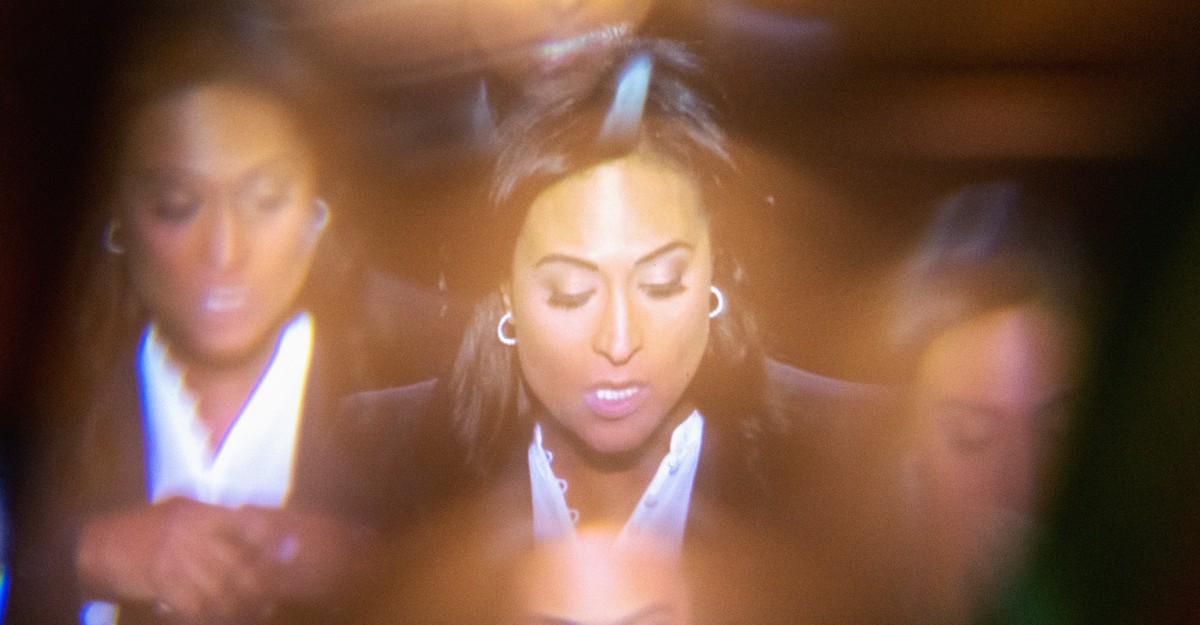
The Atlantic argues that Trump’s insult style is a kind of data set that reveals his habits, especially when aimed at women journalists. In a viral NBC interview clip, Kristen Welker’s basic fact-checking questions led Trump to explode, then abruptly soften and call her “darling,” which the piece reads as a form of control.
A reporter asked the president to show proof for something he said. He got mad, walked off, then suddenly used a sweet word like a pretend bandage over an argument. It is like someone slamming a game board and then saying “good game” a second later.
Analysis
What the clip showed
The article treats Trump’s insults as more than random outbursts. It argues they form a pattern that can be studied, especially when the target is a woman journalist. In this case, a Meet the Press interview with Kristen Welker turned viral after Trump reacted badly to questions about fraud claims in California and the 2020 election.
Why the exchange mattered
Welker asked for evidence and pressed him in a straightforward way, which the piece says was normal journalism rather than an attack. Trump responded by saying he had “enough,” calling NBC and Welker crooked, and ending the interview. The Atlantic says the scene mattered because viewers saw the president’s anger unfold in real time, rather than only hearing reports about it later.
The odd twist
What stood out most to the writer was what happened after the anger peaked. Trump thanked Welker and called her “darling.” The article reads that as part of his long-running habit of insulting women reporters, but also as an effort to reassert control once his fury did not rattle her. The piece suggests this was not an apology or a real softening, but another move in the same power struggle.
The broader point
The article’s larger claim is that Trump’s language is revealing because it shows how he handles challenge: he escalates, attacks, and then sometimes tries to reset the moment with false warmth. In that sense, the Welker clip is presented not just as a TV spectacle, but as a compact example of Trump’s public style under pressure.
Key points
- Trump’s interview with Kristen Welker turned into a viral display of anger and withdrawal.
- The Atlantic argues his insults follow a pattern, especially toward women journalists.
- Welker asked for evidence on fraud claims, which triggered Trump’s exit from the interview.
- Trump then thanked her and called her “darling,” which the piece reads as a control move.
- The article treats the clip as a revealing look at how Trump reacts when challenged.
If the exchange helps more viewers pay attention to evidence-based questioning, it could strengthen the role of hard-nosed journalism in presidential interviews. The clip may also make it easier for audiences to recognize a familiar pattern in Trump’s behavior when he is challenged.
The downside is that Trump’s insults and sudden resets can normalize hostile behavior as just another part of politics. It may also discourage serious questioning if reporters worry that basic follow-ups will be recast as provocation.