The weekend is 100 years old – but have ‘skiveday Fridays’ and hybrid working ruined it for everyone?
The concept of the two-day weekend, established by Henry Ford in 1926, is celebrating its centenary but faces erosion from modern work trends like hybrid working and 'skiveday Fridays'. This shift blurs the lines between work and leisure, impacting collective social time …
Intelligence analysis by Gemini 2.5 Flash
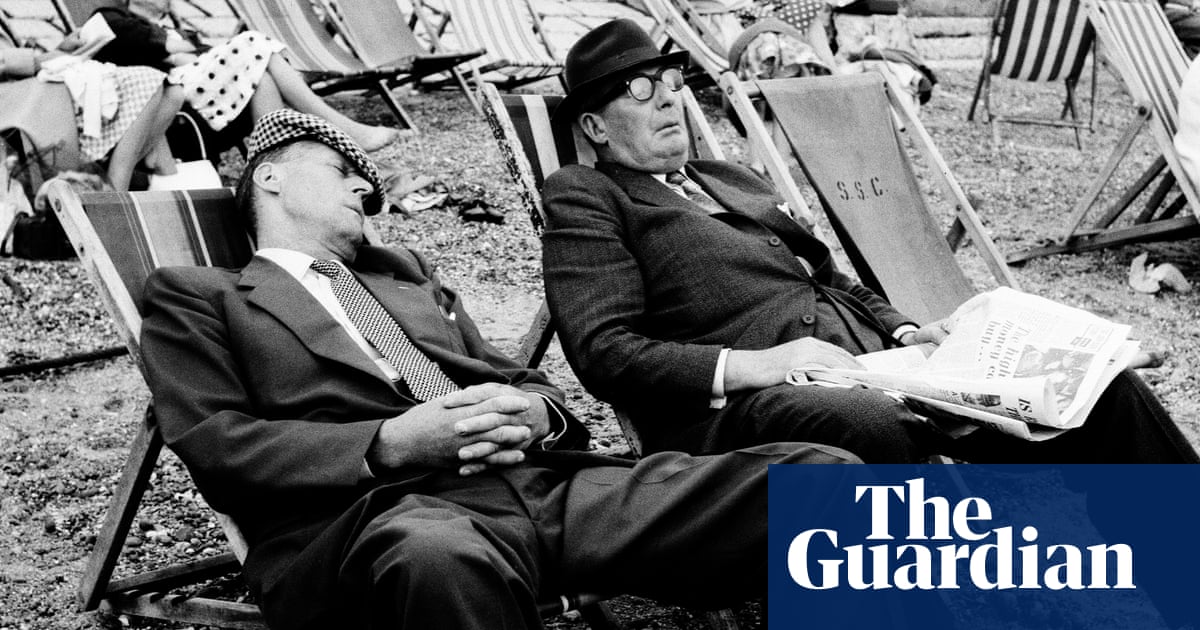
The article explores the 100-year history of the two-day weekend, tracing its origins to Henry Ford's factories and contrasting it with the Soviet Union's failed attempt at fragmented days off. It argues that while the weekend remains a cherished concept, its traditional form is being undermined by contemporary work practices, leading to a loss of shared leisure and a redefinition of …
Imagine the weekend, those two special days off, is like a really old toy that's turning 100! A long time ago, a car maker named Henry Ford gave his workers Saturdays and Sundays off so they could rest and buy his cars. But now, with people working from home or taking Fridays off to do chores, those two special days are getting mixed up with workdays. It's like your playtime is getting interrupted by homework, making it harder to truly relax and play with your friends and family all at the same time.
Analysis
The traditional two-day weekend, a cornerstone of modern work-life balance, marks its 100th anniversary amidst significant challenges posed by evolving employment models. What began as a revolutionary concept to boost productivity and worker well-being is now experiencing a profound transformation, raising questions about its future relevance and societal impact.
Henry Ford
In 1926, Henry Ford's decision to grant his factory workers both Saturdays and Sundays off, without a reduction in pay, fundamentally reshaped the working week. This move, while seemingly altruistic, was also a strategic business decision aimed at combating high absenteeism rates caused by the exhausting nature of assembly line work. Ford recognized that rested workers were more productive, and he also saw an opportunity to stimulate demand for his automobiles, noting that people with more leisure time would require more transportation for day trips.
Ford's innovation was not entirely novel, as the idea of a shorter work week had been advocated by trade unions and religious groups for decades. However, his industrial influence propelled the two-day weekend into mainstream adoption, solidifying it as a standard practice across the United States by 1938, partly as a response to rising unemployment during the Great Depression. This historical context underscores the economic and social forces that initially championed the weekend as a period of collective rest and personal freedom.
Soviet Union
The article highlights a stark contrast to Ford's model by recounting the Soviet Union's experiment with a fragmented work week between 1929 and 1940. In an attempt to maximize factory output, citizens were given a random day off every seven, ensuring that 80% of the population was always working. This policy, however, proved disastrous for social cohesion and worker morale.
Without a shared day off, families struggled to spend time together, children were often unsupervised, and extended gatherings became impossible. A disgruntled worker's letter to Pravda vividly illustrated the isolation, stating, "It is no holiday if you have to have it alone." The projected productivity spike never materialized; instead, the workforce became demoralized and listless, leading to the eventual abandonment of the policy. This historical example serves as a powerful testament to the importance of collective leisure time for societal well-being and economic efficiency.
Pedro Gomes
Professor Pedro Gomes, an economist at Birkbeck, University of London, and author of Friday is the New Saturday, offers insights into the evolving nature of the weekend across different life stages. He notes that the weekend experience transforms significantly, from a period of social bonding with friends in youth to family time with children and eventually grandchildren in later life. Despite these personal evolutions, the weekend has historically remained a shared experience, fostering collective rituals and cultural touchstones.
However, Gomes's work also implicitly addresses the contemporary erosion of these shared experiences. The article points out that modern practices like hybrid working and the rise of 'skiveday Fridays' — where Friday becomes a de facto day off for personal errands or leisure — blur the traditional boundaries of the weekend. Emails are answered on Sundays, and household chores spill into work-from-home Fridays, fragmenting leisure time and diminishing the distinct separation between work and rest. This blurring challenges the very definition of the weekend, transforming it from a universally understood block of collective time into a more individualized and often interrupted period.
Key points
- The two-day weekend, as established by Henry Ford, is 100 years old in 2026.
- Ford introduced the five-day, 40-hour work week in 1926 to boost productivity and stimulate consumer spending on leisure activities like car trips.
- The Soviet Union's experiment with fragmented days off (1929-1940) failed due to social isolation and demoralization, highlighting the importance of collective leisure.
- Modern work trends, including hybrid working and 'skiveday Fridays,' are blurring the boundaries of the traditional weekend, impacting shared social time.
- The Netherlands has seen an average working week of 32.1 hours, indicating a move towards shorter work weeks in some regions.
The evolution of the weekend could lead to more flexible work arrangements, such as the four-day week gaining traction in places like the Netherlands, potentially offering workers more concentrated leisure time. This shift might allow for a more personalized approach to work-life balance, where individuals can better integrate personal needs with professional responsibilities.
The blurring lines between work and leisure, driven by hybrid working and 'skiveday Fridays,' risk eroding the traditional, collective experience of the weekend, leading to increased worker demoralization and a constant feeling of being 'on call.' This could diminish the restorative power of time off, negatively impacting mental well-being and overall productivity.