Threat to oil tankers in Middle East worst since start of Iran war, analysts say
Analysts warn that threats to oil tankers in the Middle East are at their worst since the Iran war began, as Houthi attacks on Red Sea shipping compound the Strait of Hormuz blockade. Traffic through key chokepoints has collapsed, with no quick resolution in sight.
Intelligence analysis by Llama
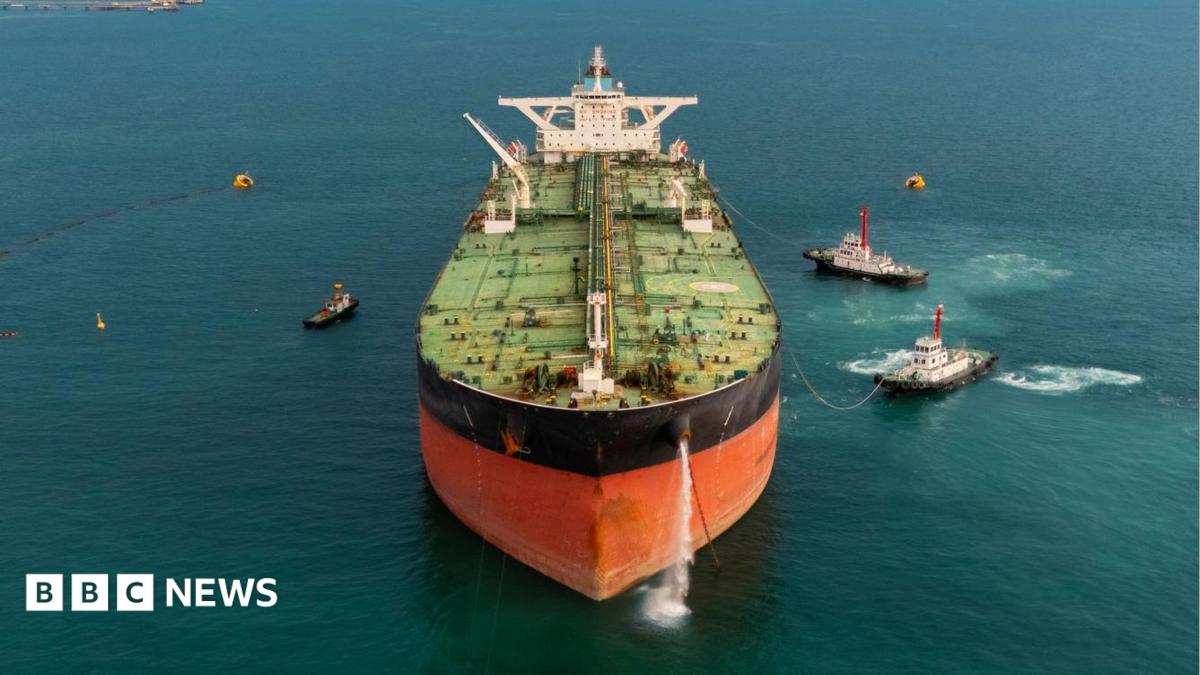
The Iran war has choked the Strait of Hormuz, and now Houthi attacks on Saudi tankers in the Red Sea have closed off the main alternative route. Kpler data shows just 8 ships transited Hormuz on Sunday, down from 100+ daily before the war, pushing oil prices sharply higher despite brief Trump-driven dips.
Imagine a giant straw that carries oil from the Middle East to the rest of the world. Right now, the straw is blocked, and the back-up pipe through the Red Sea is also being attacked. So very little oil is getting through, and prices are jumping up because there isn't enough to go around.
Analysis
A Two-Pronged Squeeze on Gulf Oil Exports
Matthew Wright of ship-tracking firm Kpler describes the current situation as the worst period for crude trade since the Iran crisis began. The Strait of Hormuz, through which about 20% of global oil and gas normally passes, saw just eight ships on Sunday and 11 on Saturday — a collapse from more than 100 per day before the war. A temporary June peace deal with the US had allowed traffic to recover, but the resumption of US-Iran strikes roughly a month later reversed those gains. Many vessels are now 'going dark,' switching off their transponders to avoid detection in the narrow waterway. This dual pressure — physical danger plus the operational cost of evasive routing — has effectively throttled one of the most important energy corridors on earth.
The Red Sea Lifeline Comes Under Fire
When Hormuz became unreliable, many Saudi-bound oil shipments rerouted through the Red Sea, the Bab el-Mandeb strait, and around west Africa. That fallback is now compromised. The Iranian-backed Houthi militia announced a blockade on Saudi Arabia's Red Sea ports on 20 July, and the UK Maritime Trade Operations agency has logged several attacks in the past week. According to Kpler, 28 commodity vessels transited Bab el-Mandeb on Saturday, six with transponders off, but the number of ships loading crude specifically for export to Asia has dropped to about four per day — the lowest point since the war began. Tim Wilkins of Intertanko called it a 'broadening, deteriorating, and increasingly complex security situation,' with the high-risk zone now extending into Saudi waters and parts of the Red Sea.
A Brief Dip, No Resolution in Sight
Markets caught a short-lived reprieve when Donald Trump said he would cancel planned strikes on Iran in light of potential talks, sending Brent crude down as much as 7.3% to $81.55 a barrel before settling 4.4% lower at $84.05. That optimism is fragile. Iran has denied being in talks with the US, instead confirming only discussions with Oman, and foreign ministry spokesman Esmaeil Baqaei said no deal is imminent while US 'aggression' continues. Kpler's Wright warned any resolution would require US involvement and could prove a 'false start' without mutual concessions. Hapag-Lloyd noted that even if Hormuz reopened, restoring normal cargo flows would take three to four months as services have been suspended and ships redeployed. Xeneta's Peter Sand summed up the mood: the industry has been taken 'back to square one,' with no change of fortunes in sight.
Key points
- Strait of Hormuz traffic collapsed to 8 ships on Sunday, down from 100+ daily before the Iran war, per Kpler data.
- Houthi attacks on Saudi tankers in the Red Sea have closed off the main alternative shipping route, with the militia declaring a blockade on Saudi Red Sea ports on 20 July.
- About 20% of the world's oil and gas normally transits the Strait of Hormuz, making the dual disruption a significant global energy risk.
- Brent crude briefly fell 7.3% to $81.55 a barrel after Trump cancelled planned strikes, before settling 4.4% lower at $84.05.
- Even if the Strait of Hormuz reopens, Hapag-Lloyd says restoring normal cargo flows would take three to four months due to redeployed ships and suspended services.
Iran's reported talks with Oman, combined with Trump's willingness to cancel strikes in exchange for diplomacy, leave a narrow path to a ceasefire. If both the Strait of Hormuz and Red Sea routes reopen, analysts say a return to normal flows would still take three to four months, but oil prices and shipping costs would likely ease meaningfully from current highs.
Houthi attacks on Saudi tankers are broadening the conflict's footprint into the Red Sea, and Iran insists no deal is near while US strikes continue. Kpler's Wright fears negotiations could prove a 'false start,' and Hapag-Lloyd warns that even a Hormuz reopening would not restore normal flows for months. Persistent disruption keeps upward pressure on Brent crude and global shipping costs.
Market signals
- OIL Simultaneous disruption of the Strait of Hormuz and Red Sea routes threatens roughly 20% of global oil and gas flows, per Kpler analysts cited in the article.
- XAU Escalating Middle East conflict and the collapse of Hormuz transit typically drive safe-haven demand for gold, per the article's framing of the security deterioration.
AI-generated analysis of potential market relevance. Not financial advice.