Trump doesn’t rule out giving Jan. 6 rioters who attacked police ‘anti-weaponization’ fund payouts
Trump said he would not rule out taxpayer payouts for some Jan. 6 rioters who assaulted police, even as the fund’s future remains legally uncertain.
Intelligence analysis by GPT-5.4 Mini
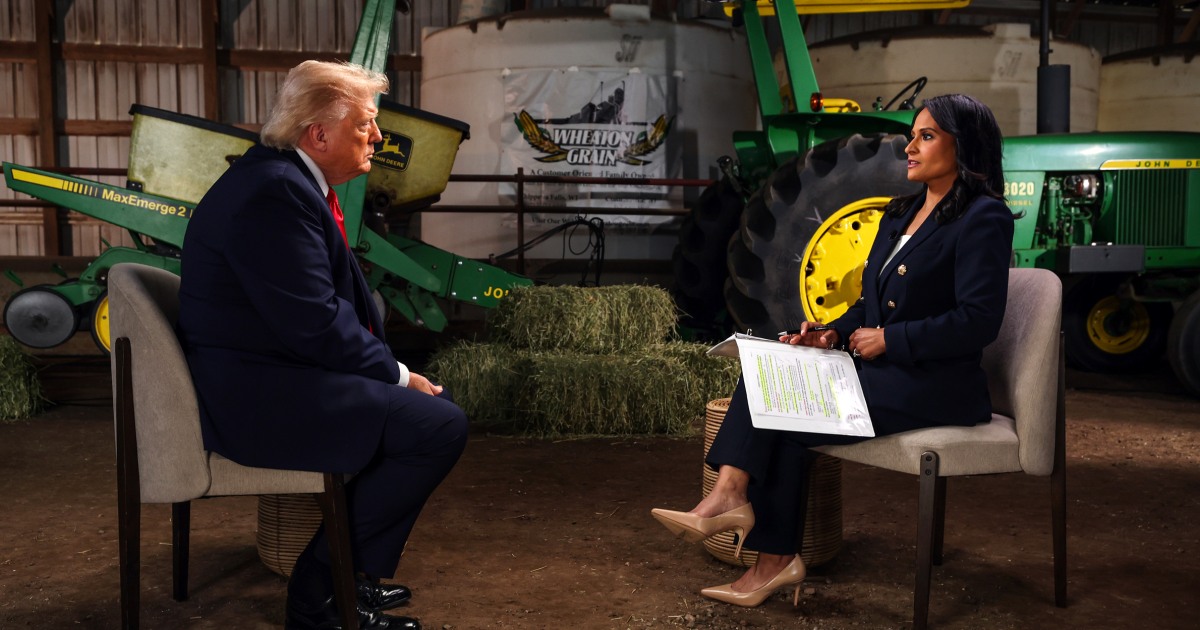
In an NBC News interview, Trump defended an “anti-weaponization” fund and would not fully rule out payouts for Jan. 6 defendants who attacked police. The remarks came even though the fund is facing a court challenge and the Justice Department had recently said it was not moving forward.
Trump said he might not say no to giving money to some Jan. 6 rioters, even people who hurt police, from a special fund his side calls anti-weaponization. It is like arguing over whether a school fund should pay for troublemakers after a big fight.
Analysis
What Trump said
In an interview with NBC News’ Meet the Press, Trump defended an “anti-weaponization” fund tied to his view that Jan. 6 defendants were unfairly targeted by prosecutors. When asked whether people who attacked police on Jan. 6 should receive payouts from taxpayer funds, he did not give a firm no. He said he was “not inclined” to do so, but added that he would have to see the details.
Why the fund is controversial
The fund is said to be worth nearly $1.8 billion. NBC reports that it grew out of a settlement Trump reached after suing the IRS over his leaked tax returns. The administration’s handling of it has been unclear: a federal judge temporarily blocked the fund on May 29 while a lawsuit seeks to stop it, and acting Attorney General Todd Blanche told lawmakers on June 2 that the administration was not moving forward with it. Trump later said he would need to ask lawyers about its status.
The Jan. 6 context
NBC notes that about 1,600 people were charged over the Capitol attack and more than 1,100 had been sentenced by the time the Biden administration ended. More than 140 police officers were injured, and prosecutors described the day as an extraordinary mass assault on law enforcement. Trump had already pardoned about 1,500 participants on his first day back in office, including some who attacked officers.
Broader message
Trump also repeated unsupported claims about election fraud, including in California, where ballots can take days to be counted under state law. The interview reinforced his pattern of linking Jan. 6, his own legal fights, and broader claims that government institutions were used against him and his supporters.
Key points
- Trump did not rule out payouts for Jan. 6 rioters who attacked police, saying he would have to see the details.
- The administration’s nearly $1.8 billion anti-weaponization fund is under legal challenge and has uncertain status.
- Trump defended Jan. 6 defendants as people who were unfairly targeted by prosecutors.
- NBC says more than 140 police officers were injured in the Capitol attack.
- Trump also repeated unsupported claims about election fraud in California.
If the administration narrows or clarifies the fund’s purpose, it could reduce confusion about who may benefit and what the money is for. A clear legal outcome could also settle the dispute faster and limit further uncertainty.
If the fund is used, or even seriously considered, for people who attacked police, it could trigger a major backlash and more legal fights. Trump’s repeated unsupported claims about elections may also deepen mistrust in public institutions and the political process.