Trump says he will talk to Hezbollah if Lebanon asks
President Trump told Lebanese President Joseph Aoun at the White House that he is willing to engage with Hezbollah if Lebanon formally requests it, while Aoun pressed for continued US support for the Lebanese army.
Intelligence analysis by Llama
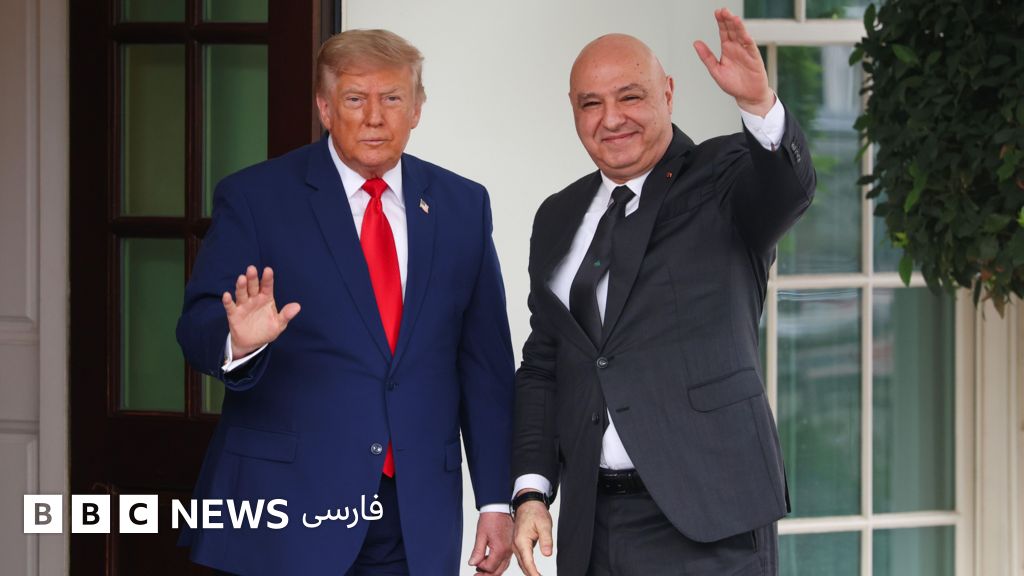
During the first White House visit by a Lebanese president since 2009, Trump said he would talk to Hezbollah if asked by Beirut. Aoun sought US backing for completing Israel's withdrawal from southern Lebanon and strengthening the Lebanese army, warning that a cut in support could revive 1970s-era chaos.
The US president told Lebanon's president that if Lebanon asks, America is ready to talk to a powerful armed group in Lebanon called Hezbollah. Lebanon's leader came to ask for help paying for his army so it can take control of the south, and warned that without US support the country could fall apart again like it did a long time ago.
Analysis
A Conditional Opening to Hezbollah
Trump's offer to talk to Hezbollah, made in the Oval Office and contingent on a Lebanese request, marks a notable rhetorical shift from his first term, when his administration designated the group a terrorist organization and applied a "maximum pressure" campaign against its patron Iran. The president did not specify the nature of such contact or whether any outreach is imminent, leaving the statement as an opening bid rather than a policy commitment. For Beirut, the offer provides diplomatic leverage: the Lebanese government can now frame any future engagement with Hezbollah as something requested and coordinated with Washington, which could insulate the Lebanese state politically at home. For Iran, the signal is ambiguous. A direct US-Hezbollah channel would sideline Tehran's traditional role as the group's primary interlocutor with the West, but it could also create a parallel track that complicates Iranian influence management.
Aoun's Three-Part Agenda
According to the report, Aoun used the visit to push three interconnected demands: continued US military aid to the Lebanese army, American pressure on Israel to complete its withdrawal from the south, and support for a written Lebanese proposal on how to handle Hezbollah's arsenal. Aoun warned that a halt to US assistance could collapse the country back into the turmoil that engulfed southern Lebanon in the 1970s. He also framed the consolidation of state authority across all of Lebanon as part of Trump's potential political legacy. The framing matters because it aligns Lebanese state-building with an American domestic priority — a presidential legacy — which historically improves the odds of sustained engagement from Washington.
A Fragile First Deployment
Hours before the meeting, the Lebanese army began deploying in the Zawtar al-Gharbiyeh area of the Nabatieh region, the first field test of a framework agreement signed on June 26 under US mediation. Under that deal, the Lebanese army takes responsibility for areas vacated by Israeli forces and is tasked with disarming Hezbollah and preventing any armed presence outside state authority. The deployment got off to a shaky start: the Lebanese army reported that Israeli troops opened fire near its positions during the operation, a warning sign that could complicate implementation. The episode illustrates how the diplomacy celebrated in Washington must survive contact with a southern front where Israeli and Lebanese forces now operate in close proximity under an unfinished arrangement.
Key points
- Trump told Aoun he is willing to engage with Hezbollah if Lebanon formally requests it, without specifying the nature of any contact
- Aoun pressed for continued US military aid, American pressure on Israel to complete its southern withdrawal, and backing for a written proposal on Hezbollah's arsenal
- The Lebanese army began its first deployment under a June 26 framework agreement in the Nabatieh region, but reported Israeli fire near its positions during the operation
- Aoun warned that cutting US support could return Lebanon to the chaos of the 1970s and framed consolidation of state authority as part of Trump's potential legacy
- The visit was Aoun's first to the White House by a Lebanese president since Michel Sleiman's 2009 meeting with Barack Obama, and the modest welcome at Andrews Air Base drew domestic criticism in Lebanon
If the framework agreement holds, a phased Israeli withdrawal combined with a US-backed Lebanese army deployment could stabilize southern Lebanon and create political space for Lebanon to address Hezbollah's weapons through its own institutions rather than renewed war. A negotiated US-Hezbollah channel, if it materializes, could also reduce the risk of miscalculation between Washington and Tehran's proxies across the region.
The Israeli gunfire near Lebanese army positions during the first deployment suggests the southern arrangement is brittle and could collapse into renewed cross-border fighting. A unilateral US-Hezbollah dialogue could also fracture Lebanon's fragile internal consensus, embolden Hezbollah's refusal to disarm, and undercut Iran's influence in ways that push Tehran toward escalation rather than accommodation.