Ukraine war: 14 dead in Russian missile strike on Kyiv
A Russian missile strike on Kyiv overnight killed 14 people and injured 27, with several warehouses damaged in the wider region, per Ukraine's emergency services.
Intelligence analysis by Llama
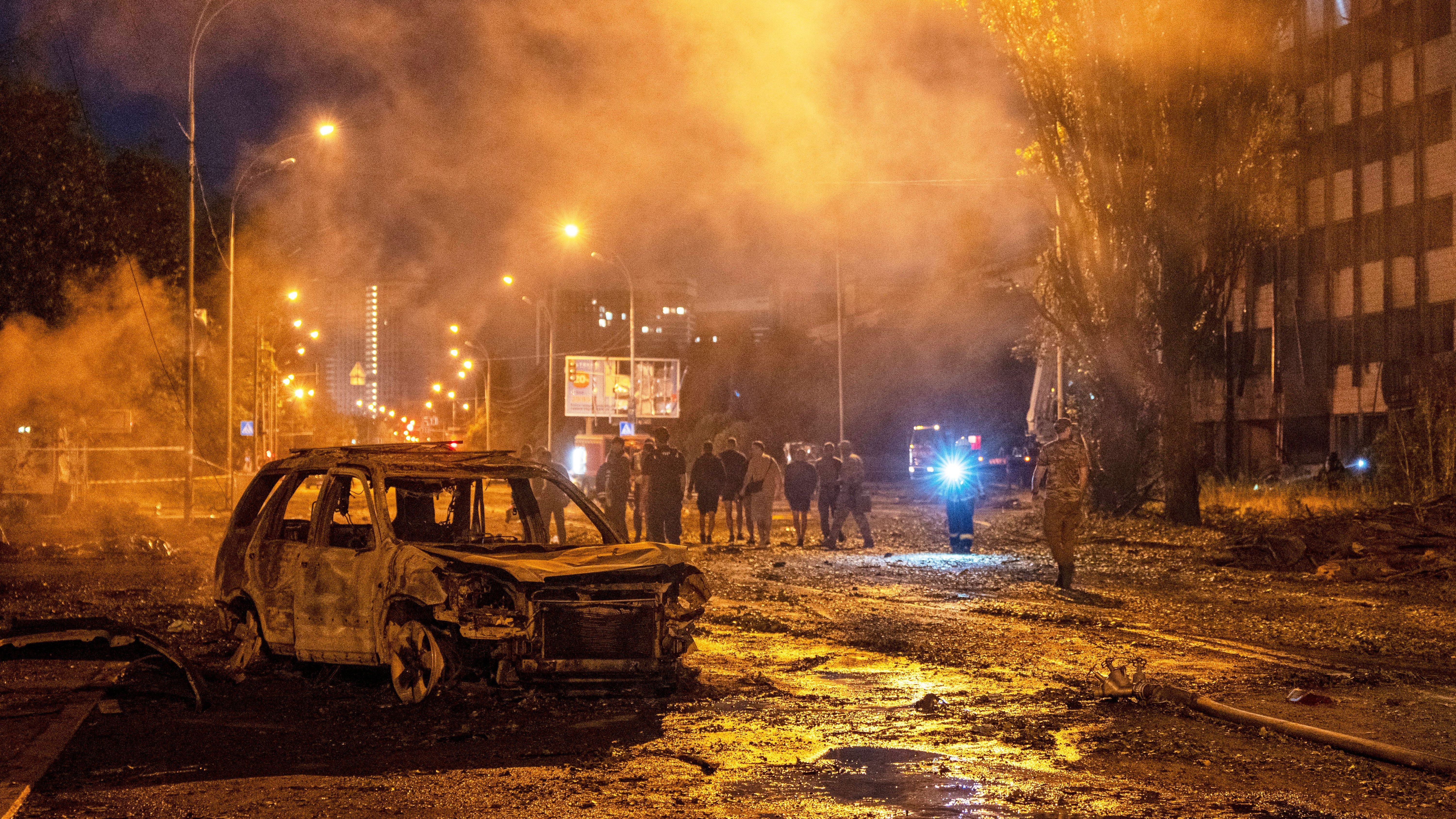
Russia escalated its bombardment of Kyiv with a ballistic missile strike that killed 14 and injured 27. Russia separately damaged freighters near Odessa, Ukraine struck a Wildberries warehouse in Tula, and a North Korean missile unit reportedly deploys to western Russia.
Russia fired missiles at a city called Kyiv while people slept, and 14 of them died and 27 got hurt. Another country called North Korea is sending missiles and soldiers to help Russia. And Poland keeps chasing away Russian spy planes that fly too close to its border.
Analysis
A Capital Under Fire Again
In the overnight attack of August 4-5, a Russian missile strike on Kyiv killed 14 people and injured 27, according to Ukraine's emergency services, which posted the toll on Telegram. Mayor Vitali Klitschko said Russia used ballistic missiles and that air defenses were active throughout the night. Several warehouses in the surrounding Kyiv region were also damaged, a reminder that Moscow continues to frame Ukrainian logistics and supply infrastructure as legitimate targets. The single-night casualty figure ranks among the higher tolls reported in the capital in recent months and underlines the persistent pressure on Ukrainian civilians despite Western calls for restraint.
Ships, Drones, and a Logistics Shadow War
The broader news cycle mapped a parallel escalation at sea. Russia's defense ministry said its forces had damaged three freighters near the port of Odessa, hit three ships in Mykolaiv and another in the Black Sea, and struck a container terminal plus a drone-component warehouse in Chornomorsk — facilities it claimed served military purposes. Ukraine answered with long-range drone strikes: a Wildberries logistics center in Russia's Tula region caught fire, one person was injured, and the Russian e-commerce market leader confirmed the hit on Telegram, saying workers were evacuated and supply chains rerouted. State-linked carrier Fesco, owned by Rosatom, suspended new Black Sea freight orders after Ukrainian sea drones sank its vessel Janina, the company said.
Pyongyang's Missiles and NATO's Eastern Watch
Ukrainian military intelligence chief Andriy Cherniak told reporters that a North Korean missile unit has begun moving toward western Russia and could be equipped with 120 ballistic missiles and six launchers, with roughly 90 North Korean personnel slated for the Voronezh region. Russia has fired North Korean missiles at Ukraine since late 2023, and the two countries signed a mutual defense pact in 2024; Kyiv estimates Pyongyang has additionally shipped millions of artillery shells and deployed 14,000 soldiers to Russia's Kursk region. On NATO's eastern flank, Poland's air force intercepted a Russian Il-20 reconnaissance plane 56 kilometers northeast of Koszalin — the third such intercept in days, according to Defense Minister Władysław Kosiniak-Kamysz, who framed the flights as deliberate probes of the alliance's air defenses.
Key points
- 14 killed and 27 injured in a Russian ballistic missile strike on Kyiv overnight, per Ukraine's emergency services
- Russia's defense ministry says it also damaged three freighters near the port of Odessa
- Ukrainian drones struck a Wildberries logistics center in Russia's Tula region, the company confirmed
- Ukrainian intelligence says a North Korean missile unit is moving toward western Russia's Voronezh region
- Polish air force intercepted a Russian Il-20 reconnaissance plane over the Baltic Sea, the third such incident in days
The reported deployment of a North Korean missile unit to Russia's Voronezh region, potentially equipped with 120 ballistic missiles, marks a deeper escalation than the existing arms pipeline, turning the 2024 mutual defense pact into direct combat support. Continued strikes on Ukrainian ports and warehouses risk a tit-for-tat spiral, already visible in the Wildberries strike and Fesco's Black Sea exit, that could further fragment Black Sea trade and draw in additional Nato members along the eastern flank.
Market signals
- OIL Escalating Russian strikes on Kyiv and renewed targeting of Black Sea port and shipping infrastructure lift supply-disruption risk for seaborne crude flows.
- XAU A widening North Korea–Russia military axis and fresh civilian casualties in Kyiv reinforce safe-haven demand for gold amid geopolitical risk.
AI-generated analysis of potential market relevance. Not financial advice.