US Democrats' Election Program: For a Good and Affordable Life
Ahead of the US midterm elections, Democrats are prioritizing economic issues, particularly "affordability," in their campaign to regain control of at least one chamber of Congress. They aim to counter Republican dominance by focusing on the rising cost of living and othe…
Intelligence analysis by Gemini 2.5 Flash
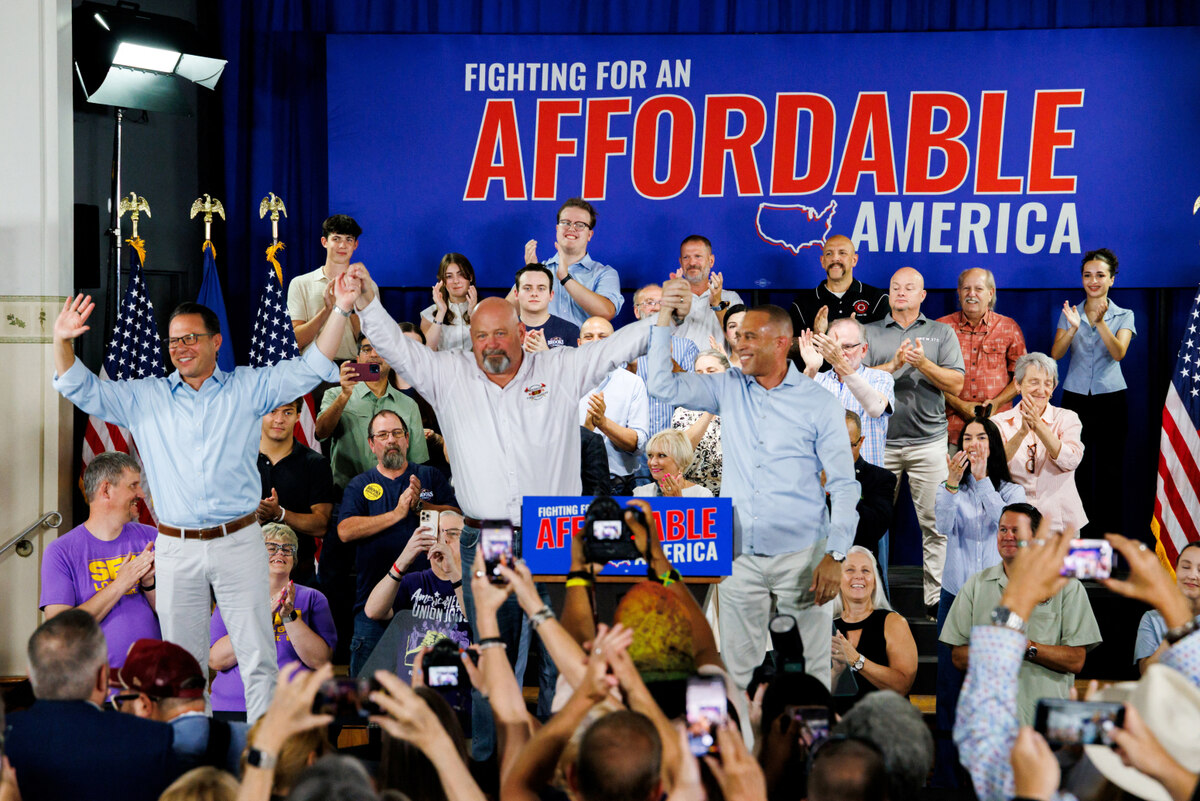
The Democratic Party has unveiled its election program, emphasizing economic themes like affordability, as they seek to break Republican control in the upcoming November congressional elections. House Minority Leader Hakeem Jeffries presented the platform, arguing that the country cannot endure another two years under a "MAGA Republican-led Congress," while Republicans, led by Donald …
Imagine two big teams, the Democrats and the Republicans, are trying to win a game to decide who gets to make the rules for the country. The Democrats are saying, "Life is too expensive! We want to make things like food and housing more affordable for everyone." They think the other team, led by President Trump, has made things harder. The Republicans, though, say the Democrats are too extreme. This game is super important because it will decide what happens for the next two years!
Analysis
The Democratic Party's strategic pivot towards economic issues, encapsulated by the term "affordability," marks a calculated effort to resonate with American voters ahead of the crucial November midterm elections. This focus is not new, having been tested in previous gubernatorial and mayoral elections where it yielded positive results. The article notes that despite promises from the Republican party, the cost of living has continued to climb, exacerbated by geopolitical events like the "war against Iran," according to economists. This economic backdrop provides fertile ground for the Democrats to argue that Republican policies under President Trump are failing the average American.
The Democratic Platform and Political Landscape
House Minority Leader Hakeem Jeffries articulated the party's vision, emphasizing that hard-working Americans should be able to achieve a comfortable and affordable middle-class life. Beyond economic relief, the Democratic platform, should they regain congressional control, includes compelling President Trump to end the "war in Iran," curtailing his administration's deportation policies, and pushing for the release of investigative files related to Jeffrey Epstein. These points underscore a broader agenda that seeks to reverse key Trump-era policies and address issues of transparency and social justice. The historical precedent of midterm elections often serving as a referendum on the incumbent president's administration offers a glimmer of hope for the Democrats, as the president's party has not successfully defended the House majority since 2002.
Challenges and Divisions Within Parties
Despite favorable historical trends, the path to victory is fraught with challenges. Republicans have actively engaged in redistricting efforts to minimize the number of contested seats, making the fight for the House particularly tight, with only 18 out of 435 seats truly open, according to the Cook Political Report. The Senate race is even closer, though Republicans have a strong chance of retaining their majority given that only a third of seats are up for election. Former President Trump's active campaigning for Republican candidates underscores the high stakes. Internally, Democrats face the task of unifying various factions, as left-wing candidates sometimes prioritize different issues, such as US support for Israel, which could create internal friction and distract from the party's core economic message. Meanwhile, Trump continues to label progressive Democrats as "communists," attempting to galvanize his base and paint the opposition in an extreme light.
Key points
- Democrats are focusing their midterm election campaign primarily on economic issues, particularly 'affordability'.
- House Minority Leader Hakeem Jeffries presented the party's program, criticizing a 'MAGA Republican-led Congress'.
- Beyond economics, Democrats aim to end the 'war in Iran', curb deportation policies, and release Jeffrey Epstein files.
- Historically, midterm elections often serve as a referendum on the incumbent president, which could favor Democrats.
- Republicans, led by Donald Trump, are campaigning against 'communists' from the Democratic left wing, while Democrats face internal factional challenges.
If the Democrats successfully rally voters around their "affordability" message and regain control of Congress, they could implement policies aimed at lowering living costs and addressing other key social issues. This shift could lead to a more unified legislative agenda, potentially forcing President Trump to compromise on certain policies and creating a more stable political environment.
Should the Democrats fail to overcome Republican redistricting efforts and internal party divisions, they risk another two years of a divided government, potentially leading to legislative gridlock. The continued focus on economic struggles and the escalating rhetoric from both sides could further polarize the electorate, making it difficult to address pressing national issues effectively.