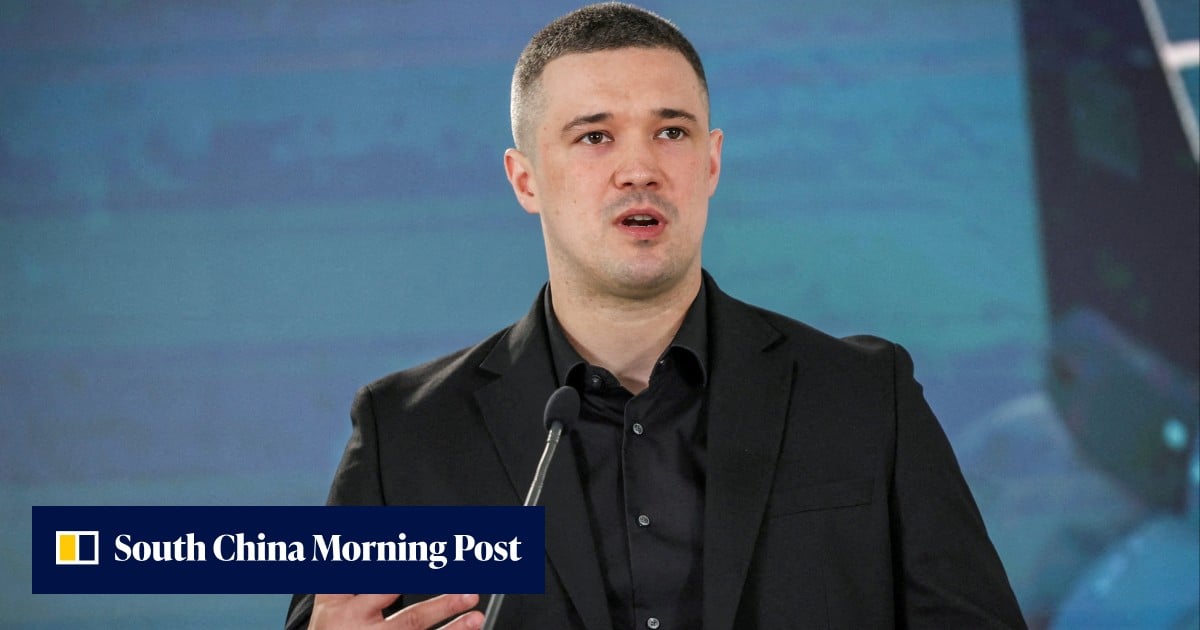
US efforts to secure AI supply chains are doomed to fail, says Chinese academic
A Chinese political scientist, Zheng Yongnian, asserts that US initiatives like Pax Silica aimed at securing AI supply chains are destined to fail, arguing that targeting third parties and restricting access to Chinese models will backfire.
Intelligence analysis by Gemini 2.5 Flash

Zheng Yongnian, dean at the Chinese University of Hong Kong, Shenzhen, criticized Washington's strategy of forming alliances to curb Beijing's tech momentum, suggesting that such efforts, which explicitly target third parties, are inherently flawed. He advocates for US-China collaboration to foster global economic growth instead of escalating technological rivalry.
Imagine two big kids, America and China, are trying to build the coolest LEGO robots. America wants to make sure only its friends help build its robots and doesn't want anyone to use China's cheaper LEGOs. But a smart grown-up from China says this plan won't work because it makes other kids choose sides, and everyone would be better off if America and China just worked together to make more cool LEGOs for everyone to buy.
Analysis
Zheng Yongnian's Critique
Zheng Yongnian, a prominent political scientist and dean of the School of Public Policy at the Chinese University of Hong Kong, Shenzhen, offers a critical assessment of the United States' current strategies regarding artificial intelligence and supply chain security. He firmly asserts that Washington's initiatives, such as Pax Silica, are inherently flawed and ultimately "doomed to fail." His core argument centers on the premise that these frameworks explicitly target third parties, creating an exclusionary environment rather than fostering a collaborative one. This approach, Zheng contends, is unsustainable in the long run and will prove ineffective in achieving its stated objectives of securing supply chains and curbing China's technological advancement.
Furthermore, Zheng Yongnian argues that efforts to restrict US companies' access to low-cost Chinese AI models will not only be unsuccessful but could also backfire on American economic interests. He suggests that such protectionist measures could hinder innovation and increase costs for US businesses, making them less competitive globally. Instead of pursuing a strategy of containment and restriction, Zheng advocates for a fundamental shift towards cooperation. He emphasizes that both the United States and China should actively collaborate on driving global economic development, believing that this joint effort is essential for generating the external demand needed to sustain long-term economic growth for both nations and the broader international community.
Pax Silica and Alliances
The concept of Pax Silica represents a significant component of Washington's strategy to secure critical supply chains across vital technological sectors, including semiconductors, artificial intelligence, and rare earth minerals. These international groupings are explicitly designed with the dual purpose of curbing Beijing's technological momentum and ensuring the resilience and security of supply chains for the United States and its allies. However, Zheng Yongnian views these alliances as fundamentally counterproductive. He argues that their explicit targeting of third parties, rather than focusing on mutual benefit, creates an unstable and ultimately self-defeating framework.
The article highlights the exclusionary nature of these US-led initiatives, noting a Reuters report about a draft State Department document. This document reportedly warned members of Pax Silica that they could face exclusion if they chose to align with the alternative Chinese-led World Artificial Intelligence Cooperation Organisation. This illustrates the zero-sum game mentality that Zheng criticizes, suggesting that such ultimatums will alienate potential partners and undermine the very supply chain security and international cooperation that are ostensibly desired. The emphasis on restriction and forced alignment, rather than inclusive engagement, is identified as a critical misstep that could lead to fragmentation rather than security.
Technological Rivalry's Implications
The escalating technological rivalry between the world's two largest economies, the United States and China, carries profound implications for global trade, innovation, and the future of international relations. Washington's consideration of blacklisting several Chinese AI labs, as reported by US media outlet Axios, signifies a hardening stance aimed at directly restricting China's access to crucial US technology. Such measures are intended to slow China's progress in advanced AI capabilities but risk creating a deeply fragmented global tech ecosystem, where different standards and supply chains emerge, potentially hindering universal technological advancement.
This intense competition extends beyond the high-profile sectors of semiconductors and artificial intelligence to encompass critical minerals, underscoring a broader struggle for control over the foundational elements of future technologies. The long-term consequences of this rivalry could include increased costs for consumers, slower innovation due to duplicated efforts and restricted knowledge sharing, and heightened geopolitical tensions. Zheng Yongnian's call for collaboration, therefore, underscores a potential alternative path, suggesting that a cooperative approach could yield more stable and mutually beneficial outcomes for global economic development, rather than a confrontational strategy that risks destabilizing international supply chains and impeding overall technological progress worldwide.
Key points
- Chinese academic Zheng Yongnian believes US AI supply chain initiatives like Pax Silica are destined to fail.
- He argues that targeting third parties and restricting access to low-cost Chinese models will be counterproductive.
- Zheng advocates for US-China collaboration to drive global economic development and sustain long-term growth.
- US initiatives aim to curb Beijing's tech momentum in AI, semiconductors, and critical minerals.
- The US has reportedly warned Pax Silica members against joining a Chinese-led AI organization and considered blacklisting Chinese AI labs.
If the US and China heed calls for collaboration, they could jointly drive global economic development, creating external demand that sustains long-term growth for both nations and fosters a more stable international tech landscape.
Continued US efforts to restrict China's access to technology and target third parties could backfire, leading to a fragmented global supply chain, increased geopolitical tensions, and a slowdown in overall technological innovation and economic growth.