US general's warning underscores Iran's strategic success
A US general warns of insufficient naval assets to protect Israel, highlighting Iran's strategic success.
Intelligence analysis by Llama 3.3 70B
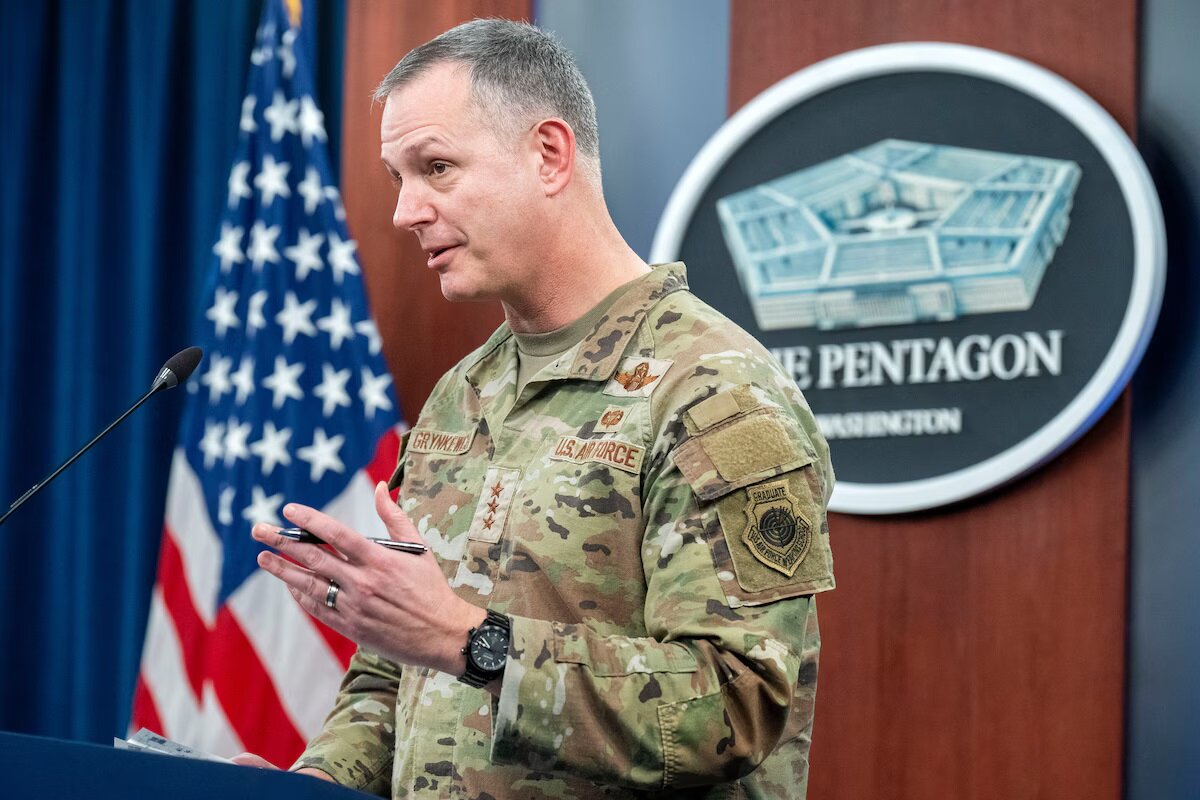
The US general's warning marks a turning point in the US-Israeli war on Iran, revealing strategic limits and the effectiveness of Tehran's defensive architecture.
Imagine a big country like the US trying to protect its friend Israel from another country called Iran. But the US general says they don't have enough ships to do that and keep their own country safe at the same time. This shows that Iran is doing a good job of defending itself.
Analysis
A Shift in the Balance of Power
The warning from General Alexus Grynkewich, commander of US European Command, marks a significant shift in the balance of power between the US and Iran. The general's admission that he lacks sufficient naval assets to continue protecting Israel without abandoning the defense of the US homeland reveals the strategic limits of the US military. This shift is a result of Iran's ability to transform Western power projection into a strategic liability.
The Operational Realities of Missile-Defense Warfare
The crisis facing US forces lies in the stark operational realities of missile-defense warfare. The US Navy's forward-deployed destroyers in Rota, Spain, are facing maintenance backlogs and operational fatigue, which has led to a rapid depletion of interceptor stocks. This has forced Washington to fire multi-million-dollar interceptors against sustained salvos launched by Iranian defense forces and regional allies, exposing the severe mathematical limits of Western air defense umbrellas.
The Economic Repercussions
The economic repercussions of the war within the United States continue to destabilize the political viability of the conflict. The closure of key trade routes and the disruption of energy flows through the Strait of Hormuz have pushed domestic gas and food prices to unprecedented levels. American taxpayers are feeling the effects of the war, and opposition in Congress is growing.
Key points
- US general warns of insufficient naval assets to protect Israel
- Iran's defensive architecture is effective
- US facing operational and economic challenges in the conflict
If the US and Iran can find a way to resolve their differences, it could lead to a more stable region and lower energy prices for Americans. This could also lead to increased trade and economic cooperation between the two countries.
If the conflict escalates, it could lead to a wider war in the region, causing more suffering for civilians and damaging the global economy. The US could also face increased opposition from its allies and a decline in its international influence.
Market signals
- OIL Disruption of energy flows through the Strait of Hormuz has pushed domestic gas and food prices to unprecedented levels.
AI-generated analysis of potential market relevance. Not financial advice.