U.S.-Iran Live Updates: Iran declares it has won the war as U.S. turns to economic warfare
Iran's President Masoud Pezeshkian said Friday the world had 'approved' the country's victory over the U.S. and the war should therefore end. President Trump said Friday that Iran 'would love to make a deal' but that 'they are not ready to make the right deal.'
Intelligence analysis by Llama
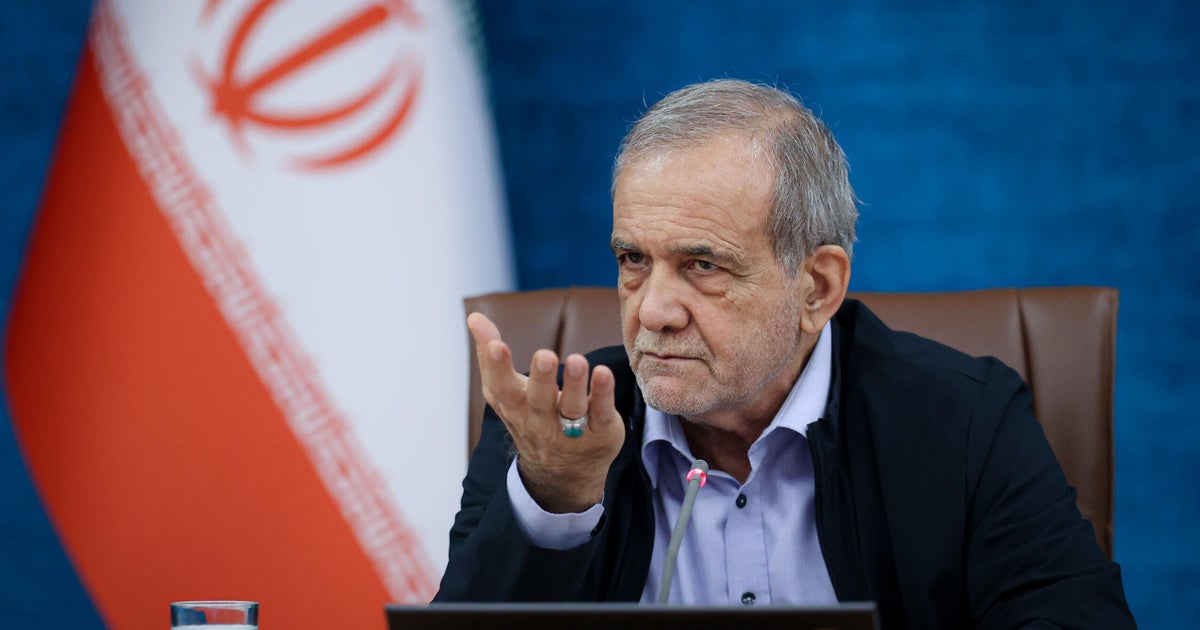
Iran's President Masoud Pezeshkian declared victory over the U.S. in the ongoing war, while President Trump emphasized the need for a 'right deal' with Iran. The U.S. has imposed economic sanctions on Iran, aiming to force its leadership to cave to demands to end its nuclear program and fully reopen the Strait of Hormuz to oil and natural gas tankers.
Imagine you're playing a game of chess with your friend. You both make moves, and the game gets more and more intense. That's kind of like what's happening between the U.S. and Iran. They're both making moves, and the situation is getting more and more complicated. The U.S. is trying to hurt Iran's economy by not letting them sell oil, but Iran is finding ways to keep selling oil. It's a big game of cat and mouse, and it's hard to predict what will happen next.
Analysis
Iran's Victory Declaration: A Turning Point in the War?
Iran's President Masoud Pezeshkian's declaration of victory over the U.S. in the ongoing war marks a significant turning point in the conflict. The statement, made on Friday, suggests that Iran believes it has achieved its objectives and is now seeking to end the war. However, the U.S. has not yet acknowledged Iran's victory, and the war continues to escalate.
The U.S. has imposed economic sanctions on Iran, aiming to force its leadership to cave to demands to end its nuclear program and fully reopen the Strait of Hormuz to oil and natural gas tankers. The sanctions, which include restrictions on Iran's oil exports and access to international financial markets, are designed to cripple Iran's economy and force it to negotiate a peace deal.
However, Iran has shown resilience in the face of the sanctions, and its economy has continued to grow despite the challenges. The country has also made significant progress in its nuclear program, with the International Atomic Energy Agency (IAEA) reporting that Iran has made significant advancements in its nuclear capabilities.
The war between the U.S. and Iran has significant implications for global politics and economy. The conflict has led to a significant increase in tensions between the two countries, and has also had a major impact on the global economy. The sanctions imposed by the U.S. have led to a significant decrease in Iran's oil exports, which has had a major impact on the global oil market.
Economic Warfare: A New Front in the War?
The U.S. has also launched a new front in the war against Iran, with the imposition of economic sanctions. The sanctions, which include restrictions on Iran's oil exports and access to international financial markets, are designed to cripple Iran's economy and force it to negotiate a peace deal.
However, Iran has shown resilience in the face of the sanctions, and its economy has continued to grow despite the challenges. The country has also made significant progress in its nuclear program, with the IAEA reporting that Iran has made significant advancements in its nuclear capabilities.
The Future of the War: What's Next?
The war between the U.S. and Iran is far from over, and the future of the conflict remains uncertain. The U.S. has imposed economic sanctions on Iran, aiming to force its leadership to cave to demands to end its nuclear program and fully reopen the Strait of Hormuz to oil and natural gas tankers. However, Iran has shown resilience in the face of the sanctions, and its economy has continued to grow despite the challenges.
The country has also made significant progress in its nuclear program, with the IAEA reporting that Iran has made significant advancements in its nuclear capabilities. The war between the U.S. and Iran has significant implications for global politics and economy, and the future of the conflict remains uncertain.
Key points
- Iran's President Masoud Pezeshkian declared victory over the U.S. in the ongoing war.
- The U.S. has imposed economic sanctions on Iran, aiming to force its leadership to cave to demands to end its nuclear program and fully reopen the Strait of Hormuz to oil and natural gas tankers.
- Iran has shown resilience in the face of the sanctions, and its economy has continued to grow despite the challenges.
- The war between the U.S. and Iran has significant implications for global politics and economy.
If the U.S. and Iran can find a way to negotiate a peace deal, it could lead to a significant reduction in tensions and a boost to the global economy. The U.S. could also consider lifting some of the economic sanctions it has imposed on Iran, which could help to improve relations between the two countries.
If the war between the U.S. and Iran continues to escalate, it could lead to a significant increase in tensions and a major impact on the global economy. The U.S. could also consider imposing even more severe economic sanctions on Iran, which could lead to a further decline in the country's economy.