US Justice Department investigating whether Harvard aid programmes are discriminatory
The US Justice Department is investigating whether Harvard University's financial aid programmes are discriminatory, specifically whether Chinese donors are creating scholarships that exclude American students.
Intelligence analysis by Llama
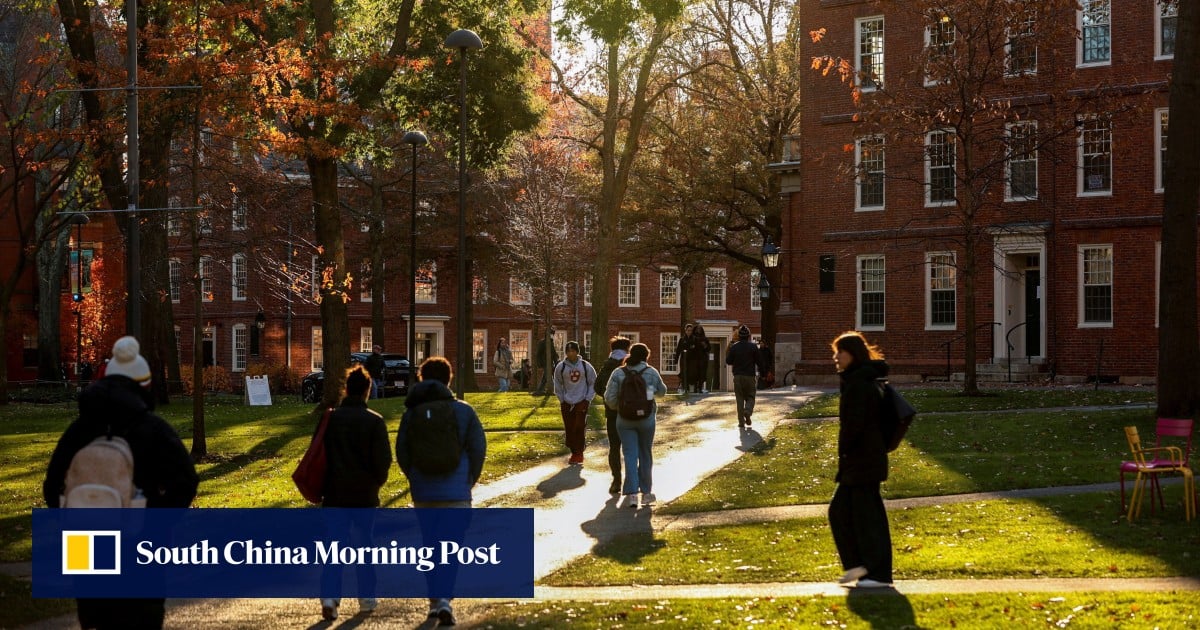
The US Justice Department is reviewing Harvard University's financial aid programmes to determine if they are discriminatory, particularly if Chinese donors are creating scholarships that exclude American students. The investigation is the latest fight against the university by Donald Trump's administration.
Imagine you're a student at Harvard University, and you're trying to get a scholarship to help pay for your education. But the scholarship is only available to students from certain countries, like China. That's not fair, because it means American students like you are being left out. The US Justice Department is investigating whether Harvard is doing this, and it's a big deal because it could affect how American universities get money from foreign countries.
Analysis
A $60B Vote of Confidence
Harvard University has long been a symbol of American excellence in education, but a recent investigation by the US Justice Department has raised questions about the university's financial aid programmes. The investigation, which was launched in response to allegations that Harvard is accepting money from Chinese donors to create scholarships that exclude American students, has sparked a heated debate about the role of foreign funding in American education.
Why Cursor?
The Justice Department's investigation is not the first time that Harvard has faced scrutiny over its financial aid programmes. In 2020, the university was accused of accepting money from the Chinese government to create a scholarship programme that excluded American students. At the time, Harvard denied any wrongdoing, but the incident highlighted the complex web of relationships between American universities and foreign governments.
The Road Ahead
The outcome of the Justice Department's investigation is still unclear, but it is likely to have significant implications for Harvard and other American universities that receive foreign funding. If the investigation finds that Harvard has indeed accepted money from Chinese donors to create scholarships that exclude American students, it could lead to a major scandal and potentially even sanctions against the university. On the other hand, if the investigation finds no wrongdoing, it could be seen as a victory for Harvard and a vindication of its policies. Either way, the story is likely to have significant implications for the future of American education and the role of foreign funding in it.
Key points
- The US Justice Department is investigating whether Harvard University's financial aid programmes are discriminatory.
- The investigation is focused on whether Chinese donors are creating scholarships that exclude American students.
- Harvard has denied any wrongdoing, but the incident has highlighted the complex web of relationships between American universities and foreign governments.
If the investigation finds that Harvard has not accepted money from Chinese donors to create scholarships that exclude American students, it could be a victory for the university and a vindication of its policies. It could also lead to a more transparent and accountable system for foreign funding in American education.
On the other hand, if the investigation finds that Harvard has indeed accepted money from Chinese donors to create scholarships that exclude American students, it could lead to a major scandal and potentially even sanctions against the university. It could also damage the reputation of Harvard and other American universities that receive foreign funding.