US launches 10th night of airstrikes on Iran after attacks on Bahrain, Kuwait
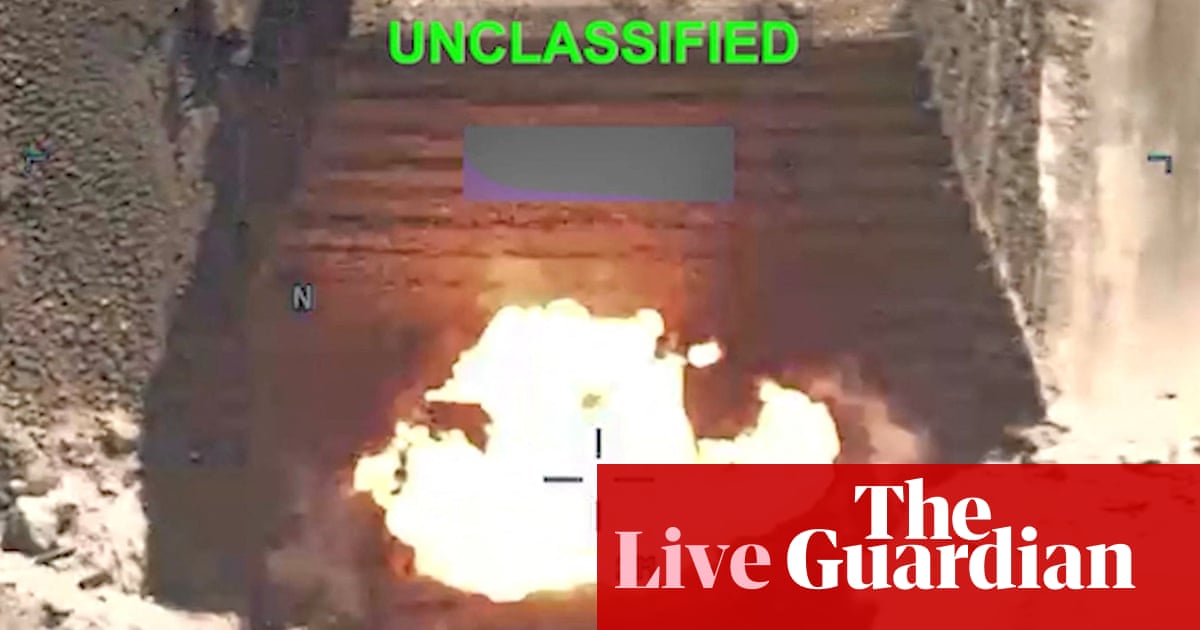
The US military said it completed its latest round of strikes on Iran, targeting various sites to counter Tehran's ability to attack ships transiting the Strait of Hormuz. Iran's Revolutionary Guards said they hit US military targets including air defence systems in Bahra…
Intelligence analysis by Llama
The US military has launched its 10th consecutive night of airstrikes on Iran, targeting Iranian military command centers, maritime capabilities, missile and drone launch sites, and air defense systems. Iran's Revolutionary Guards have retaliated by hitting US military targets in Bahrain and Kuwait.
Imagine you're playing a game of tag with your friends. The US and Iran are like two teams playing a game of tag, but instead of running around, they're using missiles and drones to try and catch each other. The US has been launching airstrikes on Iran's military capabilities, and Iran has been retaliating by hitting US targets in Bahrain and Kuwait. It's a very serious situation that could have big consequences for the world.
Analysis
A Decade of Escalation: The US-Iran Conflict Reaches a Boiling Point
The US military's 10th consecutive night of airstrikes on Iran marks a significant escalation in the conflict between the two nations. The strikes, which targeted Iranian military command centers, maritime capabilities, missile and drone launch sites, and air defense systems, are a direct response to Iran's ability to attack ships transiting the Strait of Hormuz. The US Central Command has stated that the strikes were designed to degrade Iran's ability to continue attacking commercial vessels flowing through the Strait of Hormuz.
Iran's Revolutionary Guards have retaliated by hitting US military targets in Bahrain and Kuwait. The Guards have stated that they struck two air defense systems and a radar installation at two different US outposts in Bahrain, as well as missile defense systems and radars and satellite reception systems in Kuwait. The announcement came as the United States said it struck Iranian military command centers, air defense systems, and missile launch sites in overnight attacks.
The conflict between the US and Iran has significant implications for global security and trade. The Strait of Hormuz is a critical waterway that connects the Persian Gulf to the Gulf of Oman, and any disruption to shipping traffic through the strait could have far-reaching consequences for the global economy. The US airstrikes on Iran's military capabilities and the Iranian retaliation on US targets in Bahrain and Kuwait highlight the growing tensions in the Middle East.
The Road Ahead: What's Next for the US-Iran Conflict?
The US-Iran conflict has been ongoing for over a decade, with both nations engaging in a series of proxy wars and diplomatic efforts to resolve their differences. However, the recent escalation in the conflict has raised concerns about the potential for a wider war. The US has stated that it will continue to take military action against Iran if necessary, while Iran has vowed to retaliate against any further US aggression.
The situation is further complicated by the presence of other regional actors, including Saudi Arabia and the United Arab Emirates, which have been critical of Iran's actions in the region. The conflict has also drawn in other global powers, including the United States, which has been providing military support to the Saudi-led coalition in Yemen.
The Human Cost of War: Civilians Caught in the Crossfire
The US-Iran conflict has had a devastating impact on civilians in the region. The conflict has resulted in the deaths of hundreds of civilians, including women and children, and has displaced thousands more. The conflict has also had a significant impact on the local economy, with many businesses and industries affected by the disruption to shipping traffic through the Strait of Hormuz.
The US and Iran have both been accused of violating international humanitarian law in the conflict. The US has been accused of targeting civilian infrastructure, including hospitals and schools, while Iran has been accused of using civilians as human shields. The situation is further complicated by the presence of other regional actors, including Saudi Arabia and the United Arab Emirates, which have been accused of violating international humanitarian law in their own military campaigns in Yemen.
The conflict between the US and Iran has significant implications for global security and trade. The US airstrikes on Iran's military capabilities and the Iranian retaliation on US targets in Bahrain and Kuwait highlight the growing tensions in the Middle East. The situation is further complicated by the presence of other regional actors and the potential for a wider war.
Key points
- The US military has launched its 10th consecutive night of airstrikes on Iran, targeting Iranian military command centers, maritime capabilities, missile and drone launch sites, and air defense systems.
- Iran's Revolutionary Guards have retaliated by hitting US military targets in Bahrain and Kuwait.
- The conflict between the US and Iran has significant implications for global security and trade.
- The US airstrikes on Iran's military capabilities and the Iranian retaliation on US targets in Bahrain and Kuwait highlight the growing tensions in the Middle East.
- The situation is further complicated by the presence of other regional actors, including Saudi Arabia and the United Arab Emirates, which have been critical of Iran's actions in the region.
If the US and Iran can find a way to de-escalate the conflict and negotiate a peaceful resolution, it could lead to a significant reduction in tensions in the Middle East and a decrease in the risk of a wider war. The US and Iran have both stated that they want to avoid a wider conflict, and there are many international actors who are working to facilitate a peaceful resolution to the conflict.
If the conflict between the US and Iran continues to escalate, it could lead to a wider war that involves other regional actors and even global powers. This could have devastating consequences for civilians in the region and could lead to a significant increase in the risk of a global conflict.