US lifts some Hong Kong sanctions imposed by Trump, autonomy status unchanged
The United States has partially removed Hong Kong-related sanctions and trade restrictions imposed by President Donald Trump in 2020 over China's security crackdown on the territory, but did not restore its autonomous status.
Intelligence analysis by Llama
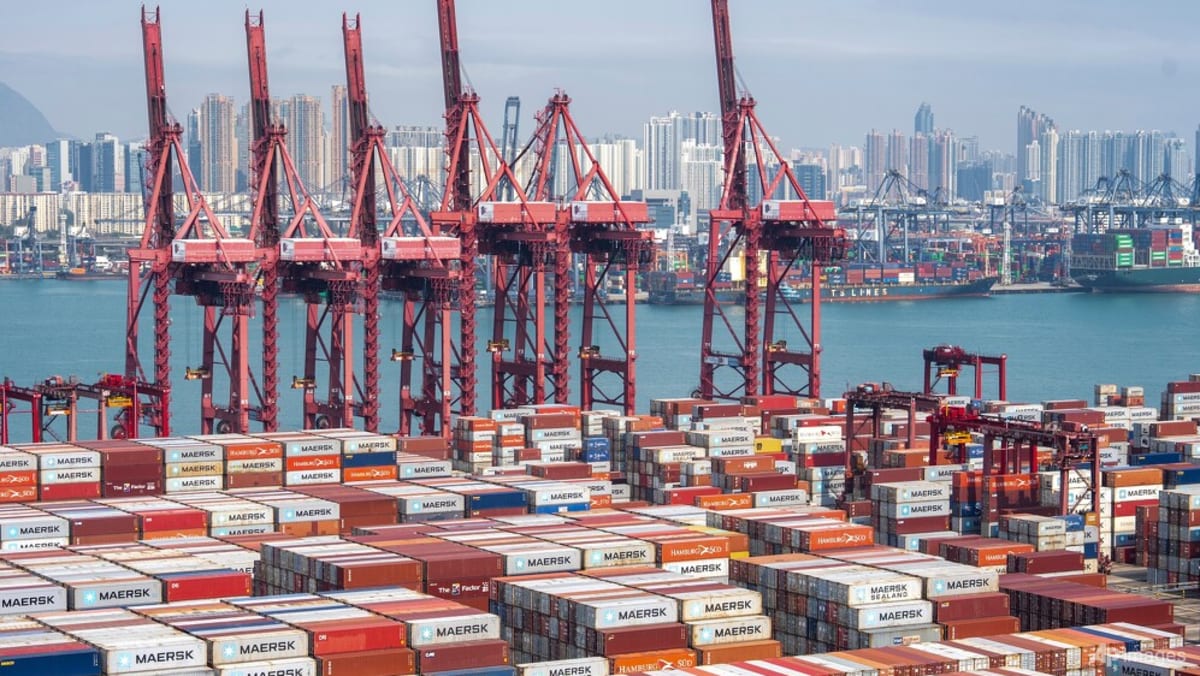
The US has lifted some sanctions on Hong Kong, but its autonomy status remains unchanged. The decision comes after recent trade talks between Washington and Beijing that also produced tariff reductions.
Imagine Hong Kong as a special economic zone that was treated differently from mainland China. The US had imposed some sanctions on Hong Kong, but now it's lifting some of those sanctions. However, Hong Kong's autonomy status remains unchanged, which means it's still not fully independent from China.
Analysis
A Partial Reversal of Trump's Sanctions
The United States has partially removed Hong Kong-related sanctions and trade restrictions imposed by President Donald Trump in 2020 over China's security crackdown on the territory. However, the US has not restored Hong Kong's autonomous status, which was a key principle of its special economic and trade status with the US.
The decision to let the order lapse marks a significant reversal and comes after recent trade talks between Washington and Beijing that also produced tariff reductions. The US has treated Hong Kong the same as China on tariffs and export controls since 2020, but it was not immediately clear whether the order's expiration would affect duties imposed by Trump since he returned to office in January 2025.
Why the US Decision Matters
The US decision to lift some sanctions on Hong Kong has significant implications for the territory's economy and trade status. Hong Kong had benefited from a special economic and trade status with the US that was separate from US dealings with China. This status was based on the principle that Hong Kong remained a separate customs territory and maintained a high degree of autonomy after its 1997 handover from Britain to China.
The Road Ahead
The decision to let the order lapse marks a significant reversal and comes after recent trade talks between Washington and Beijing that also produced tariff reductions. The US has treated Hong Kong the same as China on tariffs and export controls since 2020, but it was not immediately clear whether the order's expiration would affect duties imposed by Trump since he returned to office in January 2025.
Key points
- The US has partially removed Hong Kong-related sanctions and trade restrictions imposed by President Donald Trump in 2020 over China's security crackdown on the territory.
- The US has not restored Hong Kong's autonomous status, which was a key principle of its special economic and trade status with the US.
- The decision to let the order lapse marks a significant reversal and comes after recent trade talks between Washington and Beijing that also produced tariff reductions.
- The US has treated Hong Kong the same as China on tariffs and export controls since 2020, but it was not immediately clear whether the order's expiration would affect duties imposed by Trump since he returned to office in January 2025.
If this development plays out positively, it could lead to increased trade and economic cooperation between the US and Hong Kong, which could benefit both parties. Additionally, the lifting of some sanctions could lead to a more stable and predictable business environment for companies operating in Hong Kong.
However, there are also potential risks and downsides to this development. For example, the lifting of some sanctions could lead to a decrease in the US's leverage over Hong Kong, which could make it more difficult for the US to influence Hong Kong's policies and actions. Additionally, the decision to let the order lapse could lead to a decrease in the US's commitment to upholding human rights and democracy in Hong Kong.