US unexpectedly lost 23,000 jobs in July as slump in growth continues
US employers unexpectedly lost 23,000 jobs in July, and gains for the previous two months were revised down sharply by a combined 103,000 jobs, painting a weaker picture of the labor market than past data indicated.
Intelligence analysis by Llama
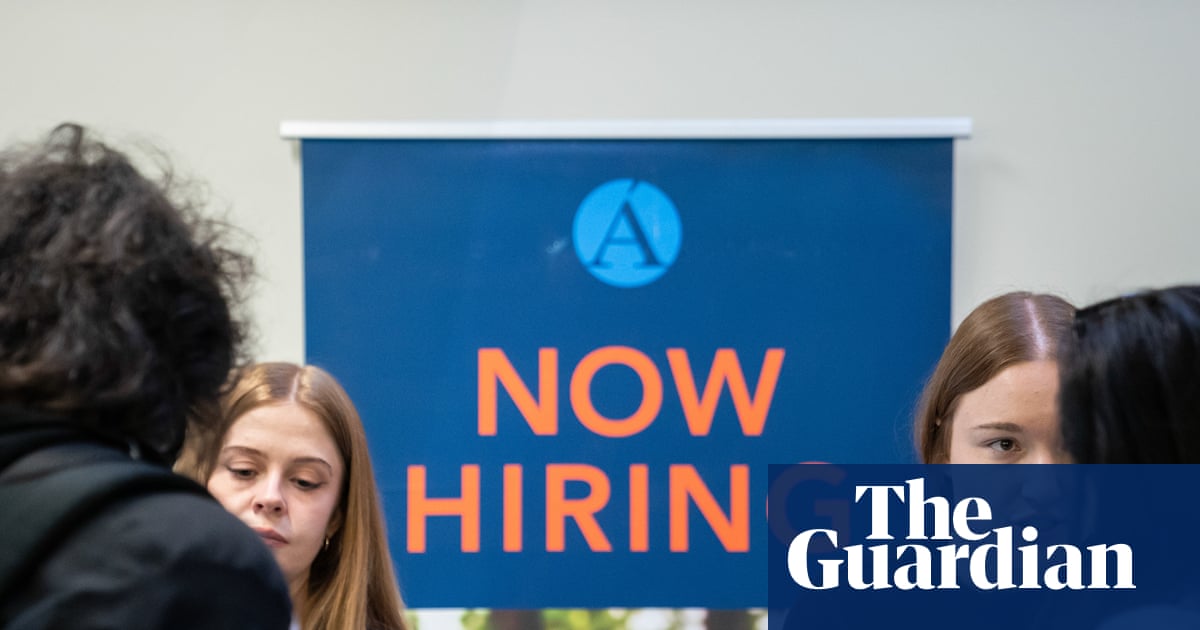
The US labor market is experiencing a summer slump in job growth, with July's job losses concentrated in local government education and retail, and the unemployment rate holding steady at 4.1%.
Imagine you're at a big career fair, but instead of lots of companies hiring, there are fewer jobs available. That's what's happening in the US labor market right now. The number of jobs lost in July was unexpected, and it's making economists think that the Federal Reserve might not raise interest rates as much as they thought. This is because the inflation rate is still high, and the Fed wants to control it.
Analysis
Labor Market Slump Continues Amid Ongoing Conflict in the Middle East
The US labor market is experiencing a summer slump in job growth, with July's job losses concentrated in local government education and retail. The private sector, however, gained 30,000 jobs, with growth focused once again in healthcare. Hourly earnings of all employees changed little over the past year, increasing by 3.2% compared to last year.
The continued slump in job growth amid ongoing conflict in the Middle East has put pressure on the US Federal Reserve to raise interest rates to combat persistently high inflation. However, July's job report and its latest revisions may cool those expectations at the central bank's next meeting. The annualized inflation rate in June was 3.5% – 0.8% higher than a year prior.
Economists are closely watching the labor market and inflation as officials at the Fed have become divided on whether to raise interest rates or leave them unchanged. Though the Fed held rates steady last month, officials indicated that they expect at least one rate hike before the end of the year to combat price increases. The deciding factor for the next rate meeting will probably be the inflation data scheduled to be released next week.
The Democratic senator Elizabeth Warren has already criticized President Trump for the worse-than-expected report, stating that his failing economic agenda is weakening the labor market. Job growth in May and June was revised down by more than 100,000 jobs, job openings have fallen, and more people are out of the labor force than at any time on record. And wage growth slowed, straining families' paychecks even more as they struggle to keep up with Trump's inflation.
Key points
- US employers lost 23,000 jobs in July, a weaker picture of the labor market than past data indicated.
- Gains for the previous two months were revised down sharply by a combined 103,000 jobs.
- The unemployment rate held steady at 4.1%.
- The private sector gained 30,000 jobs, with growth focused once again in healthcare.
- Hourly earnings of all employees changed little over the past year, increasing by 3.2% compared to last year.
If the Federal Reserve decides to raise interest rates, it could help control inflation and make the economy grow stronger in the long run. However, this could also make borrowing money more expensive, which might slow down economic growth in the short term.
If the Federal Reserve doesn't raise interest rates, it could lead to higher inflation and a weaker economy in the long run. This could also make it harder for people to afford basic necessities like housing and food.