When will the Iran war end? Here's what Trump has said.
Trump has repeatedly said the Iran war would end soon, but his timelines have kept changing as ceasefire talks and deal claims have shifted.
Intelligence analysis by GPT-5.4 Mini
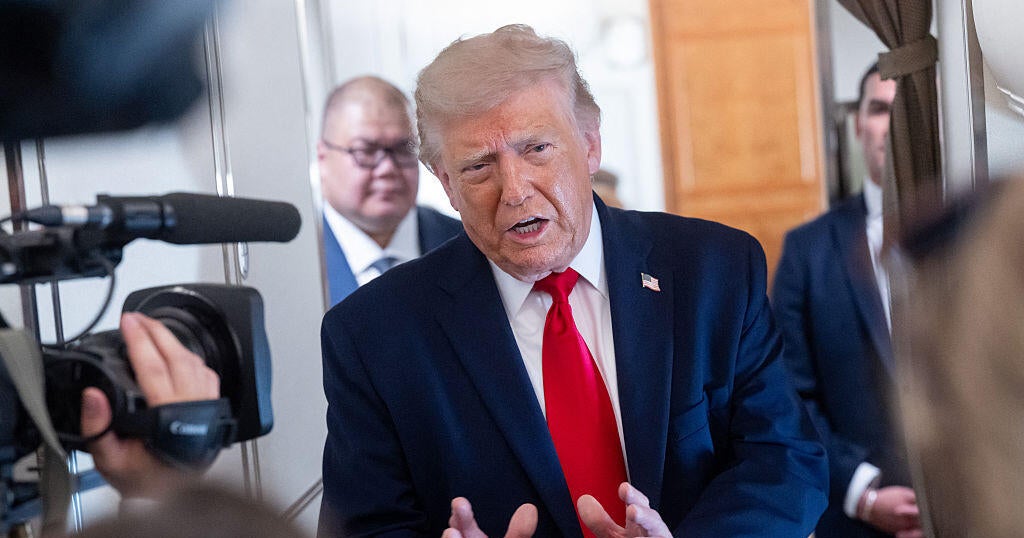
CBS News tracks how President Trump has described the Iran war from early March through late May, showing a pattern of short deadlines, upbeat claims, and shifting language even as the conflict dragged on and a durable settlement remained elusive.
It is like someone keeps saying a messy game will end in a few minutes, then keeps changing the clock. Trump has said the Iran war was almost over many times, but the fighting and talks have kept going.
Analysis
What Trump said
CBS News lays out a timeline of President Trump’s public comments on the Iran war from early March through late May. At first, he said the fighting would last about four to five weeks, and later he repeatedly suggested the conflict was close to ending. His language shifted over time: sometimes he called it a war, and at other times he described it as an “excursion.”
How the timeline changed
The article notes that Trump’s early estimate of four to five weeks came on March 1 and March 2, when he said the U.S. and Israel could sustain the assault and were even ahead of schedule. By March 9, he said the war was “very complete” and would end “very soon.” Later in March, he said it would last “as long as it’s necessary,” then suggested a deal could emerge within days. On March 31 and April 1, he said the U.S. would leave Iran “very soon” and that the fighting would continue for only a couple more weeks.
What happened next
A ceasefire was announced on April 7, and Trump said he agreed to suspend bombing and attacks for two weeks. But the piece says there were still intermittent attacks and no full agreement on issues such as Iran’s nuclear program or opening the Strait of Hormuz without conditions. In late May, Trump posted that a deal had been “largely negotiated,” then said shortly afterward that he would not rush into one and that both sides should take their time.
The broader takeaway
The article’s central point is that Trump has repeatedly projected a quick end to the conflict, but the war has outlasted those forecasts and the final status remains uncertain. The article uses his own statements to show how the administration has tried to present momentum without offering a fully settled endgame.
Key points
- Trump has repeatedly said the Iran war would end within days or weeks, but those timelines have stretched out.
- CBS News says the U.S. and Israeli offensive began on Feb. 28 and a ceasefire was later announced in April.
- The article says there is still no agreement on ending Iran’s nuclear capabilities or reopening the Strait of Hormuz without conditions.
- Trump later claimed a deal was largely negotiated, then said he would not rush into one.
If the ceasefire holds and a deal is finalized, the conflict could move from fighting to negotiations. That could reduce the risk of more attacks and make it easier to settle the nuclear and shipping issues the article highlights.
The article shows no firm agreement on Iran’s nuclear capabilities or the Strait of Hormuz, so the ceasefire could remain fragile. If the parties cannot settle those issues, intermittent attacks and renewed escalation could continue despite White House claims that the war is nearly over.