Who is Andy Burnham, the man replacing British Prime Minister Keir Starmer after his resignation?
British Prime Minister Keir Starmer announced his resignation, and attention shifted to Andy Burnham, who will replace him. Burnham was the mayor of Manchester and won a local by-election to become a member of Parliament.
Intelligence analysis by Llama
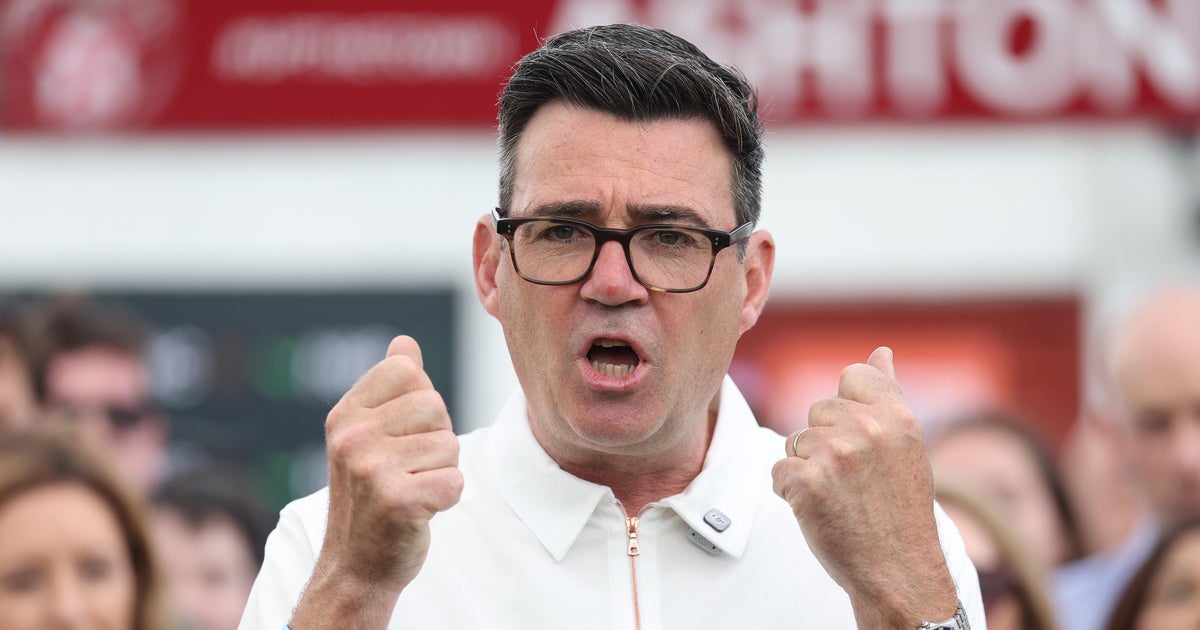
British Prime Minister Keir Starmer resigned, and Andy Burnham, the former mayor of Manchester, is likely to replace him. Burnham won a local by-election to become a member of Parliament and has been positioning himself as a viable alternative to Starmer.
Andy Burnham is a British politician who is likely to replace Keir Starmer as the leader of the Labour Party. He was the mayor of Manchester and won a local by-election to become a member of Parliament. Burnham wants to be a leader who understands the needs of post-industrial Britain and is against adopting American-style politics.
Analysis
A New Leader for the Labour Party
Andy Burnham, the former mayor of Manchester, is likely to replace Keir Starmer as the leader of the Labour Party. Burnham's victory in the Makerfield by-election was significant, as he won decisively in a constituency that Labour has struggled to hold onto in recent years. The seat is predominantly White British, traditionally working-class, post-industrial, and voted heavily to leave the European Union in the 2016 Brexit referendum.
Burnham has spent years positioning himself as a viable alternative to Starmer, criticizing Labour's leadership at moments of weakness while carefully cultivating his own national profile. However, it's not clear what policies Burnham might try to implement when he does become the country's next leader that would really differentiate him from Starmer. He may be reluctant to make any dramatic changes as Labour will seat him, or whoever replaces Starmer, without winning a new mandate for the party through national elections.
A Champion of Northern England
Burnham built a reputation as a champion of northern England, particularly during the COVID-19 pandemic, when he publicly clashed with then-Prime Minister Boris Johnson's rival Conservative Party government over financial support for his city. He has also championed a model of regional devolution — giving city councils more power — and civic pride that is now sometimes referred to as 'Manchesterism.' This, his supporters argue, is where he differs from Starmer. They portray him as an authentic voice for post-industrial Britain — a man who understands communities that feel neglected by London.
A Polarized Politics
Burnham has warned the U.K. against adopting American-style politics, which he believes would lead to a polarized and poisonous politics where people in communities don't work together anymore. He has also expressed concerns about the impact of immigration on living standards, which has been a major issue in recent years. However, his views on immigration and Britain's post-Brexit relationship with Europe are not clear, and he has previously expressed support for Britain eventually rejoining the European Union, but has since distanced himself from that position.
Key points
- Andy Burnham is likely to replace Keir Starmer as the leader of the Labour Party.
- Burnham won a local by-election to become a member of Parliament.
- Burnham has spent years positioning himself as a viable alternative to Starmer.
- Burnham has a reputation as a champion of northern England.
- Burnham has warned the U.K. against adopting American-style politics.
Burnham's leadership could bring a new perspective to the Labour Party and help the party reconnect with voters in post-industrial Britain. He has a reputation as a champion of northern England and has built a model of regional devolution that could benefit the country.
Burnham's leadership could also lead to a polarized politics in the U.K., where people in communities don't work together anymore. His views on immigration and Britain's post-Brexit relationship with Europe are not clear, and he has previously expressed support for Britain eventually rejoining the European Union, but has since distanced himself from that position.