Why Calls to ‘Save Democracy’ Don’t Work
The essay argues that many Trump voters do not reject democracy itself, but see government as failing faith, family, freedom, and local community.
Intelligence analysis by GPT-5.4 Mini
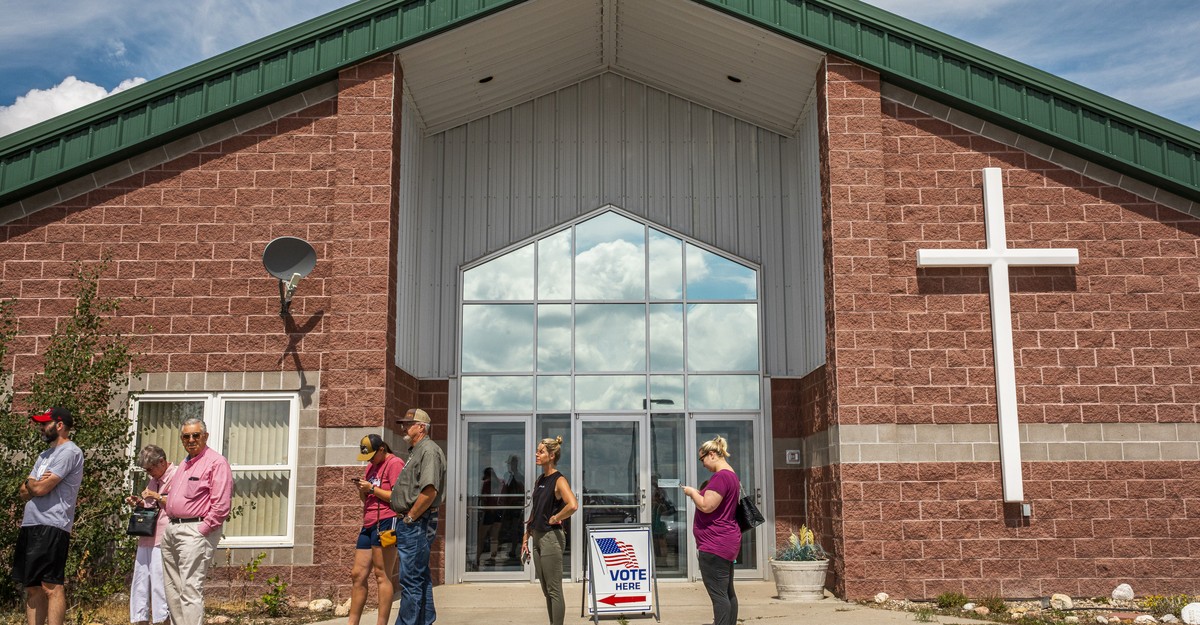
After interviews in Wyoming, Michigan, and South Carolina, the piece argues that conservative Trump voters judge democracy by whether institutions stay faithful to moral and local values. That is why abstract appeals to “save democracy” often fail to move them.
The article says some people see government like a school that stopped listening to the kids. They care more about faith, family, and their hometown than big speeches about democracy, so “save democracy” does not feel like the right fix.
Analysis
What the article argues
The essay says the usual warning that Trump is a threat to democracy does not persuade many conservative voters, even those who value the Constitution, elections, the Electoral College, and the rule of law. The reason, the authors argue, is that these voters do not ask first whether America should be a democracy. They ask whether democratic institutions still act in line with what they consider legitimate: faith, family, freedom from government overreach, and local community.
What the interviews showed
The authors say they spent months talking with and observing conservative Trump voters in three counties across Wyoming, Michigan, and South Carolina. A recurring pattern emerged: people described conventional institutions as having failed them, while churches, family networks, and local groups stepped in to provide care and trust. One woman in rural Wyoming, for example, said her church helped raise her family and gave her dignity in a way public institutions never had. That experience shaped how she judged government later in life.
Why Trump still fits their worldview
The piece argues that many of these voters do not see Trump as a personal role model. Instead, they see him as someone who pushes back against institutions they believe have drifted away from their values. In that view, political norms are not sacred if they simply preserve a system that feels morally empty or disconnected from their lives.
The larger takeaway
The article’s central point is that pro-democracy appeals can sound thin if they do not address the deeper crisis of trust. For these voters, legitimacy is tied less to abstract democratic ideals than to whether government protects the people and places they think matter most.
Key points
- The article says many Trump voters do not reject democracy itself; they question whether institutions are still legitimate.
- Interviews in Wyoming, Michigan, and South Carolina found repeated emphasis on faith, family, freedom, and local community.
- Participants often trusted churches, families, and local networks more than schools, hospitals, or federal agencies.
- Trump is described as a defender of values, not necessarily as a personal moral model.
- The essay argues that appeals to “save democracy” fail when they do not address distrust in government.
If political leaders and institutions speak more directly to the values these voters care about, trust could improve. The article suggests many conservatives still respect elections and the Constitution, which leaves room for rebuilding legitimacy instead of giving up on it.
If public institutions keep sounding distant or moralizing, the distrust the article describes may deepen. In that case, voters may keep treating democratic norms as optional whenever they think those norms do not protect their communities or values.