With uncertainty surrounding the H-1B visa fee, some U.S. businesses unsure how to move forward
A Dallas firm that relies on H-1B workers is freezing hiring as legal fights continue over a $100,000 visa fee.
Intelligence analysis by GPT-5.4 Mini
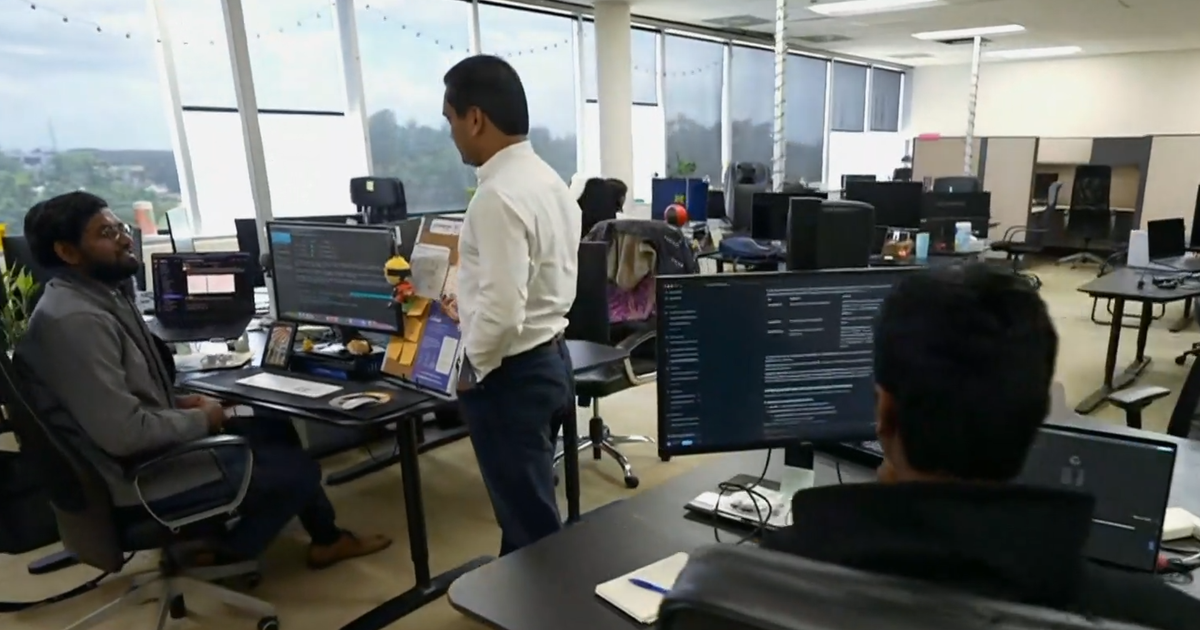
CBS News reports that some U.S. businesses are stuck in limbo after the Trump administration's H-1B fee plan was blocked by a federal judge, even as the government appeals. Employers say the uncertainty is already affecting hiring, staffing, and long-term planning.
A business owner is worried the rules for hiring certain foreign workers could become so expensive and confusing that companies stop bringing them in, like a team losing players because the ticket gate keeps changing.
Analysis
What happened
CBS News focuses on Kishore Khandavalli, a Dallas software consulting company owner who began his own U.S. career on an H-1B visa and now employs many H-1B workers. He says nearly half of his 380 employees are on the visa, and he argues that his sector has a shortage of qualified U.S. talent for the work he needs.
The policy fight
President Trump announced in September 2025 that the H-1B fee would rise from about $215 to $100,000. That move was blocked on June 8 when U.S. District Judge Leo Sorokin invalidated the fee policy in a lawsuit filed by 20 states. CBS quotes Sorokin as saying the charge functions like a tax and that there is no statutory authority for such a tax on H-1B petitions. The administration is appealing the ruling.
Business and student reaction
Khandavalli says he has not hired any new foreign workers since the fee move was implemented, and he says the change could cost him about $1 million a year. He warns that if another barrier appears, he may have to send work overseas.
CBS also reports from the Birla Institute of Technology and Science in Pilani, India, where students who once saw the U.S. as the obvious next step are reconsidering. One doctoral student, Ravi Bushan, said the changing visa environment is pushing him to diversify his options and look at other countries.
Bigger picture
The article frames H-1B as a long-running bridge between skilled foreign workers and U.S. businesses. The central concern is not just one fee, but whether policy whiplash could make the U.S. less attractive to talent and harder for firms to innovate.
Key points
- A Dallas software consulting firm says nearly half of its 380 employees are on H-1B visas.
- Trump's administration tried to raise the H-1B fee to $100,000, up from about $215.
- A federal judge blocked the fee policy after a lawsuit from 20 states.
- The company owner says he has stopped hiring new foreign workers while the rules stay uncertain.
- CBS reports that some Indian students are reconsidering U.S. plans because of the changing visa climate.
If the court ruling holds, the fee increase could stay blocked, giving companies more certainty about hiring skilled workers. That could keep some business work in the U.S. and help students still see the U.S. as an option.
If the administration's appeal succeeds or new barriers follow, companies like Khandavalli's may delay hiring or move work abroad. The article suggests that could weaken the talent pipeline and make it harder for firms to innovate.