90 Earthquakes Hit Iran in a Week
Iran recorded 90 earthquakes in one week, with most being minor. Khorasan Razavi, Semnan, and Khuzestan provinces experienced the highest seismic activity.
Intelligence analysis by Gemini 2.5 Flash Lite
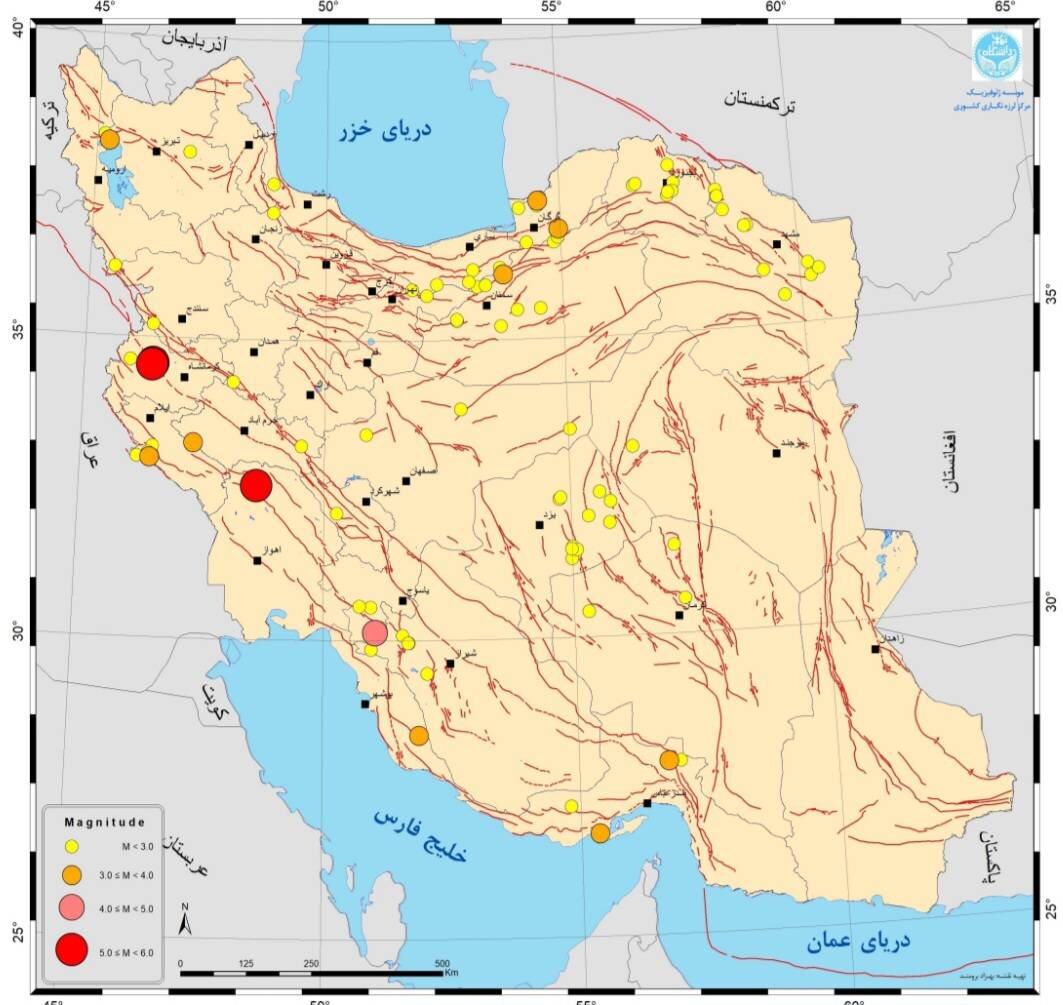
A recent report highlights significant seismic activity in Iran, with 90 earthquakes recorded in a single week. While most were minor, the data underscores Iran's position in a highly seismically active region and its historical vulnerability to devastating seismic events.
Imagine the ground under Iran is like a giant puzzle with many pieces that sometimes shift and bump into each other. In one week, about 90 of these bumps happened! Most were very small, like a tiny nudge, but a few were a bit bigger. This happens a lot because Iran sits on a spot where the Earth's puzzle pieces are always moving.
Analysis
The Institute of Geophysics of the University of Tehran
The Institute of Geophysics of the University of Tehran, through its seismological networks, has provided crucial data on Iran's recent seismic activity. The report indicates that between August 8th and 14th, a total of 90 earthquakes were registered across the country. This figure breaks down into 76 tremors with magnitudes below 3, ten between 3 and 4, and four with magnitudes ranging from 4 to 5 on the Richter scale. The most significant single event noted was a magnitude 4.7 earthquake on August 10th in Khuzestan province.
This detailed monitoring by the Institute of Geophysics is vital for understanding the seismic patterns within Iran. The data reveals a concentration of activity in specific provinces, with Khorasan Razavi leading at 16 earthquakes, followed by Semnan with 12, and Khuzestan with 11. Notably, several provinces, including Tehran, East Azarbaijan, and Gilan, reported no seismic events during this period, suggesting a localized distribution of the week's tremors.
Khorasan Razavi
Khorasan Razavi province emerged as the epicenter of seismic activity in Iran during the reported week, experiencing 16 earthquakes. This high number, even if predominantly minor, contributes to the overall seismic picture of the region. The province's location within Iran's seismically active zone means that such frequent tremors, while not necessarily alarming individually, warrant continuous monitoring and assessment of potential cumulative stress on fault lines.
The consistent seismic activity in provinces like Khorasan Razavi underscores the inherent geological risks faced by Iran. Understanding the frequency and magnitude of these events is critical for developing effective disaster preparedness strategies and infrastructure resilience measures. The Institute of Geophysics' role in tracking these occurrences is therefore paramount for public safety and long-term risk management.
Iranian Plateau
The Iranian plateau is situated in one of the world's most seismically active regions, a fact that has historically led to devastating earthquakes. The article points out that while Iran accounts for approximately 2 percent of global earthquakes, it has tragically accounted for over 6 percent of earthquake-related fatalities worldwide during the 20th century. This statistic highlights a disproportionate impact, suggesting that factors beyond just seismic frequency, such as building codes, population density in vulnerable areas, and emergency response capabilities, play a critical role in disaster outcomes.
The past calendar year (March 2025–March 2026) saw a total of 2,380 earthquakes with magnitudes greater than 2.5. Of these, 910 were above magnitude 3, 130 above magnitude 4, and 15 above magnitude 5. This ongoing seismic activity reinforces the need for robust earthquake safety protocols and public awareness campaigns across the nation, given the significant historical and ongoing risks associated with the Iranian plateau's geological setting.
Key points
- Iran experienced 90 earthquakes in a single week, from August 8th to 14th.
- The majority of these tremors were minor, with magnitudes below 3.
- Khorasan Razavi, Semnan, and Khuzestan provinces recorded the highest number of earthquakes.
- Iran is located in a highly seismically active region, historically prone to major earthquakes.
- Over the past year, 2,380 earthquakes with magnitudes over 2.5 were recorded nationwide.
The consistent monitoring by the Institute of Geophysics provides valuable data for understanding seismic patterns, potentially leading to improved early warning systems and more effective disaster preparedness strategies. The high number of minor earthquakes could also indicate a gradual release of seismic energy, potentially reducing the likelihood of a single, massive catastrophic event in the short term.
The sheer frequency of seismic events, even if minor, highlights Iran's inherent vulnerability to earthquakes. Given the country's history of devastating seismic disasters and the significant percentage of global earthquake fatalities it has experienced, any increase in activity raises concerns about potential future catastrophic events and the adequacy of current safety measures.