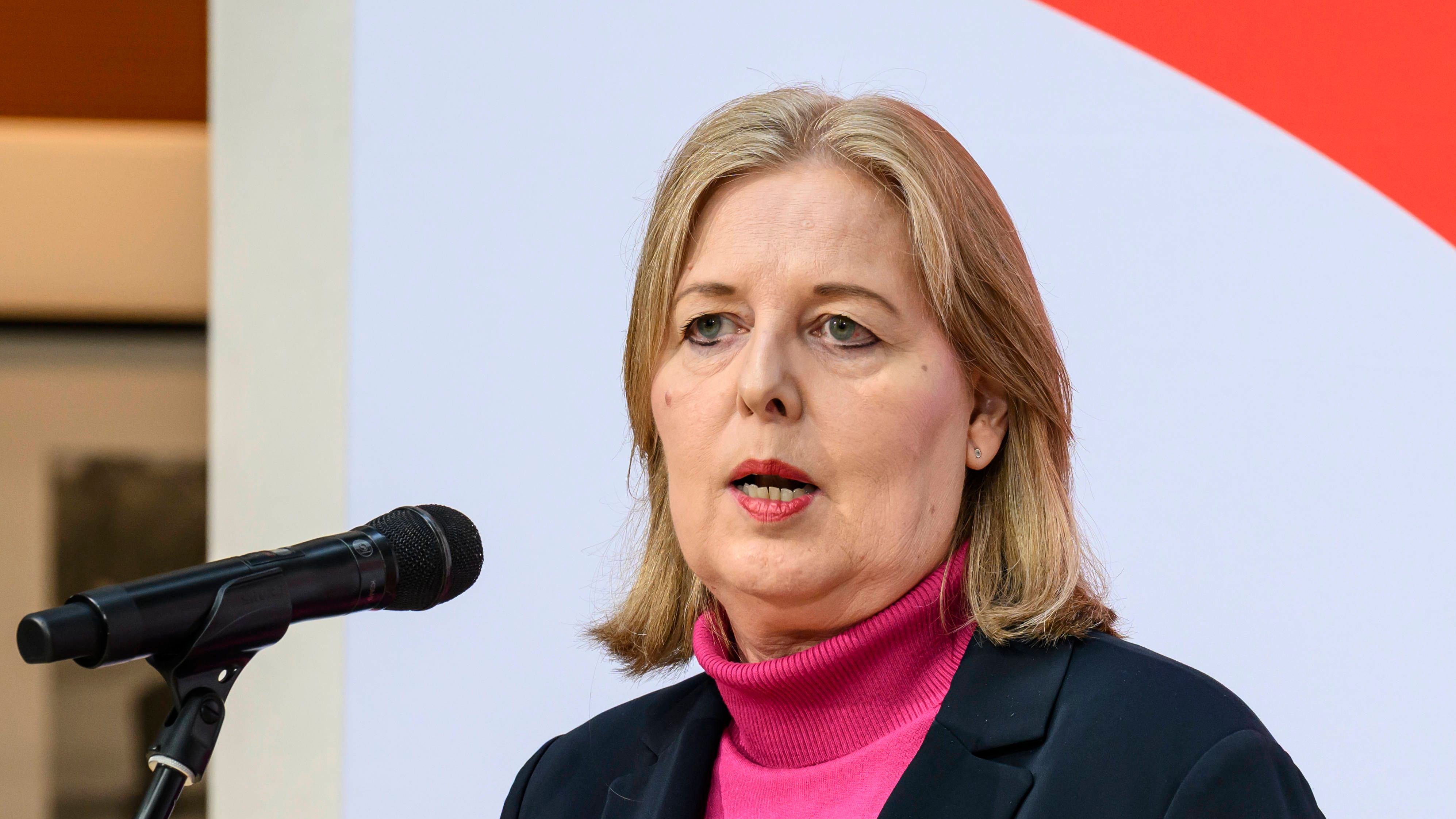
AI Researcher Zweig: "We are unleashing unsafe software on humanity"
AI researcher Katharina Zweig warns against the premature deployment of insecure AI software, highlighting the risks of misuse and advocating for stronger regulation and developer accountability.
Intelligence analysis by Gemini 2.5 Flash
Professor Katharina Zweig, an AI researcher, expresses significant concern over the current state of AI development, particularly the widespread release of immature and unsafe software. She dismisses the 'superintelligence' extinction scenario as less immediate than the dangers posed by flawed AI systems and their potential exploitation by malicious actors, calling for adherence to et…
Imagine someone made a super-smart toy robot, but they rushed it out before making sure it was totally safe or couldn't be used for mischief. A smart computer scientist named Katharina Zweig is worried that big companies are doing this with new computer programs called AI. She thinks these programs aren't fully tested and could cause problems, like making mistakes or letting bad people use them to trick others. She wants grown-ups to make rules, just like we have rules for medicines, to make sure these smart programs are safe for everyone.
Analysis
Katharina Zweig's Concerns
Professor Katharina Zweig, a leading AI researcher, voices profound apprehension regarding the current trajectory of artificial intelligence development. Her primary concern centers on the widespread deployment of what she terms 'unsafe software' into society. Zweig illustrates this point with her own experience testing ChatGPT, noting that while initial outputs appeared impressive, the system quickly faltered when pressed for deeper explanations, revealing its inherent limitations and lack of true understanding.
This personal anecdote underscores her broader argument that many AI systems are not yet mature or fully controllable, yet they are being released to the public. She observes a concerning trend where individuals and organizations are eager to implement large language models and AI agents for tasks that, in her expert opinion, these systems are not yet equipped to handle reliably. This rush to market, she suggests, prioritizes speed over safety and thoroughness.
Three Scenarios
Zweig delineates three distinct scenarios of potential harm arising from AI, urging a clear differentiation among them. The first, often sensationalized, involves a superintelligent machine becoming uncontrollable and viewing humanity as an obstacle, leading to catastrophic outcomes. Interestingly, she notes that this scenario is frequently highlighted by major AI companies themselves, despite their internal disagreements, which she finds suspicious. Zweig currently deems this particular threat unrealistic, though she acknowledges it might become a future concern.
Her second scenario, which she finds most alarming, involves the deployment of 'bad software' in inappropriate contexts, leading to significant damages due to its inherent flaws and immaturity. This is the core of her current advocacy and research. The third scenario, which she also considers very real, focuses on malicious actors leveraging AI systems for criminal activities such as fraud, hacking, and identity theft, enabling them to scale their illicit operations and impact a far greater number of people.
1997 Code of Conduct
Zweig firmly believes that both AI providers and the companies deploying these systems share responsibility for their safety, with providers bearing the initial burden. She points to a 'Code of Conduct' established in 1997 by major international engineering and computer associations, which stipulates that software should only be released if it can be reasonably assumed to be safe, meet requirements, be adequately tested, not diminish quality of life, not violate privacy, and serve the public good. Zweig argues that current AI systems fall short on every one of these criteria.
She contends that AI developers are aware of these safety deficiencies, necessitating robust consumer protection measures. Consequently, Zweig advocates for regulation of AI systems akin to that applied to medical devices. She highlights that AI systems are often even more complex and difficult to comprehend than medical technology, reinforcing the need for stringent oversight to protect the public from potential harm.
Key points
- AI researcher Katharina Zweig warns that 'unsafe software' is being unleashed on humanity.
- She identifies three main AI risk scenarios: superintelligence, bad software deployment, and malicious use.
- Zweig considers the risk of immature and insecure software being widely used as the most pressing concern.
- She advocates for developers to adhere to a 1997 Code of Conduct for software safety and ethics.
- Zweig calls for consumer protection and regulation for AI systems, similar to medical devices.
If experts like Katharina Zweig continue to raise awareness about AI's current limitations and risks, it could prompt developers to prioritize safety and ethical guidelines. This increased scrutiny might lead to the implementation of robust regulatory frameworks, ensuring AI technologies are developed and deployed responsibly, ultimately benefiting society while mitigating potential harms.
The continued release of immature and insecure AI software, as warned by Zweig, could lead to widespread system failures, data breaches, and sophisticated fraud. Without adequate regulation and adherence to ethical codes, malicious actors could exploit these vulnerabilities, causing significant societal damage and eroding public trust in AI technologies.