Airport Restructuring: Expert Says Airports Have Stabilized, but Major Hurdles Remain
An aviation expert says Leipzig/Halle and Dresden have stabilized economically, but the sector still faces heavy pressure and high costs.
Intelligence analysis by GPT-5.4 Mini
Hartmut Fricke of TU Dresden says the airports’ earlier-than-planned progress is welcome, but not a sign of all-clear. He argues Germany’s aviation market remains expensive and regional routes remain under pressure, even as Leipzig/Halle and Dresden seek a stronger footing.
The airports in Dresden and Leipzig/Halle are like two shops that have stopped losing ground, but still have to walk through a hard storm. New planes and cleaner fuel might help them sell more tickets later, but for now high costs and fewer flights still make life tough.
Analysis
Stabilization, not closure
The central message from aviation expert Hartmut Fricke is that the financial stabilization of Leipzig/Halle and Dresden is real, but it should not be mistaken for a full recovery. Fricke, who teaches at TU Dresden, said the earlier-than-planned achievement of key restructuring targets is “highly welcome,” especially in the current environment. Even so, he said the conditions for aviation will not become “really easier” before 2030.
Structural pressure on regional airports
Fricke pointed to several continuing problems for the sector. Flying has become significantly more expensive in Germany, and many airlines have reduced service to regional airports. That makes it harder for airports outside the largest hubs to grow passenger traffic on their own.
Where the optimism comes from
Despite those headwinds, Fricke still sees prospects for Leipzig/Halle and Dresden. He said hybrid-electric aircraft and planes using SAF could help revive short-haul traffic. SAF refers to sustainable aviation fuels, which can reduce total CO2 emissions compared with conventional kerosene when viewed across the full production chain. He also linked that hope to Deutsche Aircraft’s move to Leipzig/Halle, where a plant for the D328eco, a regional aircraft with around 40 seats, is being built.
Politics and jobs keep the airports alive
Saxony’s government remains committed to both airports. Finance Minister Christian Piwarz said that while operating two airports in parallel is difficult from a purely business perspective, the economic case looks different when viewed in broader terms. According to the finance ministry, Leipzig/Halle and Dresden together support more than 52,000 jobs and generate almost five billion euros in gross value added.
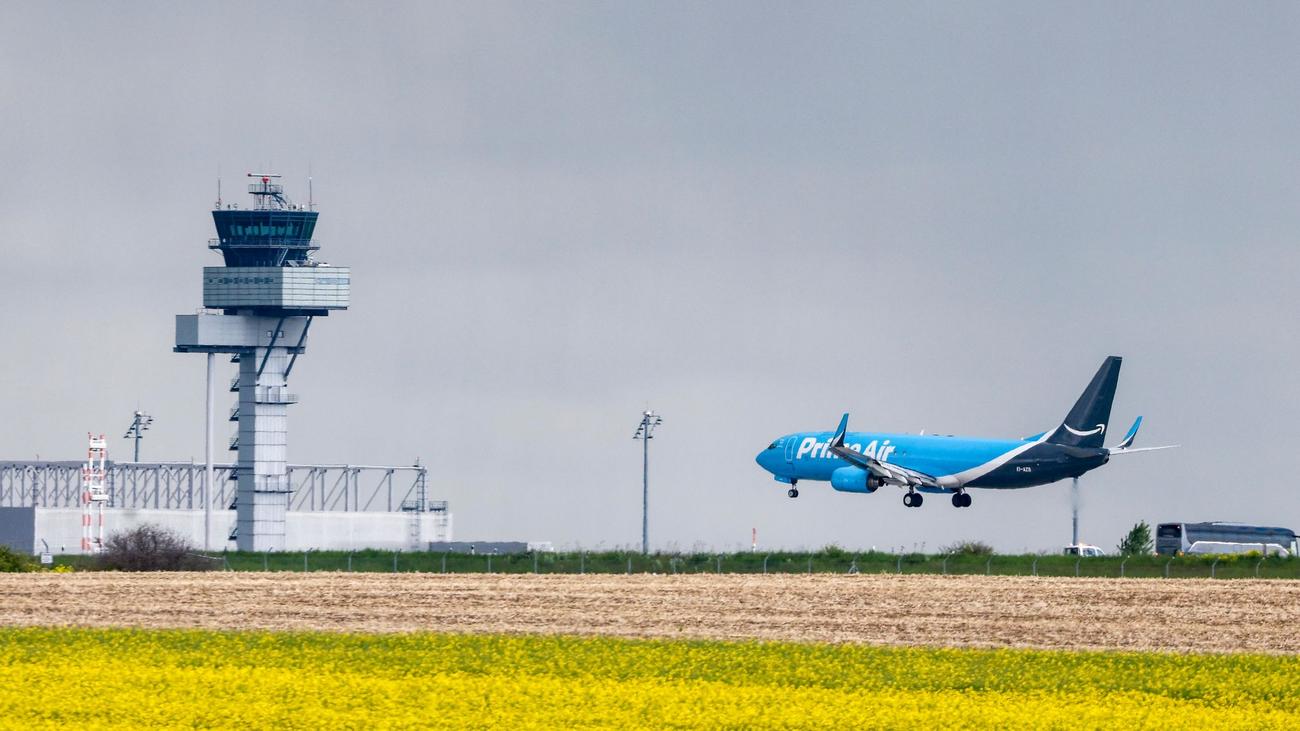
DHL remains a key stabilizer at Leipzig/Halle, where it is described as a central strategic partner. The airport group also says it wants to broaden its base through passenger traffic, cargo, services, and new business settlements.
Key points
- Hartmut Fricke says Leipzig/Halle and Dresden have stabilized, but the situation is not fully resolved.
- He says flying in Germany has become much more expensive and regional airports face reduced airline service.
- Fricke sees potential in hybrid-electric aircraft and SAF-powered planes for reviving short-haul routes.
- Saxony’s finance minister says the two airports matter economically, not just as standalone businesses.
- DHL remains a major stabilizing factor at Leipzig/Halle, alongside new industrial activity such as Deutsche Aircraft.
If the stabilization holds, the airports could move out of crisis mode sooner than planned. New aircraft technologies and sustainable fuels could help reopen short routes, and Deutsche Aircraft’s presence at Leipzig/Halle could strengthen the site further. DHL also remains a strong anchor for the cargo side.
The article says the wider aviation market in Germany remains expensive and is unlikely to get much easier before 2030. If airlines keep cutting regional routes and new technologies take longer to scale, the airports may remain dependent on a few large partners and public backing.