Nuremberg Prepares Streetcars for New Heatwave
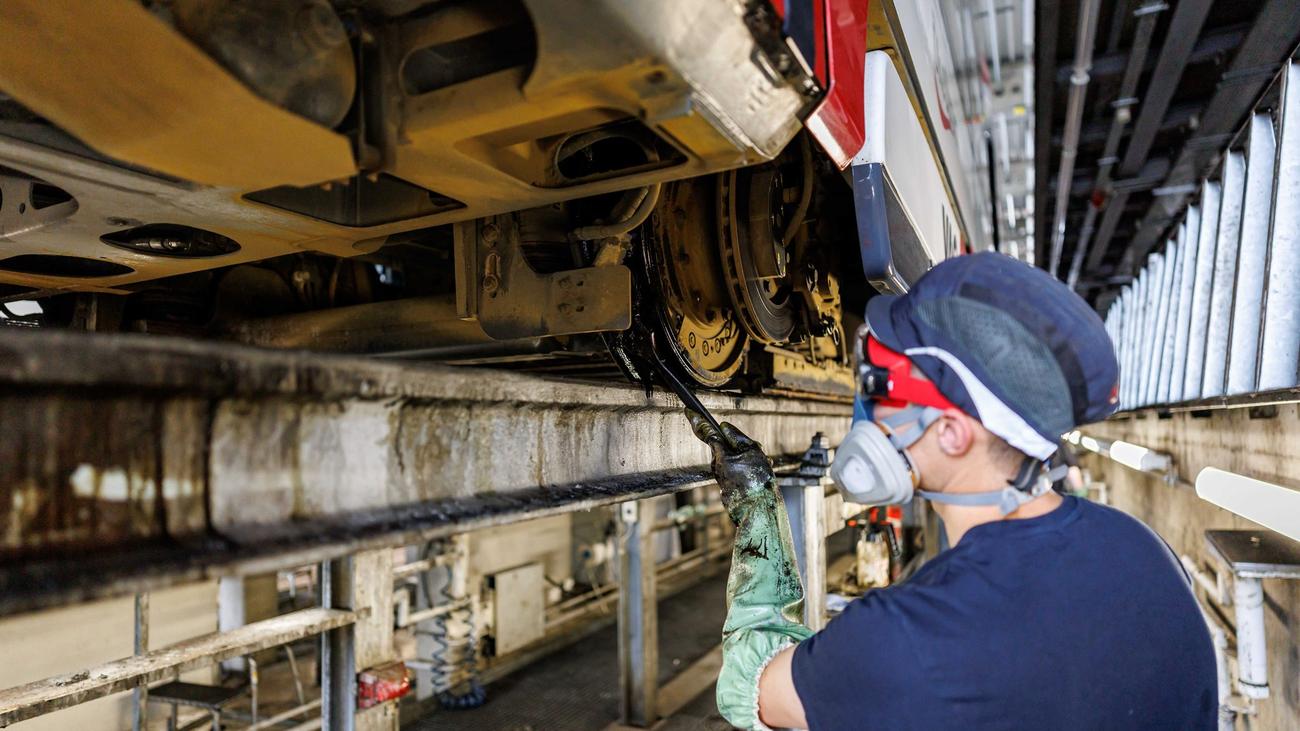
To prevent heat-related outages, Nuremberg's VAG is preparing for the upcoming heatwave by intensifying checks on the streetcar network. The company will deploy a rail grinder around the clock to clean asphalted sections and spray tracks with water to lower surface temper…
Intelligence analysis by Llama
Nuremberg's VAG is preparing for the upcoming heatwave by intensifying checks on the streetcar network and deploying a rail grinder to clean asphalted sections and spray tracks with water.
Imagine you're playing with a toy train on a hot summer day. The tracks get really hot and start to melt, causing the train to stop working. To prevent this from happening, the people in charge of the train system in Nuremberg are using special machines to clean the tracks and spray them with water to keep them cool. This way, the train can keep running even when it's really hot outside.
Analysis
A Preventive Measure Against Heat-Related Outages
The Nuremberg-based Verkehrs-Aktiengesellschaft (VAG) is taking proactive steps to mitigate the impact of the upcoming heatwave on its streetcar network. Following the recent heat-related outages in June, the company has identified the need to intensify checks on the network to prevent similar incidents in the future. The VAG has announced that it will deploy a rail grinder around the clock to clean asphalted sections and remove any debris that may be causing friction on the tracks. This measure is expected to reduce the risk of heat-related outages and ensure the smooth operation of the streetcar network.
Water-Based Cooling Measures
In addition to the rail grinder, the VAG will also employ water-based cooling measures to lower the surface temperature of the tracks. This will involve spraying tracks with water, a technique commonly used in winter to prevent ice formation. The company has also stated that it will use vehicles that normally distribute salt solution in winter to spray water on the tracks. This will help to reduce the temperature of the tracks and prevent heat-related outages.
Contingency Planning
In the event that the heat-related outages do occur, the VAG has a contingency plan in place. The company has announced that it will suspend the streetcar service temporarily and replace it with 23 buses that will operate on a 15-minute frequency. The buses will be stationed at major U-Bahn stations, and the VAG has also announced that some bus lines will be rerouted to avoid areas with high temperatures. This contingency plan is designed to minimize disruptions to the public transportation network and ensure that passengers can continue to use the service despite the heat-related outages.
Key points
- Nuremberg's VAG is preparing for the upcoming heatwave by intensifying checks on the streetcar network.
- The company will deploy a rail grinder around the clock to clean asphalted sections and spray tracks with water to lower surface temperatures.
- The VAG has a contingency plan in place in case of heat-related outages, including suspending the streetcar service and replacing it with buses.
If the VAG's preparations are successful, the streetcar network in Nuremberg should be able to operate smoothly even during the heatwave. The use of water-based cooling measures and the deployment of a rail grinder should help to prevent heat-related outages and ensure the continuity of public transportation.
If the heatwave is more severe than expected, the VAG's contingency plan may not be enough to prevent disruptions to the streetcar service. In this scenario, the suspension of the service and the deployment of buses may be necessary to minimize disruptions to the public transportation network.