British artist David Hockney dies at 88
David Hockney, one of the most influential contemporary artists, has died at 88 in London. He became famous for bright pool paintings and record-breaking auction prices.
Intelligence analysis by GPT-5.4 Mini
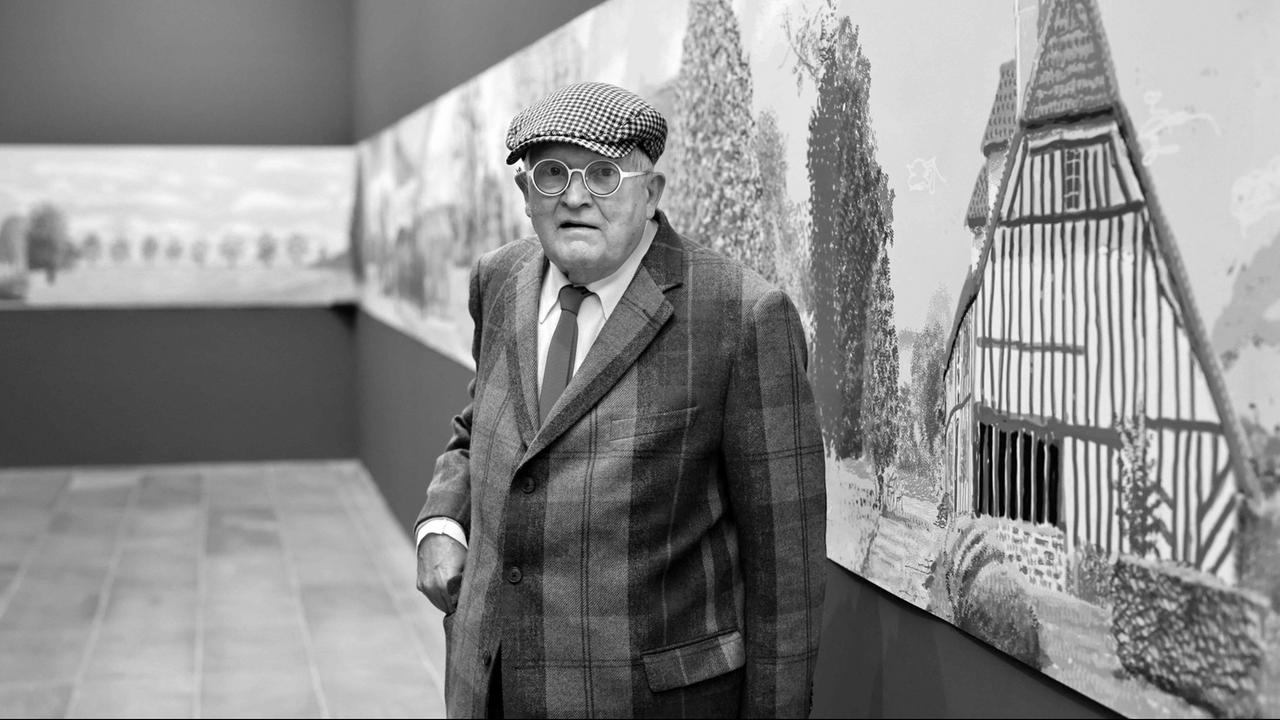
Tagesschau reports the death of David Hockney, whose vivid paintings of pools, portraits, and landscapes made him one of the best-known artists of his era. The obituary traces his career from Bradford to Los Angeles and back to Europe, and stresses that he kept working until the end.
David Hockney was a famous painter who loved bright colors, pools, and sunlight. His pictures felt like turning an ordinary day into something glowing and special. He died at 88, but his art will keep hanging in museums.
Analysis
A major figure in modern art
David Hockney died peacefully in his London apartment at 88, according to his agent. Tagesschau describes him as one of the most influential European artists of the present day and notes that he would have turned 89 in a few weeks.
What made him famous
Hockney became widely known for paintings of swimming pools, sunlight, and bold color contrasts, especially works shaped by his time in California. The article says those images helped define his public image and made him a star in both British and American art circles.
Born in Bradford in 1937, he studied at the Royal College of Art in London and was already attracting attention before graduating. After being taken on by art dealer John Kasmin in 1961, he rose quickly and later moved to Los Angeles, which became his home for a time. He later split his life between Europe and California, drawing inspiration from Yorkshire and Normandy as well.
Style, identity, and legacy
The piece highlights Hockney’s focus on landscape and portrait painting, along with his interest in realism at a time when many contemporaries moved toward abstraction. It also notes that he never hid that he was gay, even when homosexuality was still illegal in Britain, and that male bodies were a recurring subject in his work.
His market value was immense. The article cites the 2018 sale of Portrait of an Artist (Pool with Two Figures) for $90.3 million, then the highest auction price for a living artist at the time. Hockney also worked beyond painting, including a stained-glass window unveiled at Westminster Abbey in 2018.
Tagesschau says he remained active until the end, with new works on view in London and further exhibitions planned in London and Oslo. That makes the obituary both a farewell and a reminder that his influence is still unfolding.
Key points
- David Hockney died peacefully in London at the age of 88.
- He was known for vivid pool paintings, portraits, and landscapes.
- His career took him from Bradford to London, Los Angeles, Yorkshire, and Normandy.
- One of his paintings sold for $90.3 million at Christie’s in 2018.
- Tagesschau says he stayed artistically active until the end.
Hockney’s work is already deeply embedded in major museums and galleries, so his legacy is likely to stay highly visible. The article also notes that new works were on show and more exhibitions were being prepared, which could keep public interest in his art strong.
His death ends the possibility of new work from one of the era’s most productive painters. Planned exhibitions may now shift from living artistic output to retrospective commemoration, which can narrow the focus of how his work is received.