China boosts coal’s economic value 700% after turning it to liquids: report
China has significantly boosted the economic value of coal by transforming it into liquid fuels, with a new plant in Ningxia increasing coal's value sevenfold.
Intelligence analysis by Gemini 2.5 Flash
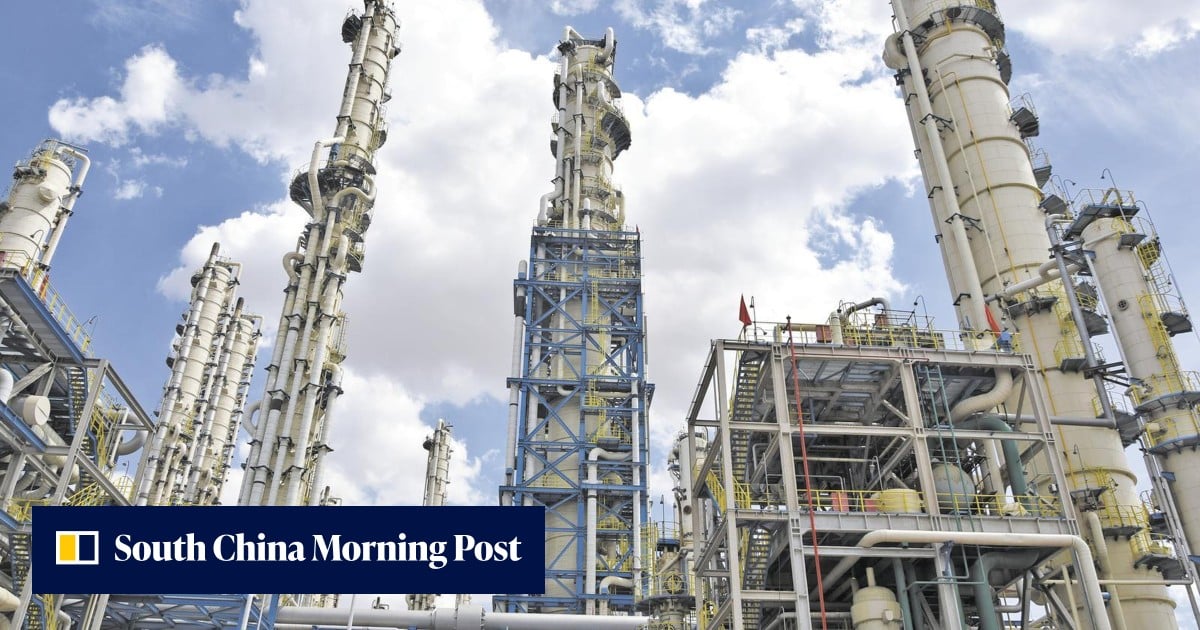
A major coal-to-liquids plant operated by China Energy Group Ningxia Coal Industry Co Ltd has begun full operations, processing 24 million tonnes of coal annually. This technology, which turns coal into oil products, is enhancing China's energy security by reducing reliance on imported crude oil, especially after geopolitical events impacted global oil prices.
Imagine coal is like a big, solid rock that's hard to use for cars or planes. Scientists in China have found a clever way to cook this rock with steam and oxygen, turning it into a special gas. Then, they change that gas into liquid fuels, just like the gasoline or jet fuel we use! This makes the coal much more valuable, like turning a regular rock into a shiny gem, and helps China make its own fuel instead of buying it all from other countries.
Analysis
China's strategic investment in coal liquefaction technology marks a significant shift in its energy landscape, aiming to transform its resource-rich coal into high-value liquid fuels. This initiative is particularly timely given global geopolitical instabilities that have historically threatened crude oil supply chains and driven up international prices. The successful scaling of this technology not only promises substantial economic returns but also reinforces China's pursuit of greater energy self-sufficiency.
China Energy Group Ningxia Coal Industry Co Ltd
The world's largest coal-to-liquids plant, operated by China Energy Group Ningxia Coal Industry Co Ltd, has achieved full operational status in northwest China's Ningxia Hui autonomous region. This facility processed an impressive 24 million tonnes of coal in 2025, representing a quarter of the region's total annual output. The plant's output includes oil products suitable for high-demand applications like rocket fuel and machine lubricants, showcasing the advanced capabilities of the domestically developed technology.
The project's success is a testament to years of dedicated research and development, culminating in a production line that significantly enhances the economic utility of coal. By converting a primary domestic resource into versatile liquid fuels, China is creating new industrial value chains and reducing its reliance on external energy sources. This strategic move aligns with broader national goals of fostering indigenous technological innovation and strengthening economic resilience.
Strait of Hormuz
The profitability and strategic importance of China's coal-to-liquids technology were underscored by recent global events, specifically the blocking of the Strait of Hormuz due to the US-Israel war on Iran. This geopolitical incident caused international oil prices to surge above US$100 per barrel, highlighting the vulnerability of nations heavily dependent on imported crude oil. For China, which previously sourced over 40 percent of its crude oil from the Middle East, such disruptions pose significant economic and security risks.
The elevated oil prices made the conversion of coal into liquid fuels an exceptionally profitable venture, accelerating the economic justification for the massive investment in this technology. The report by Science and Technology Daily emphasizes that beyond the immediate economic gains, the project has been instrumental in mitigating China's reliance on imported oil. This strategic advantage provides a buffer against volatile global energy markets and enhances the nation's capacity to withstand external shocks.
indirect coal liquefaction
The core of this transformative process is a technology known as indirect coal liquefaction. This method involves a sophisticated chemical procedure where coal is heated with oxygen and steam, converting it into a synthetic gas composed of carbon monoxide and hydrogen. This synthetic gas is then further processed to yield various liquid hydrocarbon products, effectively turning solid coal into a versatile liquid fuel.
This technological breakthrough is fundamentally reshaping China's long-defined energy structure, which has historically been characterized by abundant coal, limited oil, and scarce natural gas reserves. In regions like Ningxia, where coal accounts for more than 90 percent of energy use, indirect coal liquefaction offers a pathway to diversify energy outputs from existing resources. The ability to domestically produce liquid fuels from coal provides a critical alternative to imported crude oil, aligning China's energy consumption patterns more closely with its indigenous resource endowments.
Key points
- China's new coal-to-liquids plant has boosted the economic value of coal by 700%, turning it into oil products.
- The facility, operated by China Energy Group Ningxia Coal Industry Co Ltd, processed 24 million tonnes of coal in 2025.
- The technology reduces China's reliance on imported oil, a strategic advantage highlighted by past disruptions like the Strait of Hormuz blockage.
- The core process, indirect coal liquefaction, converts coal into a synthetic gas which is then processed into liquid fuels.
- This development is transforming China's energy structure, which has historically relied heavily on coal due to limited oil and gas reserves.
This technological advancement could significantly enhance China's energy independence, reducing its vulnerability to global oil price volatility and geopolitical disruptions. By leveraging its vast coal reserves, China can secure a more stable and cost-effective supply of liquid fuels, fostering economic stability and supporting its industrial growth.
Market signals
- OIL China's increased domestic production of liquid fuels from coal is expected to reduce its reliance on imported crude oil, potentially dampening global demand from China.
AI-generated analysis of potential market relevance. Not financial advice.